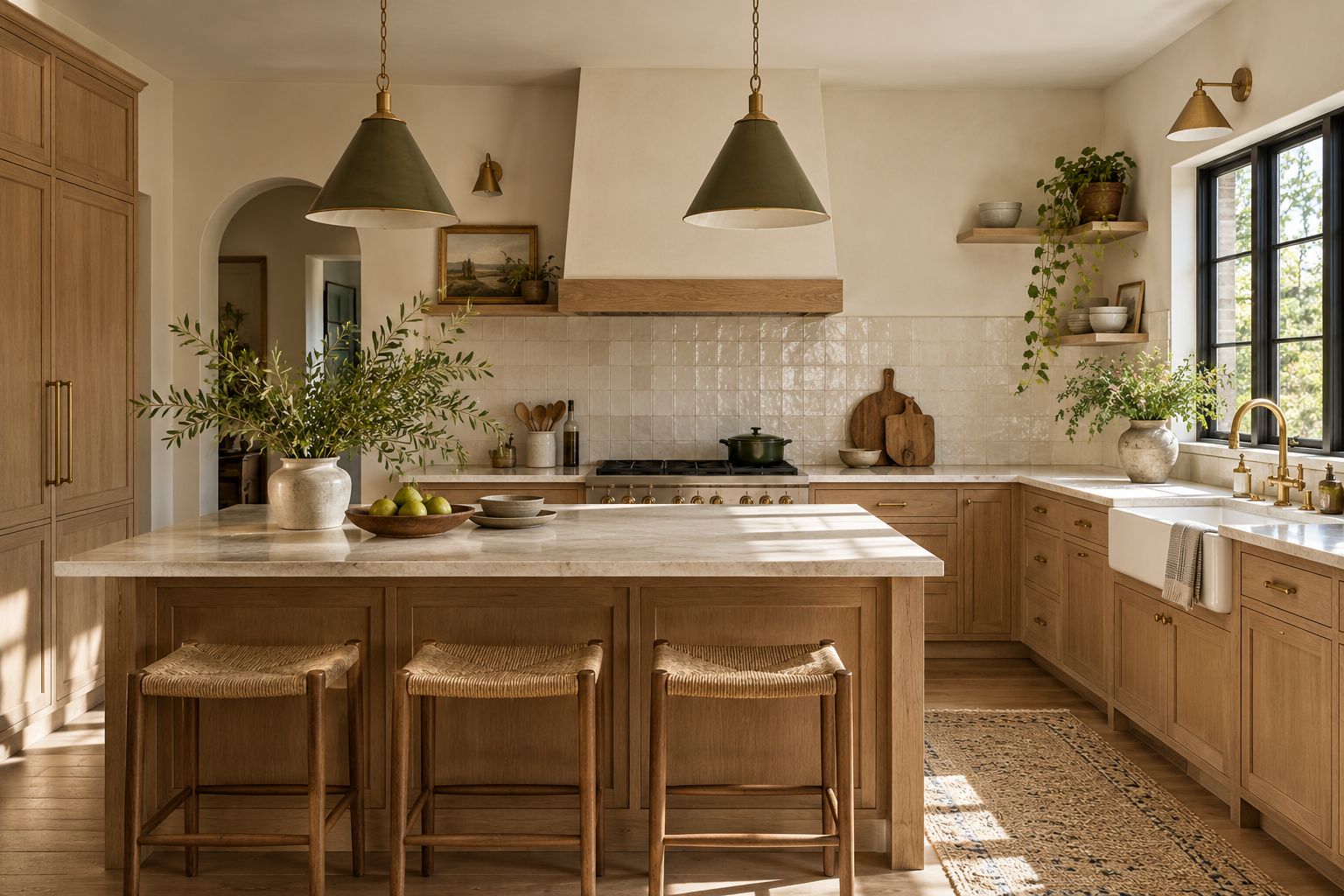
Have you ever stood in your kitchen looking at the walls and thought: Should I just paint this… or is tile actually worth it?
Paint is cheaper, easier to change, and gives you endless color options. Tile is more durable, easier to wipe down, and can completely change the character of a kitchen.
The problem is that neither option is automatically better.
The right choice depends on where you are using it, how much mess that area sees, how often you like to change your home, and how much maintenance you are willing to deal with.
So instead of asking which one is better, it is probably more useful to ask: Where does each material actually make the most sense?
1. Cost
Paint is usually the more affordable option upfront.
You are paying for paint, prep materials, and possibly labor if you are not doing it yourself.
Tile adds more layers to the budget. There is the tile itself, adhesive or mortar, grout, trim pieces, surface preparation, and often professional installation.
But the size of the area matters
If you are only tiling a backsplash, the total cost may be much more manageable than tiling an entire wall.
A small area of tile can also create a strong visual impact without turning the whole kitchen into a large renovation.
The takeaway
If budget is the priority, paint usually wins. If you are working with a smaller high-impact area, tile may still be worth the extra cost.
2. Maintenance
Kitchen walls deal with more than most walls in the house: grease, steam, food splashes, water, and hands touching the same areas repeatedly.
This is where material choice starts to matter.
Paint
A good washable kitchen paint can perform very well in many areas. But repeated scrubbing, grease, and splashes can eventually leave marks or wear down the finish.
Tile
The tile surface itself is usually very easy to wipe clean. The potential weak point is the grout.
Grout lines can collect dirt or discolor over time, especially in busy cooking areas.
The takeaway
Tile is usually easier to clean in messy zones. Paint is completely reasonable in areas that are not taking constant splashes or grease.
3. Durability
If you are thinking long-term, tile usually has the advantage.
A properly installed tile surface can last for years with relatively little change. Paint will eventually need touching up or repainting.
But durability is not always the only goal
Some people would rather repaint every few years than commit to a tile they may stop loving.
So durability can be either a benefit or a limitation depending on how often you like to change your home.
4. Flexibility
This is where paint wins easily.
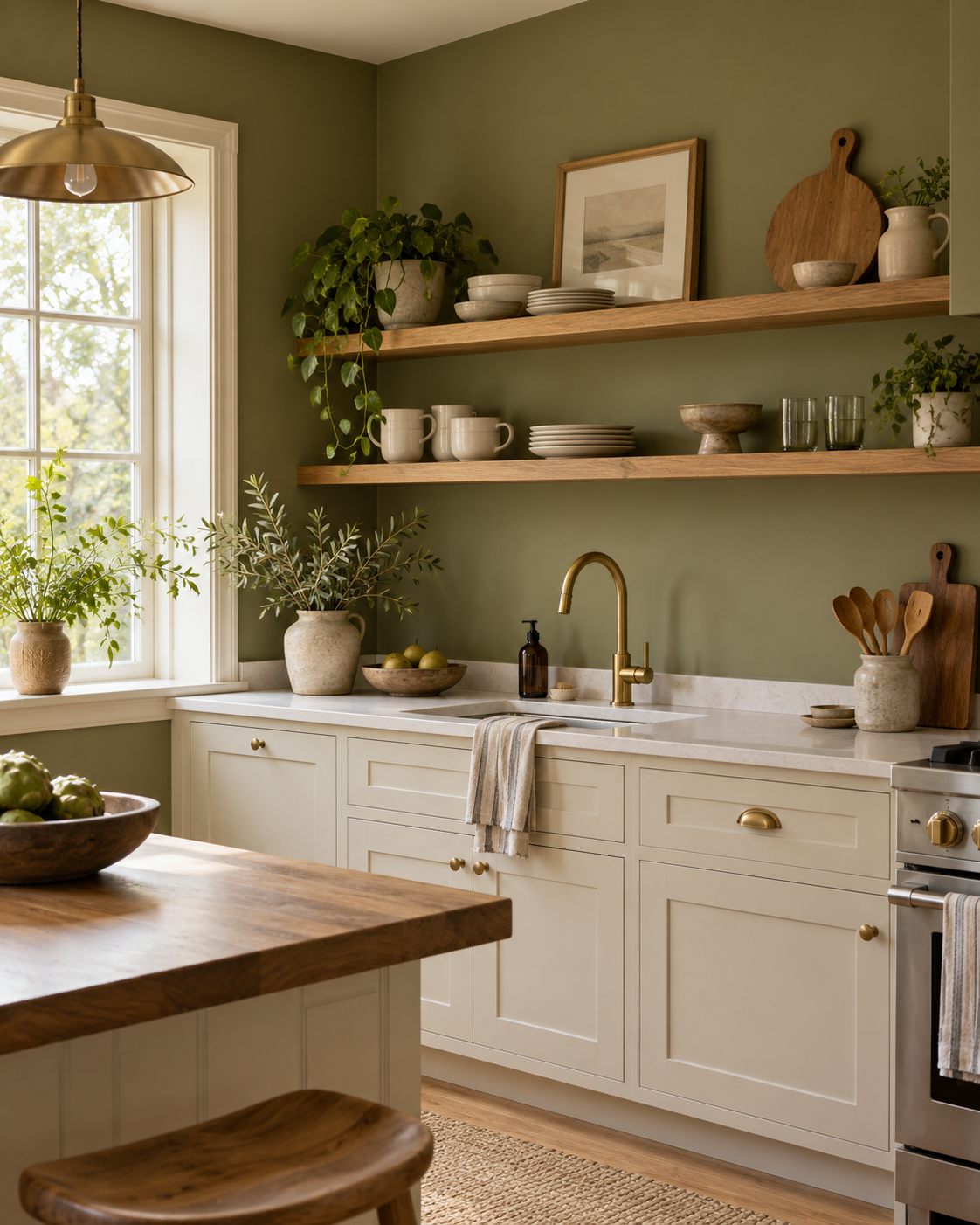
If you decide your warm beige kitchen should suddenly become olive green, paint gives you that freedom. If you change your mind again two years later, you can change it again.
Tile is a much bigger commitment. Removing it can involve demolition, wall repair, dust, and a lot more work.
The takeaway
If you love experimenting with color and changing your interiors, paint gives you far more flexibility. If you want something you can install and mostly forget about, tile may suit you better.
5. Aesthetic Impact
Paint and tile create very different kinds of visual interest.
Paint can make a kitchen feel calm, seamless, and architectural. Tile can introduce texture, pattern, movement, and craftsmanship.
Paint works beautifully when you want
- Visual simplicity
- A more seamless wall
- Stronger color
- An organic modern look
- An easy connection between the kitchen and surrounding rooms
Tile works beautifully when you want
- Texture
- Pattern
- Handmade character
- A more traditional or Mediterranean feel
- A focal point behind the stove or sink
Neither one automatically looks more expensive. The quality of the material, color choice, installation, and overall room matter much more than the category itself.
6. Moisture and Heat
The kitchen is not a bathroom, but certain areas still deal with a lot of moisture and heat.
Around the sink, you have repeated water splashes. Around the stove, you have steam, grease, and heat.
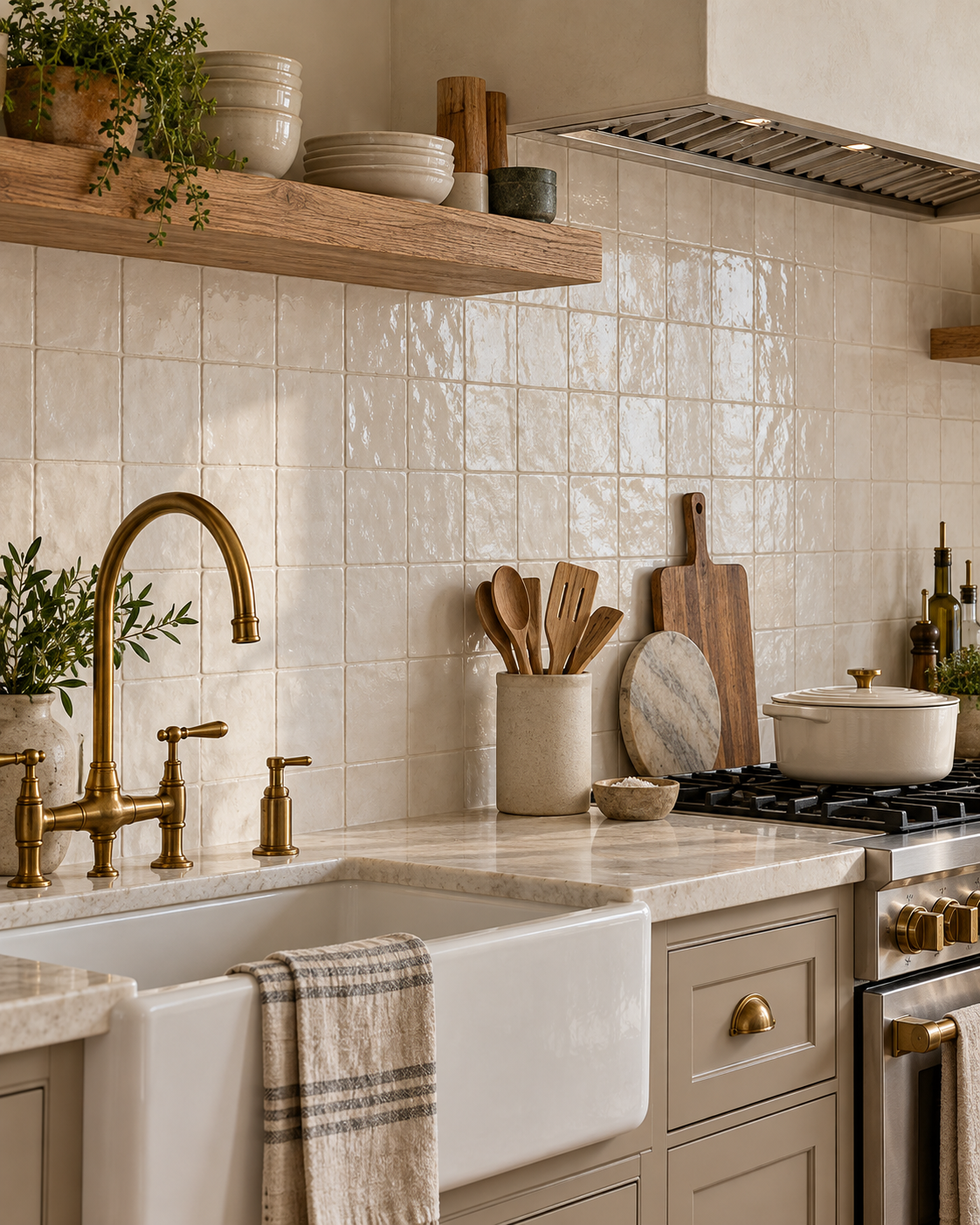
Tile performs very well in these areas. It creates a hard, protective surface that is relatively easy to clean.
Paint can work too, but the product needs to be appropriate for the conditions. A washable, durable finish matters much more here than it would in a bedroom.
The takeaway
The harder the wall has to work, the stronger the argument for tile becomes.
7. Cleaning Reality
There is a difference between something being “easy to clean” in theory and something being easy to live with every day.
Tile is easy to wipe, but lots of grout lines mean more places for residue to collect. Paint has no grout, but a painted wall near heavy cooking may need more careful cleaning.
Think about your actual kitchen
- Do you cook every day?
- Do you fry food frequently?
- Is the sink constantly splashing the wall?
- Is the kitchen mostly decorative and lightly used?
The answer changes what “easy maintenance” actually means for you.
8. What Works Better in a Small Kitchen?
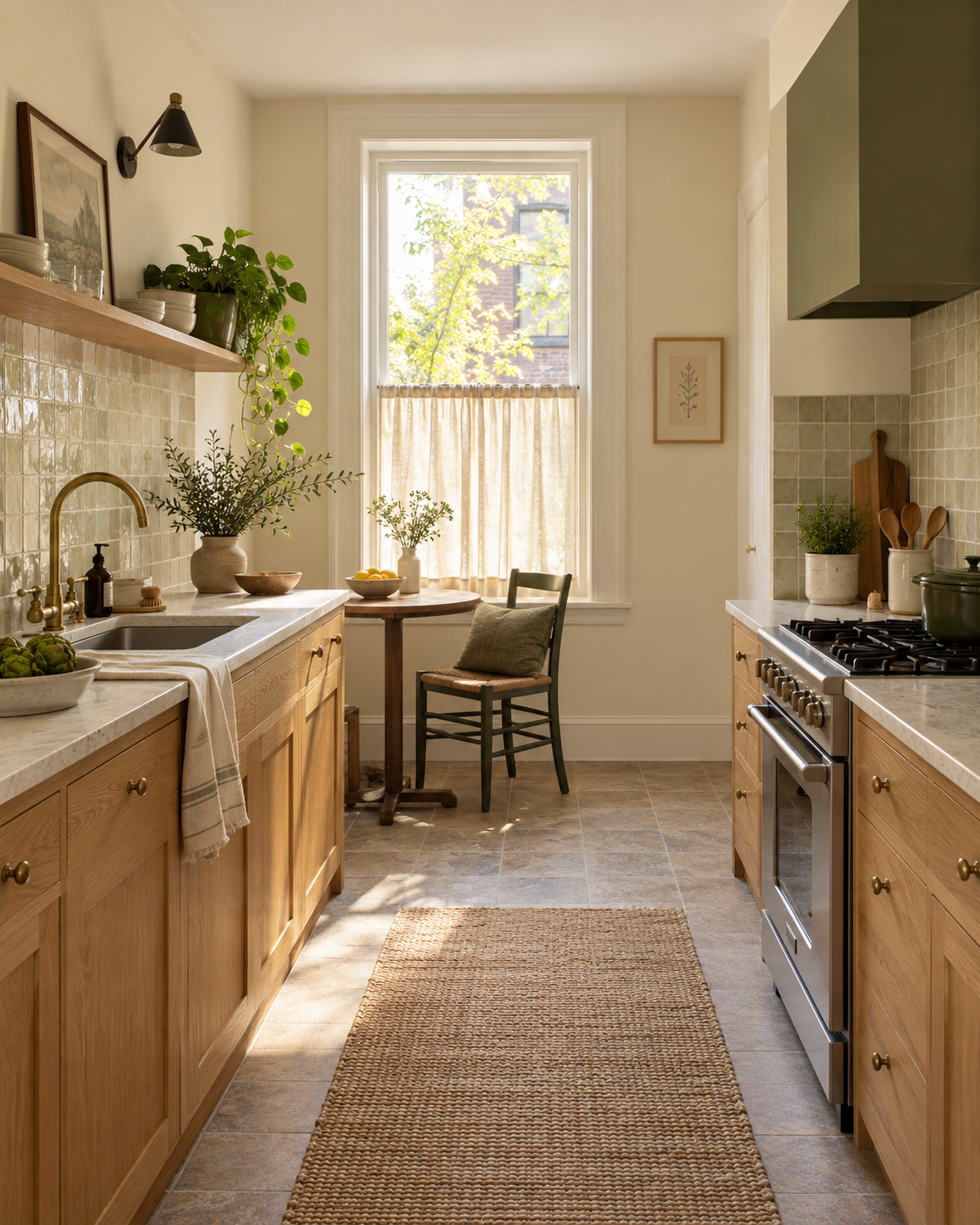
In a small kitchen, materials have a big visual impact because you see everything at once.
Paint can help walls feel continuous and visually quieter. That can be useful when cabinets, counters, appliances, and flooring are already creating a lot of information.
Tile can still work beautifully. A simple tile with subtle variation can create depth without making the room feel busy.
But very strong patterns, heavy contrast, or too many competing finishes can make a small kitchen feel visually crowded.
The takeaway
In smaller kitchens, restraint often matters more than the specific material.
9. Which One Ages Better?
This one is tricky because both paint and tile can date.
A trendy paint color is easy to change. A trendy tile is not.
That does not mean you should only choose boring tile. But it does mean the commitment level should influence how bold you go.
A good rule
The harder something is to replace, the more carefully you should think about whether you will still enjoy it later.
If you love bold trends, paint is a very forgiving place to experiment. For permanent tile, you may want to choose something with a little more longevity.
10. The Hybrid Solution Might Be the Best One
You do not necessarily need to choose one material for the entire kitchen.
In fact, many kitchens work better when each material is used where it performs best.
One practical approach
Use tile:
- Behind the stove
- Around the sink
- In areas with frequent splashes
- Where you want a visual focal point
Use paint:
- On surrounding walls
- Above cabinets
- In lower-impact areas
- Where you want flexibility with color
This gives you the durability of tile without covering every wall in it. And it gives you the flexibility of paint where you are more likely to want a change later.
What About Peel-and-Stick Tile?
Peel-and-stick tile can be a useful middle ground if you want the look of tile without committing to a full installation.
It is usually cheaper, faster to install, and easier to change than traditional tile, which makes it especially appealing for rentals, temporary updates, or kitchens you are not ready to renovate completely.
That said, not all peel-and-stick products perform the same way. Heat, steam, grease, wall texture, adhesive quality, and installation prep can make a big difference in how well they hold up.
So yes, they can absolutely work—but placement matters.
For a low-splash area or decorative backsplash, they may be a practical option. Around high heat, constant moisture, or heavy cleaning, traditional tile may still be the better long-term choice.
We’ll do a full breakdown of peel-and-stick tile next—what works, what fails, and where it is actually worth using.
Paint vs Tile: Quick Comparison
| Consideration | Paint | Tile |
|---|---|---|
| Upfront cost | Lower | Higher |
| Installation | Easier | More involved |
| Easy to change | Yes | No |
| Cleaning | Good with washable paint | Very good surface; grout needs care |
| Durability | Moderate | High |
| Moisture resistance | Depends on product | Excellent |
| Visual options | Unlimited color | Texture, pattern, and shape |
| Commitment | Low | High |
| Best for | Lower-impact walls | Splash and cooking zones |
So, Which One Should You Choose?
If your biggest priorities are affordability, flexibility, and the ability to change the look of your kitchen easily, paint may be all you need.
If you want a durable surface in an area exposed to water, grease, and frequent cleaning, tile earns its place.
But in many kitchens, the smartest answer is not choosing one over the other. It is using each material where it performs best.
Tile where the kitchen works hardest. Paint where you want flexibility. And a little restraint so the materials do not end up competing with each other.
Just as with choosing between wood and porcelain flooring, the best material is the one that fits the way you actually live.
Because the best kitchen materials are not necessarily the ones that look most impressive in a showroom. They are the ones that still make sense once you actually start cooking.
Correct one important misconception: tile is not the whole water-management system
Tile is a durable finish, but the tile surface and grout should not automatically be treated as waterproofing. Performance depends on the substrate, preparation, movement accommodation, setting materials, grout or sealant details, and installation system.
Likewise, “kitchen paint” is not one specification. Compare the exact product’s approved substrate, sheen, washability, cure time, temperature limits, and cleaning instructions.
Map the wall by exposure
| Zone | Main exposure | Decision priority |
|---|---|---|
| Behind or beside cooking equipment | Heat, grease, repeated cleaning | Appliance clearances and finish approval |
| Sink backsplash | Splashing and cleaners | Water-tolerant assembly and cleanable surface |
| Food-preparation wall | Occasional marks | Washability and easy maintenance |
| Dining or circulation wall | Lower exposure and scuffs | Flexibility, color, and touch-up |
This map often supports a hybrid result without assuming every inch of wall has identical demands.
Compare complete installed costs
For paint, include repair, primer, finish coats, protection, labor, and future repainting. For tile, include substrate preparation, membrane or backer requirements where applicable, setting material, tile, cuts, trim, grout, sealant, labor, and future repair.
Request the proposed system in writing. A low tile price does not predict the installed cost, and an expensive paint does not compensate for inadequate preparation.
Ask these questions before deciding
- What is the existing wall material and condition?
- Is there movement, loose paint, grease, or moisture to resolve?
- What do the appliance and finish manufacturers require?
- Which cleaning products will be used repeatedly?
- Can a future repair match the color, sheen, tile batch, and grout?
- How long do you expect the finish to remain?
Sources and technical guidance
Use current manufacturer technical data and qualified local installation guidance for the chosen product and wall assembly.
For the temporary category, read what works and fails with peel-and-stick tile.
How this guide was developed: The comparison separates exposure zones, complete installed systems, cleaning, repair, commitment, and design impact. It does not assume that all paint or all tile products perform alike. Reviewed October 13, 2026.