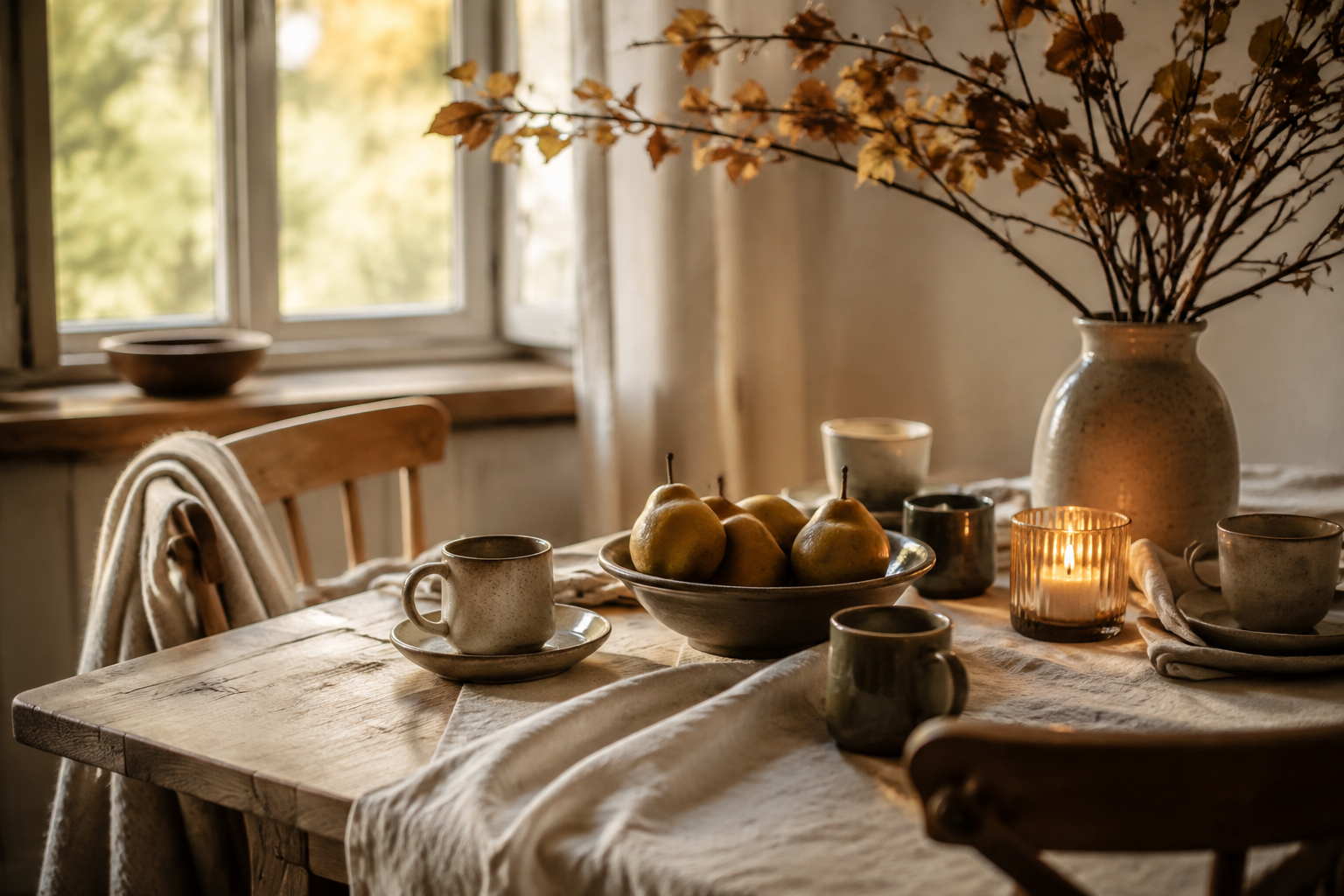
Seasonal living can be quiet. A few small changes are enough to help the house notice that the light, air, and pace outside are shifting.
You do not need a new collection of decorations every few months. The most convincing seasonal homes respond to what is actually happening outside: the available light, the temperature, the food in season, and the way daily routines begin to change.
Start by noticing the shift
Before changing the house, pay attention to what feels different. Perhaps mornings are darker, the afternoon sun reaches farther into the room, or everyone is spending more time near the windows. A seasonal update works best when it responds to those small observations.
Walk through the main living spaces and ask what would make them more comfortable now. You may need a throw near the sofa, a better lamp beside a chair, or a clear place for wet shoes. Practical changes often create a stronger seasonal feeling than decorations do.
1. Bring in what the season offers
Begin with something natural and ordinary: a bowl of pears, clipped branches, herbs from the market, small blossoms, or a handful of colorful leaves. These simple things create a sense of season without asking you to redecorate the room. For more ideas, browse the Seasonal collection.
Use what is genuinely available where you live rather than trying to recreate an image from a different climate. A branch in a tall vase can feel just as intentional as an elaborate floral arrangement, and a bowl of fruit can bring color to the kitchen while still being useful.
Keep natural arrangements simple
Choose one type of branch, flower, or foliage and give it enough space. Trim stems at different heights and let their natural shape lead the arrangement. If nothing suitable is available outdoors, a small potted herb or seasonal produce can bring the same sense of life.
2. Change the texture, not everything
Fold a heavier throw over a chair, trade crisp summer linen for something softly woven, or add one deeper color to the table. Keeping the foundation neutral makes these small transitions feel easy.
You only need to change the textiles that affect comfort. In colder months, that might mean a warmer blanket, a thicker bath mat, or cushions with more texture. In warmer weather, replace heavy layers with washable cotton or linen and leave more of the furniture visible.
Store the pieces you remove rather than layering every season together. A room feels calmer when each textile has a reason to be there. One useful throw usually adds more warmth than several decorative blankets that constantly need arranging.
3. Adjust the light for the hours you are actually home
Seasonal light changes the mood of a room even when nothing else moves. As evenings become darker, check whether the places you use after sunset have enough soft, useful light. A lamp near the sofa or a warmer bulb in a reading corner may matter more than another accessory.
During brighter seasons, clean the windows, pull curtains fully to the side, and move tall objects that block natural light. Position a mirror where it can reflect the room rather than glare directly into it. These small adjustments help the house follow the changing day.
Create an evening lighting rhythm
Turn on lamps before the room becomes completely dark. The transition feels gentler and signals that the pace of the day is changing. Use candles only where they can be supervised, and choose flameless candles when pets, children, or busy pathways make an open flame impractical.
4. Create an everyday ritual
Light a candle before dinner. Make tea in the afternoon. Open the windows for ten minutes in the morning. A seasonal home is shaped as much by repeated moments as by objects.
Choose a ritual that fits your actual schedule. It might be airing the bedrooms after waking, setting out breakfast the night before, watering plants on Saturday mornings, or putting on music while dinner cooks. The ritual does not need to be picturesque; it needs to make the day feel better.
Keep the supplies for that ritual together. Place tea near the favorite mugs, matches beside the candle, or a small tray near the chair where you read. When a pleasant habit is easy to begin, it is more likely to become part of the season.
5. Set a simple seasonal table
A wooden table, everyday ceramics, a linen cloth, and something gathered from outdoors are plenty. Leave room for serving dishes, elbows, and conversation. Hospitality feels warmest when it is relaxed.
Let one element carry the seasonal color: napkins, fruit, flowers, or a small serving bowl. The rest can remain familiar. This approach works for an ordinary weeknight as well as a gathering, and it keeps the table from feeling themed.
For a more detailed guide, see how to set a table that feels thoughtful without becoming formal.
The season does not need to arrive all at once. Let it enter the house slowly.
Reset one practical area for the weather ahead
A seasonal home also works differently. Make room for umbrellas before rainy weeks, move sunscreen closer to the door in summer, or bring extra blankets where they will actually be used. Check that the entryway can handle the shoes and outerwear the next few months will require.
This practical reset prevents seasonal items from becoming clutter. It also makes the home feel prepared, which is often the quiet comfort people are looking for when they decorate for a new season.
Use scent with restraint
Scent can make a room feel different immediately, but it should not overwhelm the people living there. Begin with natural sources such as fresh air, herbs, citrus peel, coffee, or something cooking. If you use a candle or diffuser, keep the fragrance subtle and avoid combining several scents in one area.
Freshness matters first. Empty bins, wash soft furnishings when needed, and open windows before adding fragrance. A clean, lightly scented room feels more welcoming than a strong seasonal product covering stale air.
Edit before you add
Before placing seasonal objects, remove anything that no longer feels useful or timely. Store it carefully, donate it if it no longer suits the home, or move it to another room where it has a purpose.
This small edit keeps the house from accumulating layers of decor. It also creates the visual breathing room that allows one branch, candle, or textile to make an impact.
Choose one thing for this week
Pick the idea that sounds most inviting and begin there. Put branches in a vase, change the throw on the sofa, adjust the lamps, or create one simple evening ritual. Seasonal living is not another list to complete; it is a way of paying attention to the days you are already living.
Keep creating a welcoming home
For another small project that makes everyday life easier, try this simple entryway system. If you are preparing for cooler weather, explore ways to make a home feel like fall without filling it with pumpkins.
Translate the season instead of copying a calendar
Seasonal advice should follow local weather and household routines, not assume that every reader experiences the same temperature in the same month. A warm-climate rainy season may call for airflow, an umbrella zone, and washable mats. A cold transition may require task lighting, outerwear storage, and warmer bedding.
| Change you notice | Useful home response |
|---|---|
| Earlier darkness | Review task lighting and safer walking paths |
| More rain or mud | Create a washable landing zone and drying plan |
| Hotter afternoons | Adjust shade, ventilation, and lighter textiles |
| Cooler nights | Place one useful layer where people sit or sleep |
| More time indoors | Improve one reading, play, or shared-meal area |
A five-sense seasonal audit
- Sight: Is the available light changing, and are windows or lamps supporting it?
- Touch: Are the textiles comfortable for the current temperature?
- Sound: Would an open window, quieter evening, or familiar music improve the routine?
- Smell: Does the room need fresh air and cleaning before fragrance?
- Taste: Which genuinely seasonal food could become part of an ordinary meal?
Choose one practical adjustment and one enjoyable ritual. That is enough to mark a transition without creating a new decorating project.
Store seasonal pieces as a small system
Label containers by season or function, protect fragile items, and record what is inside. Keep the collection within a fixed amount of storage. When a new seasonal object enters, consider whether an unused one should leave.
At the end of the season, note what was actually used. This prevents the same unnecessary objects from being unpacked and stored year after year.
A 30-minute seasonal reset
- Observe the current light, temperature, and entryway needs.
- Remove one item that belongs to the previous season.
- Move one useful textile or tool into reach.
- Adjust one lamp, curtain, or window routine.
- Add one natural element or food ritual.
- Stop before the transition becomes a shopping list.
How this guide was developed: Unlike the dedicated fall-decor guide, this framework works across climates, hemispheres, and seasons. It uses changes in light, weather, comfort, food, and routine as the evidence for what the home needs. Reviewed October 13, 2026.