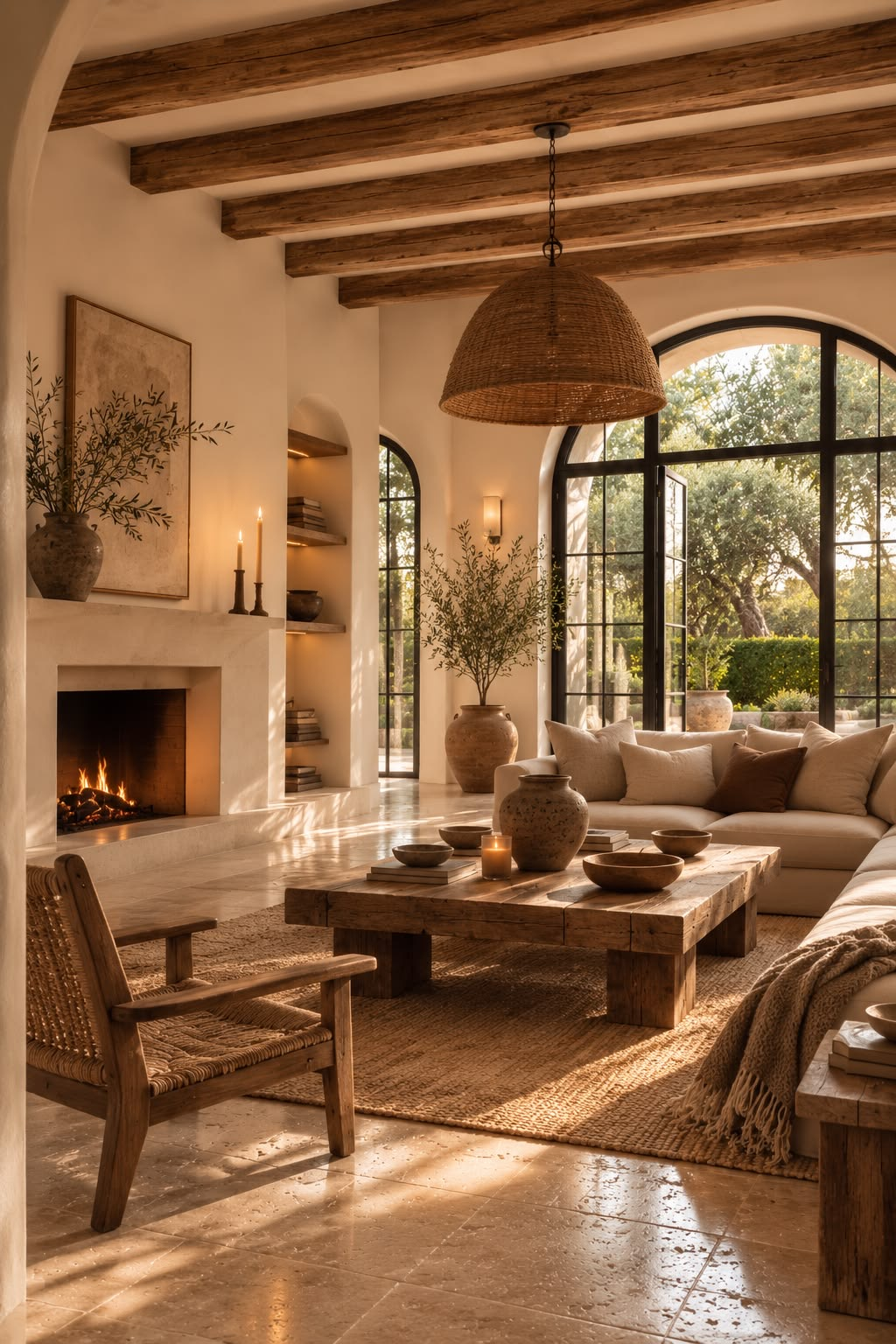
Flooring is one of those decisions that quietly shapes an entire home.
It changes how warm a room feels, how light moves through the space, how furniture looks against it, and even how relaxed or polished the house feels.
And unlike a pillow, a lamp, or a paint color, flooring isn’t something most of us want to replace every few years.
That’s why choosing a floor shouldn’t be based only on how beautiful it looks the day it’s installed.
The better question is:
How will this floor feel to live with — now, and years from now?
Here’s how to think about wood vs. porcelain, light vs. dark floors, warm vs. cool tones, and which choices tend to age the most gracefully.
Editorial note: this guide compares material behavior and design tradeoffs. Product specifications, subfloor conditions, installation methods, climate, and manufacturer instructions can change the result, so confirm the final choice with the flooring manufacturer and a qualified installer.
Wood vs. Porcelain at a Glance
| Decision factor | Wood flooring | Porcelain tile |
|---|---|---|
| Feel underfoot | Warmer and slightly more forgiving | Harder and usually cooler |
| Water exposure | Requires prompt cleanup and moisture control | Tile body is highly water-resistant; grout and the installation assembly still matter |
| Scratches and dents | Possible, depending on species, finish, and use | Surface is highly resistant, although tiles can chip or crack |
| Repair options | Some damage can be touched up; many wood floors can be refinished | Individual tiles can be replaced if matching spares are available |
| Visual aging | Can develop patina and color change | Changes little, so the original pattern choice remains visible |
| Installation sensitivity | Moisture, acclimation, and expansion planning | Flat substrate, movement accommodation, mortar coverage, and grout |
| Best fit | Living spaces where warmth and repairability matter | Wet, high-traffic, or indoor-outdoor areas where durability matters |
Start With Your House, Not the Trend
Before choosing a material or color, look at the home itself.
A floor should make sense with the architecture, the amount of natural light, the climate, and the way you actually live.
Think about:
- How much sunlight the rooms receive
- Whether the home feels traditional, modern, rustic, Mediterranean, coastal, or contemporary
- Whether you have children or pets
- How much maintenance you realistically want
- Whether the same flooring will run through several rooms
- How often the space gets wet, dirty, or heavily used
A beautiful floor that fights against the house will always feel slightly off.
The goal is to choose something that looks as though it naturally belongs there.
Wood Flooring
“Wood flooring” is not one single product. The construction determines where it can be installed, how it responds to moisture, and how many times it may be refinished.
Solid vs. Engineered Wood
Solid wood is one piece of wood from top to bottom. It can often be sanded and refinished multiple times, but it expands and contracts more as indoor humidity changes.
Engineered wood has a real-wood wear layer over multiple supporting layers. It generally moves less than solid wood and may suit basements or installations where dimensional stability matters. Refinishing potential depends on the thickness of its wear layer—not simply on the word “engineered.”
The National Wood Flooring Association’s material guide makes the same distinction and recommends choosing by construction as well as appearance.
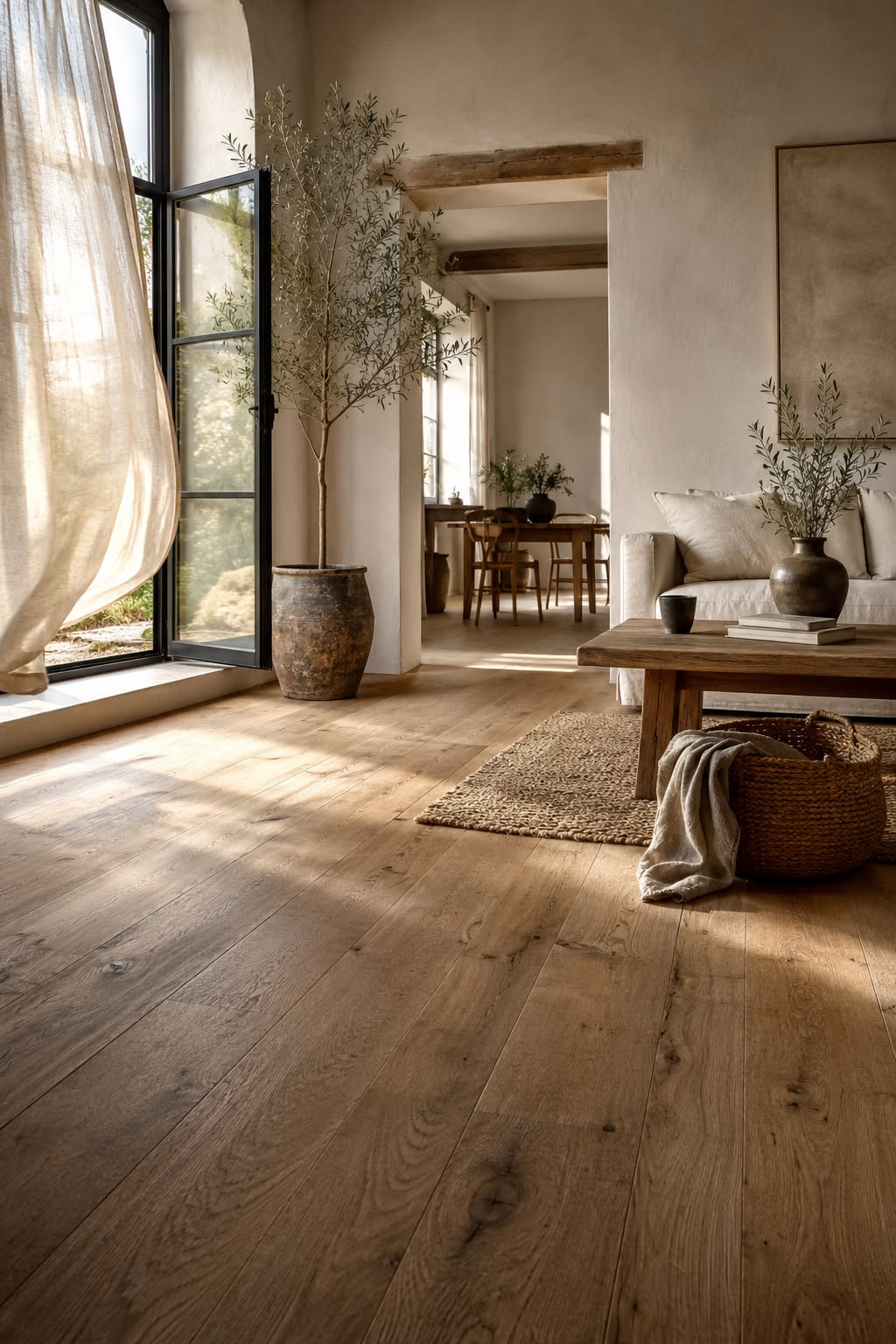
Few materials make a home feel as warm and inviting as wood.
It adds natural variation, softness, and character in a way that is difficult to reproduce perfectly with another material.
How Wood Feels When It’s New
Freshly installed wood flooring can completely transform a home.
It immediately adds warmth and tends to make rooms feel more finished, comfortable, and expensive.
Because every plank has slight differences in grain and tone, the floor also feels less flat than many manufactured surfaces.
Light oak, medium warm woods, and slightly matte finishes tend to work especially well in relaxed, timeless interiors.
How Wood Feels Years Later
This is where wood becomes interesting.
Wood does not stay perfectly new.
It can scratch, develop small dents, change slightly in color, and show signs of everyday life.
But that isn’t necessarily a disadvantage.
In the right home, those changes can make the floor feel better rather than worse.
Natural materials often develop a patina, which gives them the character of something that has been lived with rather than simply installed.
A slightly worn oak floor can still feel beautiful ten or twenty years later.
The key is accepting that wood ages rather than expecting it to remain flawless.
Wood Is Best If You Want…
- A warm and natural feeling
- A softer look
- Timeless interiors
- A material that develops character
- A floor that works beautifully with linen, stone, plaster, wool, and other natural textures
Things to Consider
Wood reacts to its environment. In humid conditions it can gain moisture and swell; in dry conditions it can shrink, gap, or split. The National Wood Flooring Association recommends maintaining indoor conditions around 60–80°F and 30–50% relative humidity year-round to reduce movement. See its moisture and scratch-prevention guidance.
Finish matters too. Lower-sheen finishes generally make small scratches and ordinary wear less noticeable, while factory-applied finishes and site-applied finishes offer different repair and customization options.
- Ask whether the product is solid, engineered, or composite engineered wood.
- For engineered flooring, ask for the wear-layer thickness and refinishing guidance.
- Confirm whether the installation is approved for the room, subfloor, and radiant-heating system.
- Request the manufacturer’s humidity range, cleaning instructions, and warranty exclusions.
- If the product contains a composite core and is sold in the United States, look for applicable TSCA Title VI compliance labeling.
Porcelain Flooring
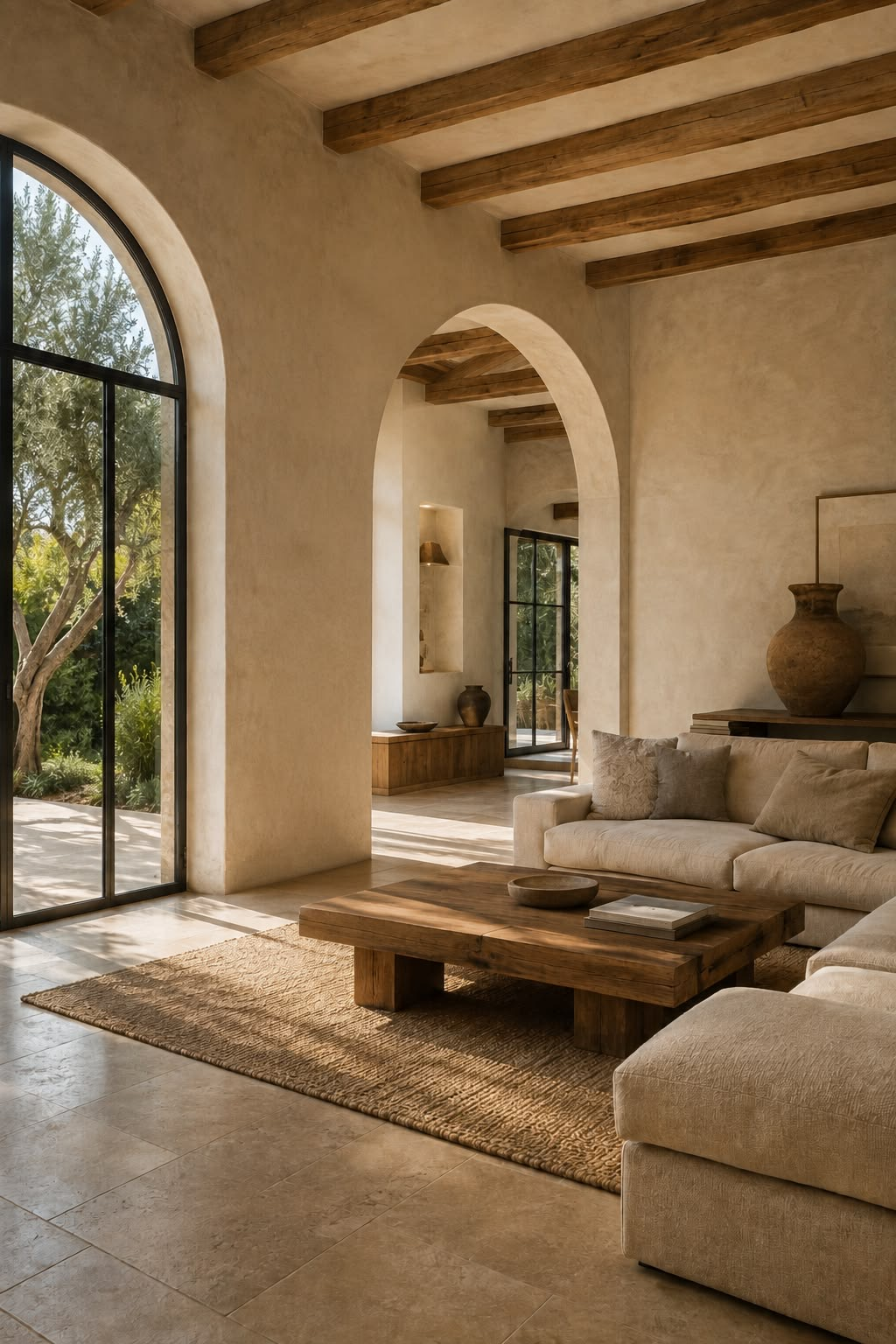
Porcelain can be the more practical choice, particularly in homes where durability matters.
Porcelain is a technical classification, not only a visual description. Under the North American standard summarized by the Tile Council of North America, porcelain tile has water absorption of 0.5% or less when tested under ASTM C373.
That low absorption makes the tile body highly resistant to water, but it does not make every tiled floor automatically waterproof. Grout, movement joints, substrate preparation, waterproofing in wet areas, and the quality of installation all affect performance.
Modern porcelain also comes in far more convincing finishes than it once did, including stone, limestone, concrete, and wood-look designs.
How Porcelain Feels When It’s New
New porcelain can look incredibly clean and polished.
Large-format tiles with minimal grout lines can create a seamless, architectural feeling, especially in contemporary, Mediterranean, or warm minimalist homes.
Stone-look porcelain can also give you much of the visual effect of natural stone with easier maintenance.
However, porcelain tends to feel visually harder and physically cooler than wood.
That can be beautiful in the right house, but it creates a very different atmosphere.
How Porcelain Feels Years Later
One of porcelain’s biggest strengths is how little it changes.
It resists water, stains, scratches, and everyday wear extremely well.
Ten years later, a good porcelain floor can look surprisingly similar to the day it was installed.
But there is another side to that.
Because porcelain itself doesn’t develop much patina, the style you choose matters enormously.
A very trendy tile pattern or color may remain physically perfect long after the trend itself has passed.
That’s why simple porcelain usually ages better than highly distinctive designs.
Porcelain Is Best If You Want…
- Low maintenance
- Excellent durability
- Easy cleaning
- Resistance to water and stains
- A good option for kitchens, bathrooms, entries, and busy family homes
- A stone-like appearance without some of the maintenance of natural stone
Wood vs. Porcelain: The Feeling Is Different
This is probably the most important distinction.
Wood makes a room feel warmer.
Porcelain makes a room feel cleaner and more architectural.
Neither is automatically better.
They simply create different moods.
A large open-plan home with lots of natural light might look beautiful with warm limestone-look porcelain.
A cozy family home might feel much more inviting with oak running through the living spaces.
Try to imagine not just the empty room, but the finished room:
the sofa, the rug, the curtains, the table, the lighting.
The floor is the background for all of it.
Light Floors vs. Dark Floors
Color can completely change how a room feels.
Light Floors
Light oak, pale beige stone, soft limestone, and warm ivory porcelain can make a room feel larger and more relaxed.
They reflect more light and generally create an airy feeling.
They’re especially useful in:
- Smaller homes
- Rooms with limited natural light
- Coastal interiors
- Organic modern spaces
- Scandinavian-inspired homes
- Warm minimal interiors
Light flooring is also relatively forgiving when it comes to everyday dust.
But extremely pale floors can sometimes make a space feel washed out if everything else in the room is also light.
The solution is usually contrast through wood, textiles, greenery, and darker accents.
Medium-Tone Floors
Medium floors are often the safest long-term choice.
Think natural oak, honeyed wood, warm taupe stone, or softly aged limestone.
They provide enough contrast to anchor a room without dominating it.
Medium tones also work with a wider range of furniture styles.
If you’re unsure which direction your decor might take over the years, a medium natural floor gives you flexibility.
Dark Floors
Dark walnut, deep brown wood, charcoal tile, and dark stone can look dramatic and sophisticated.
They create contrast and can make a room feel more intimate.
But dark floors have a few practical realities.
They often show:
- Dust
- Pet hair
- Scratches
- Crumbs
- Water marks
more easily than medium-toned floors.
They can also visually shrink a room if there isn’t enough natural light.
Dark flooring works best when the house itself can support the drama.
Warm or Cool Undertones?
Undertone matters almost as much as the actual color.
A beige floor can lean warm and creamy or cool and gray.
A wood floor can lean golden, neutral, red, or gray.
For most homes, slightly warm or neutral undertones are easier to live with long term.
Warm floors pair naturally with:
- Cream walls
- Warm whites
- Wood furniture
- Brass
- Terracotta
- Natural stone
- Linen
- Olive and muted green
Very gray floors became extremely popular for a period of time, but they can be harder to integrate with warmer materials.
If your goal is timelessness, natural tones usually give you more flexibility than highly gray or heavily colored finishes.
Think About What Will Age — Not Just What Will Wear
There are really two kinds of aging.
Physical aging is scratches, marks, fading, or wear.
Visual aging is when something starts to feel dated.
Wood may physically age more than porcelain.
But a simple natural wood floor can remain visually relevant for decades.
Porcelain may remain physically perfect for years.
But a very specific trendy pattern can eventually reveal exactly when the house was renovated.
That’s why durability isn’t only about the material.
It’s also about the design.
What About Wood-Look Porcelain?
Wood-look porcelain can be a useful middle ground.
It offers the durability of tile with some of the warmth and visual rhythm of wood.
It can work particularly well in:
- Wet climates
- Kitchens
- Mudrooms
- Homes with pets
- High-traffic areas
- Indoor-outdoor living spaces
The biggest factor is realism.
Look for variation between tiles, subtle grain, matte finishes, and realistic plank dimensions.
If every plank repeats the same pattern, the illusion disappears quickly.
A very convincing wood-look tile can be practical and attractive.
But if what you truly love is the feel and aging of natural wood, porcelain will never behave exactly the same way.
A Lower-Commitment Option: Peel-and-Stick Vinyl
Affiliate disclosure: As an Amazon Associate, we earn from qualifying purchases. If you buy through the link below, we may earn a commission at no extra cost to you.
If you love the warmth of wood flooring but are not ready for the cost or commitment, peel-and-stick vinyl planks can be a practical way to test the look before investing in permanent materials.
One option worth comparing is Art3d’s collection of wood-look peel-and-stick flooring, which includes several tones and finishes. This type of flooring can make sense for a temporary refresh, a rental with the owner’s permission, or a lower-budget room update.
It works best over a clean, smooth, dry surface. Unevenness, moisture, dust, or movement underneath can affect adhesion and make the final result look less convincing.
Peel-and-stick vinyl will not offer the same feel, lifespan, repairability, or resale value as real wood or porcelain. Before covering an entire room, test a piece in an inconspicuous area, check the instructions for the exact surface, and consider how easily the adhesive may need to be removed later.
Consider Continuity Between Rooms
One of the easiest ways to make a home feel larger and calmer is to avoid changing flooring too frequently.
Running the same floor through connected spaces creates visual continuity.
Living room, dining room, hallway, and kitchen often feel more generous when the flooring flows naturally between them.
Of course, bathrooms and other wet areas may need a different material.
When changing floors, try to make the transition feel intentional rather than accidental.
Similar undertones can help different materials relate to each other.
A Decision Framework for Different Homes
These are starting points, not universal prescriptions. The best answer changes with climate, structure, budget, and tolerance for maintenance.
Choose wood when…
- You value warmth underfoot and natural variation.
- The main living spaces stay reasonably dry and climate-controlled.
- You prefer a surface that may be repaired or refinished instead of remaining visually unchanged.
- You accept that dents, color change, and small scratches can become part of the floor’s patina.
Choose porcelain when…
- Water, mud, pets, or heavy traffic are daily concerns.
- You want stone, concrete, or wood visuals with minimal material movement.
- The floor will extend through kitchens, entries, bathrooms, or indoor-outdoor areas.
- You are comfortable with a harder surface and with maintaining grout lines.
Consider a mixed-material plan when…
Many homes do not need one answer everywhere. Wood can make bedrooms and living areas feel comfortable, while porcelain handles entries, utility rooms, bathrooms, and other wet zones. The transitions look most intentional when both materials share compatible undertones and meet cleanly at planned thresholds.
Compare the Installed Cost, Not the Box Price
Material price alone gives an incomplete comparison. Ask for an installed quote that identifies:
- Removal and disposal of the existing floor
- Subfloor repair, leveling, or moisture mitigation
- Underlayment, adhesives, mortar, grout, and sealants
- Labor for layout, cuts, stairs, transitions, and baseboards
- Delivery, acclimation, and installation waste
- Future refinishing, grout maintenance, or replacement labor
Porcelain installation can become expensive when the substrate needs extensive flattening or when a large-format layout requires more labor. Wood costs can rise with moisture mitigation, stair work, premium wear layers, or site finishing. Two products with similar shelf prices may produce very different final quotes.
The Floor Test
Before making the final decision, don’t judge a flooring sample by itself.
Place it in the actual room.
Look at it:
in the morning,
in afternoon light,
at night under your artificial lighting,
next to your wall color,
and beside the wood tones already in the home.
Then imagine the entire floor covered in it.
A sample that looks subtle in your hand can become much more yellow, gray, dark, or patterned once it covers hundreds of square feet.
Technical Sources and Further Reading
- National Wood Flooring Association: Types of Wood Floors
- National Wood Flooring Association: Moisture and Scratch Prevention
- National Wood Flooring Association: Wood Floor Finishes
- Tile Council of North America: Porcelain vs. Non-Porcelain
- U.S. EPA: Formaldehyde Standards for Composite Wood Products
Last editorial review: October 13, 2026. Always follow the current specifications for the exact flooring product and installation system you are considering.
The Best Floor Is the One You’ll Still Like When It Stops Looking New
The perfect floor isn’t necessarily the one that looks most impressive in a showroom.
It’s the one that works with your home, your lifestyle, and the way you want your spaces to feel.
Choose a material you understand.
Choose a color that complements the house.
And most importantly, think beyond installation day.
Because the best homes don’t only look beautiful when they’re finished.
They become better as people actually live in them.