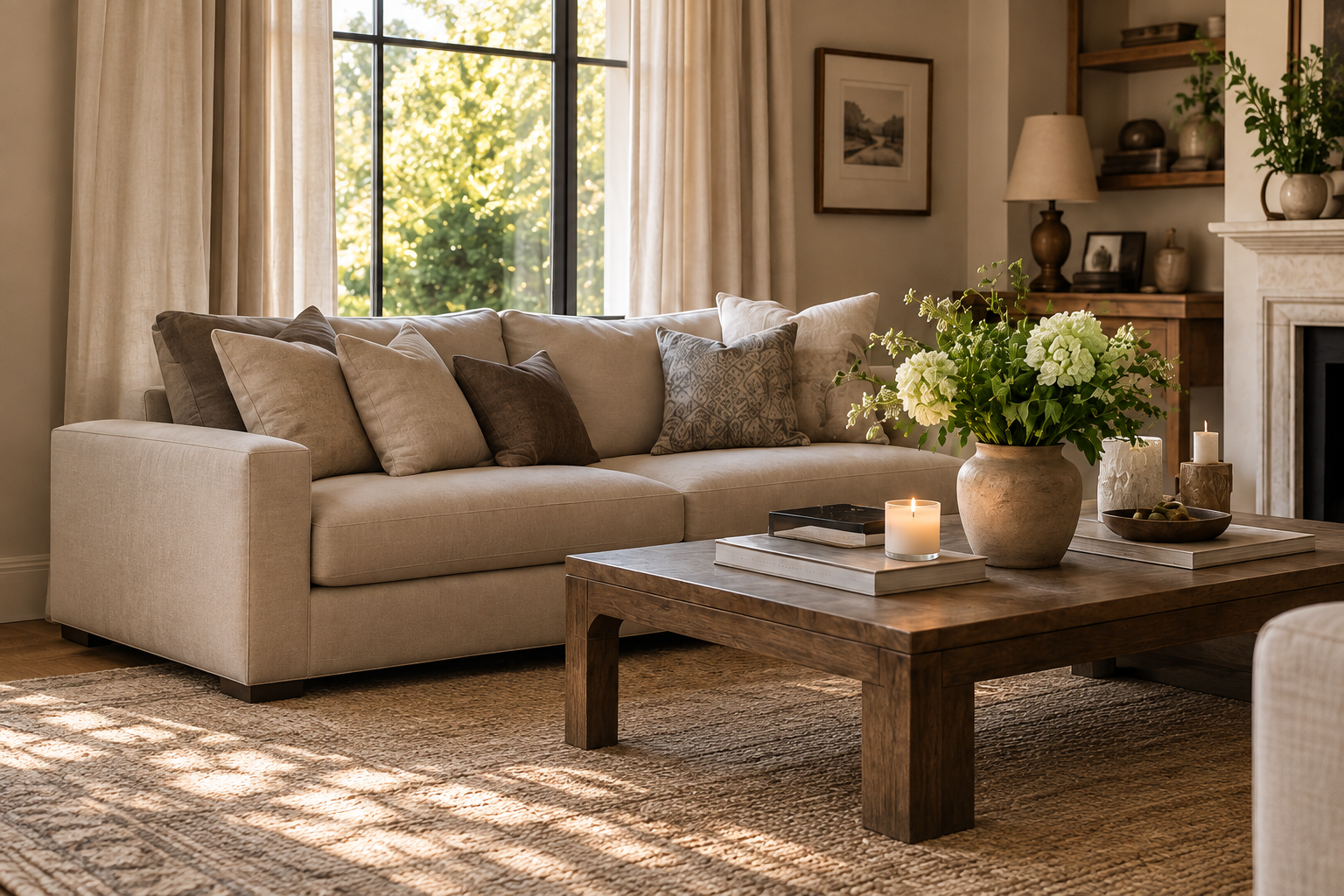
A room rarely feels unfinished because it lacks ten more objects. More often, it needs one of four things: better scale, softer light, useful texture, or a focal point that gives the eye somewhere to rest.
This guide is not a shopping list. Use it as a diagnostic tool: identify what the room is missing, then choose the smallest number of accessories that solve that specific problem.
Before buying anything: diagnose the room
| If the room feels… | It may need… | Try first |
|---|---|---|
| Flat or cold | Texture and warm light | A rug, curtains, or one textile layer |
| Small or dim | Better light distribution | A well-placed mirror and lamps—not more clutter |
| Disconnected | A visual anchor | A correctly sized rug or substantial art/mirror |
| Busy | Editing and containment | Remove small objects; group useful items on a tray |
| Generic | Personal history or variation | Books, handmade pieces, collected objects, or meaningful art |
Measure the surface or floor area, photograph the room straight on, and note what is already present. This prevents buying an attractive object that repeats a function the room already has.
1. A sculptural vase: shape without visual noise
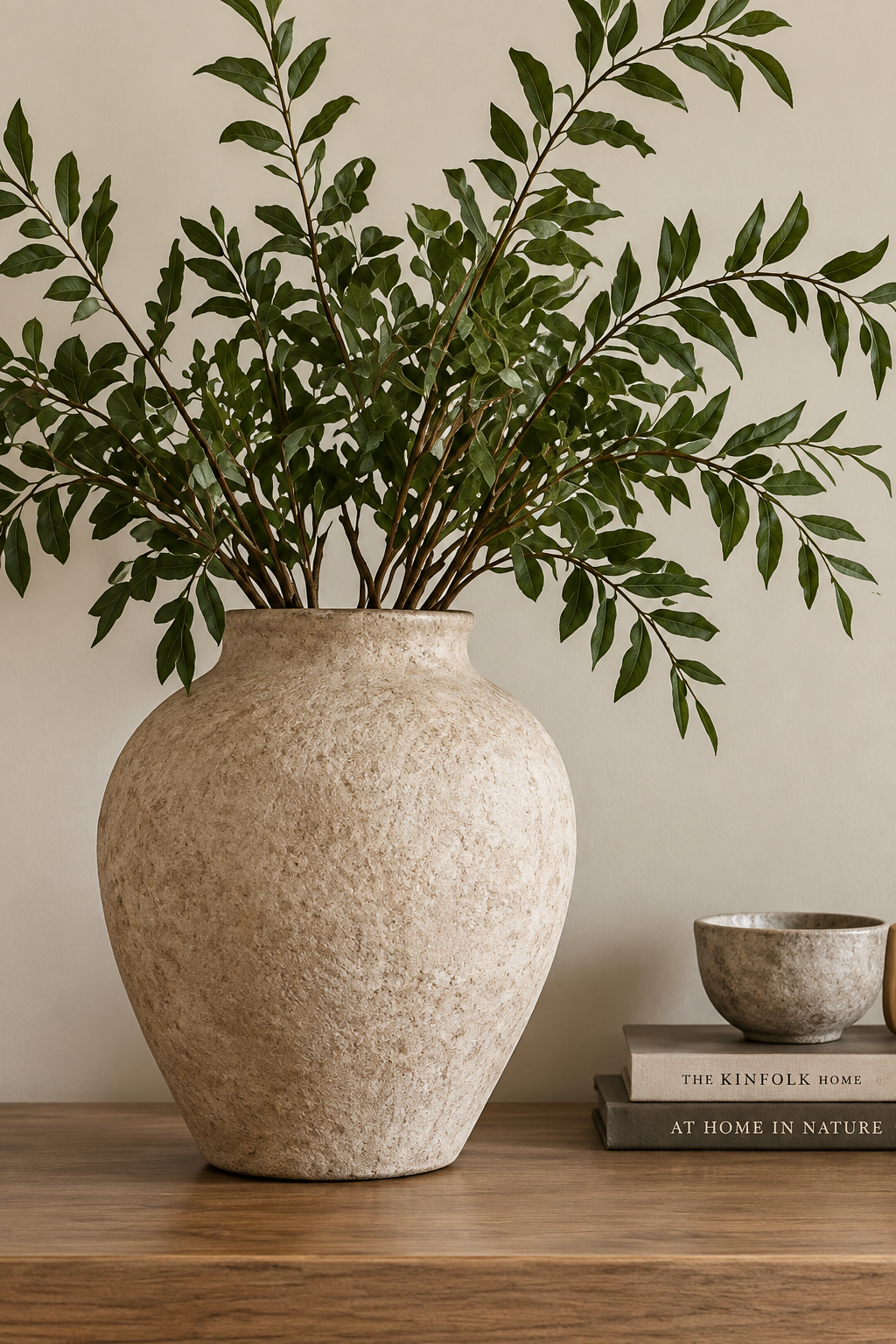
A vase can add height, an organic outline, and a break from rectangular furniture—even when empty. The useful question is not whether the vase is beautiful by itself, but whether its silhouette and scale improve the entire surface.
Choose it well: mock up the height with a bottle or rolled paper before buying. A large console can usually support one substantial form better than several tiny vases. Check the opening: narrow necks control a few branches; wide openings need more stems or a flower frog to avoid looking sparse.
Skip it when: the surface already has several decorative objects or needs to remain clear for daily use.
2. A mirror: useful only when it reflects something worth seeing
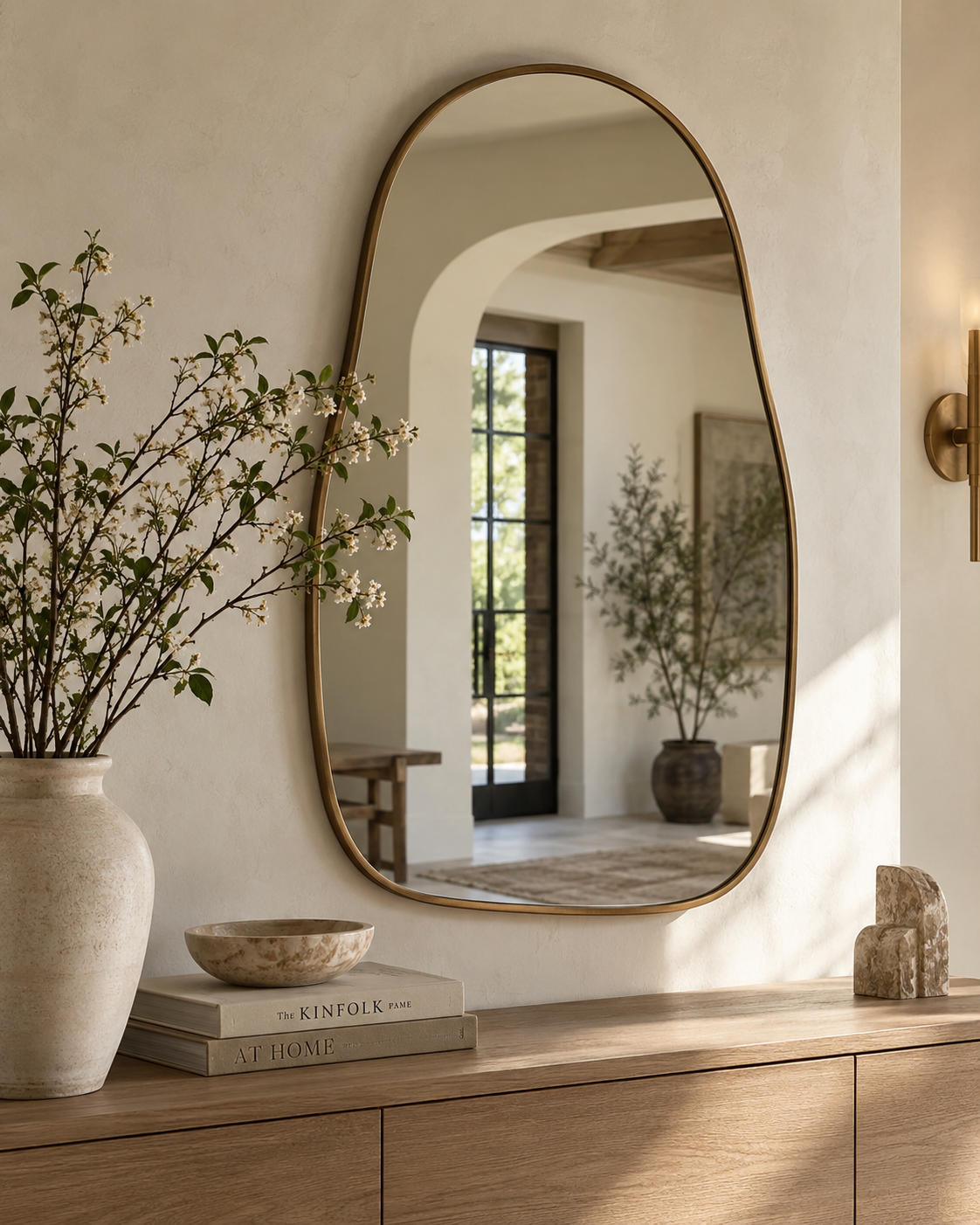
Mirrors can redirect daylight, create depth, and provide a focal point. Placement matters more than the frame. Before hanging one, stand where the mirror will be and check the reflection. A mirror that faces clutter, a blank wall, or harsh glare may make the room feel busier rather than brighter.
Above furniture, relate the mirror to the width and weight of the piece below it. Use painter’s tape to outline the proposed size. For leaning mirrors, secure them according to the manufacturer’s instructions—especially in homes with children or pets.
3. A table runner: softness with a practical job
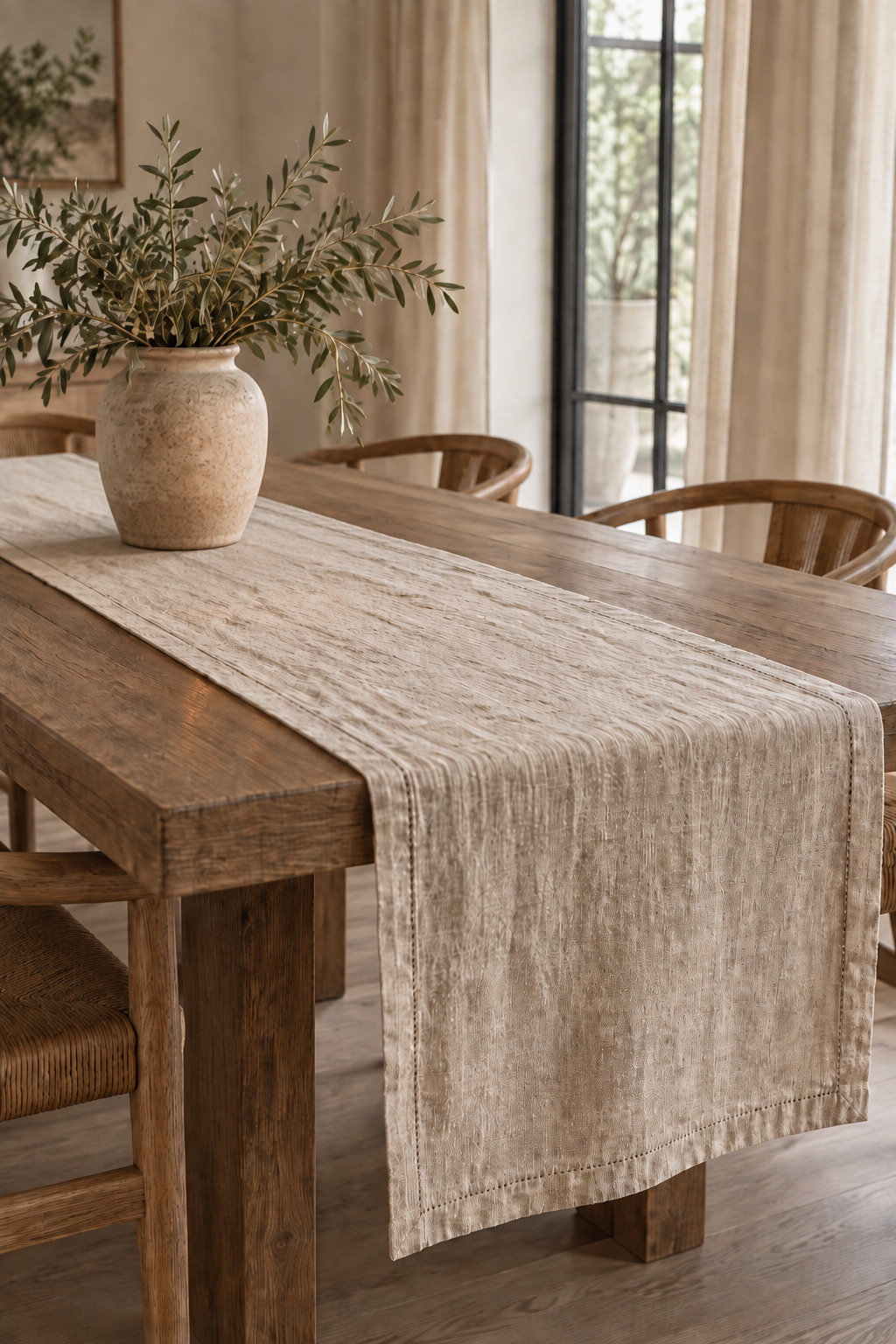
A runner introduces fabric without covering the entire table. It can also define a centerpiece zone and protect part of the surface. Choose one because it helps the way the table is used—not because every dining table is supposed to have one.
Measure both the tabletop and the desired drop. Linen and cotton relax with washing, while loosely woven fabrics may snag in busy households. If the table doubles as a desk, a runner that can be lifted in seconds is more practical than a complicated arrangement.
4. Candles and candleholders: atmosphere with safety limits
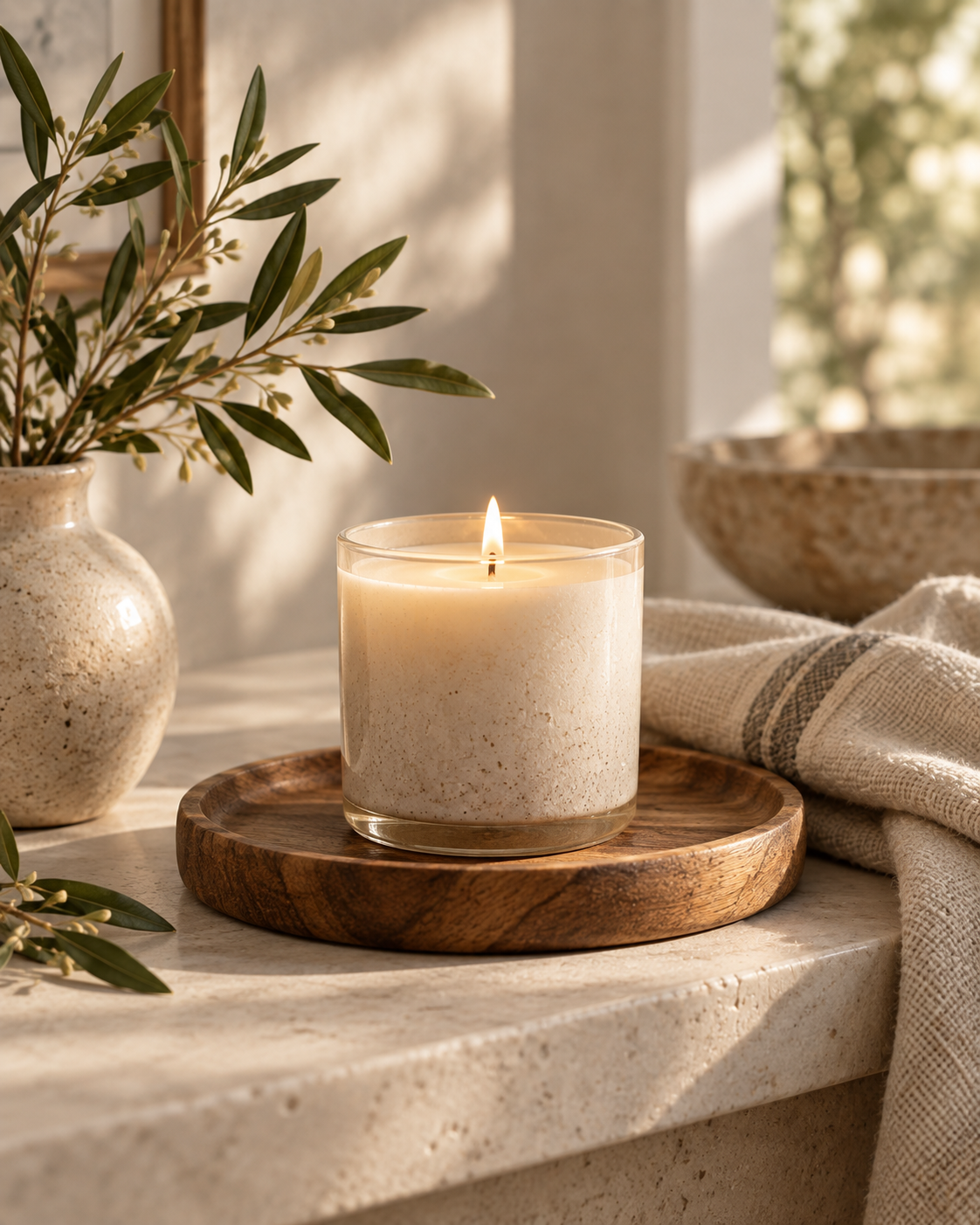
Candleholders add vertical rhythm; candles add a warm, low light source. Mix heights, but keep the grouping stable and leave enough negative space around it.
Keep open flames away from curtains, dried stems, shelves, drafts, children, and pets. Use heat-resistant holders on a stable surface and never leave burning candles unattended. In high-traffic locations, flameless candles can provide a similar visual layer without an exposed flame.
5. A correctly sized rug: the strongest visual anchor
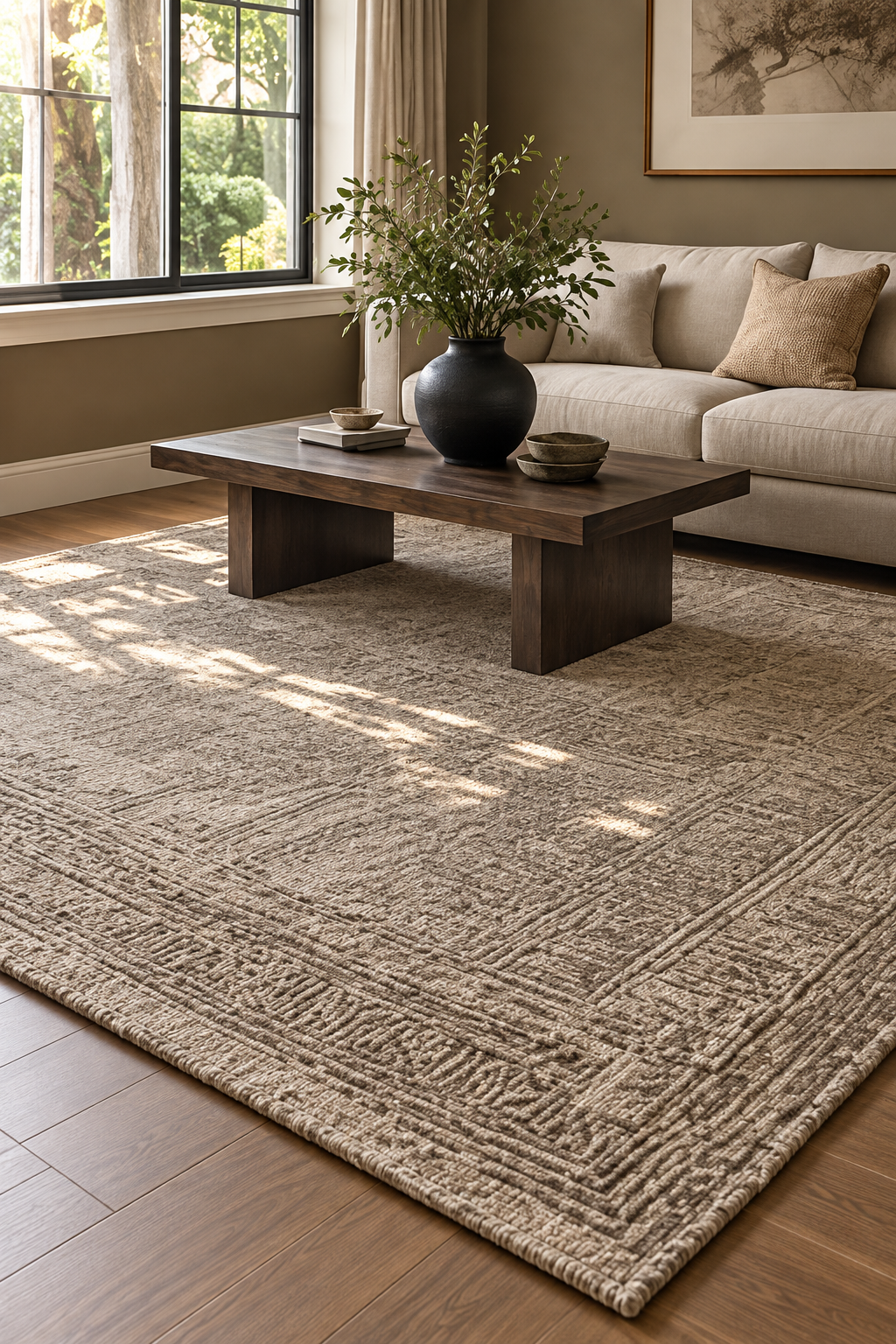
A rug is closer to a furnishing than a small accessory because it changes how every piece relates to the room. Size comes before color. In a living room, test whether the rug can visually connect the main seating rather than floating alone beneath the coffee table.
Mark the proposed dimensions on the floor with painter’s tape. Confirm door clearance, floor vents, walking paths, and whether dining chairs remain on the rug when pulled out. Choose fiber and pile according to cleaning needs, pets, wheels, and traffic—not only appearance. Use an appropriate nonslip pad where needed.
6. Curtains: light control, acoustics, and softness
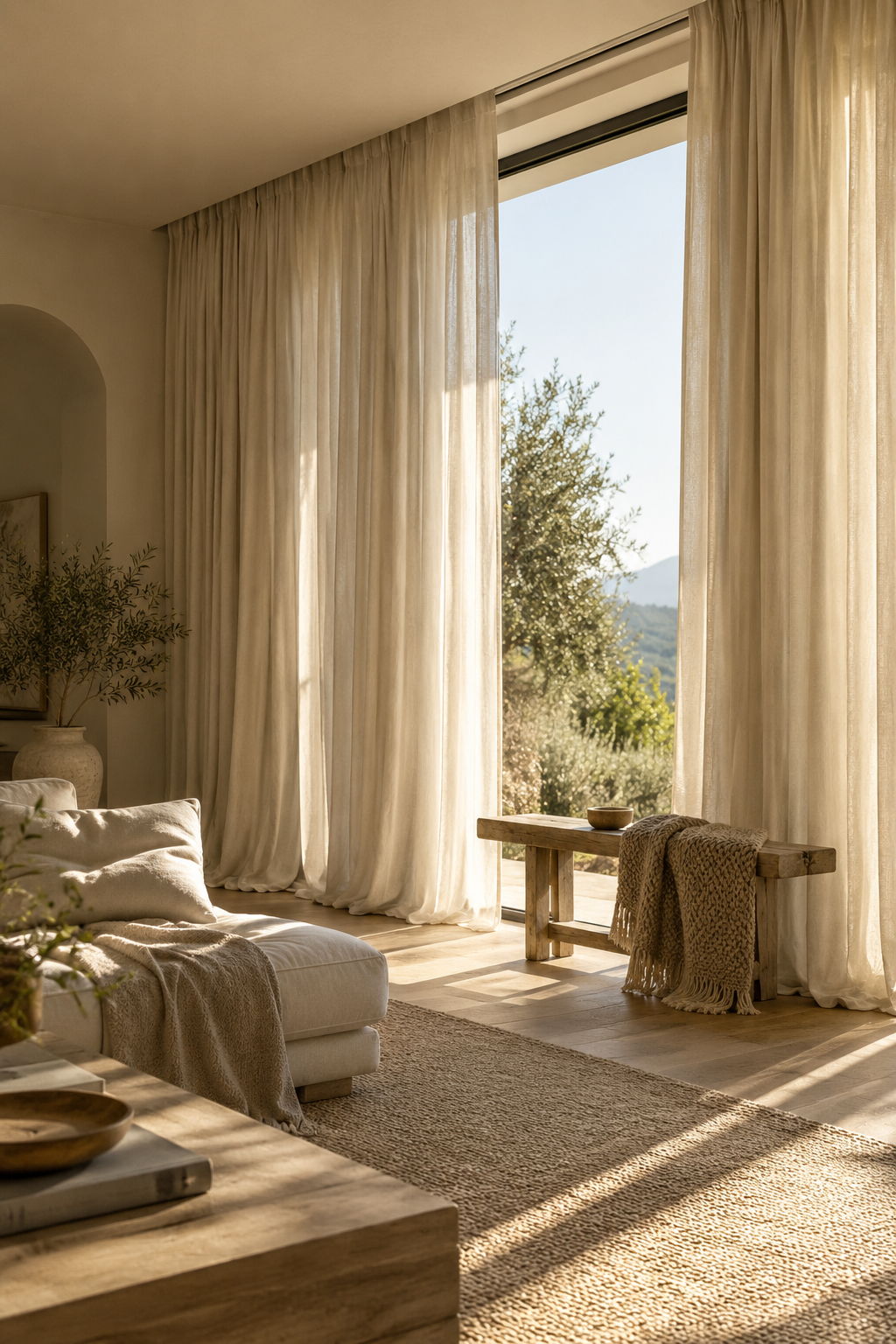
Curtains can soften hard surfaces, reduce glare, provide privacy, and make a window feel more intentional. Start with function: sheer filtering, privacy, insulation, or blackout. The required fabric and lining follow that decision.
Measure from the planned rod position—not from the top of the window. Check the panel’s actual width, because two narrow panels may technically cover a window but look flat when closed. Make sure long cords or hardware do not create a hazard, and follow installation instructions for the wall type.
7. Wood details: warmth without requiring a matching set
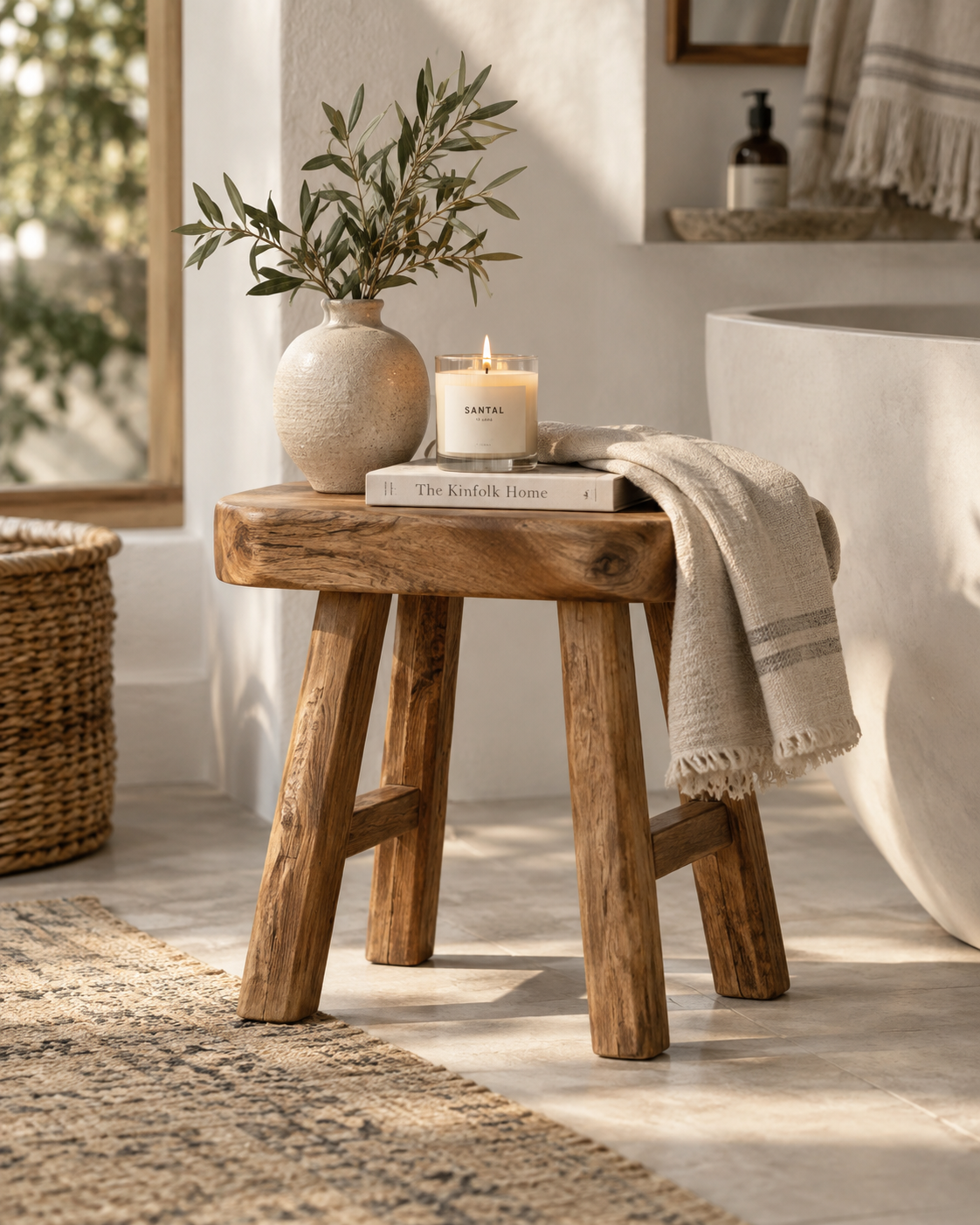
A wooden bowl, frame, stool, or tray can balance rooms dominated by white paint, stone, glass, or metal. Wood tones do not need to match exactly. They feel more coherent when they share an undertone or repeat in more than one location.
Prefer a piece with a purpose or a strong shape. Avoid scattering many small wood objects simply to make a room “warmer.” One useful stool or generous bowl creates more impact than a collection of miniature accessories.
8. Pillows and throws: texture before quantity
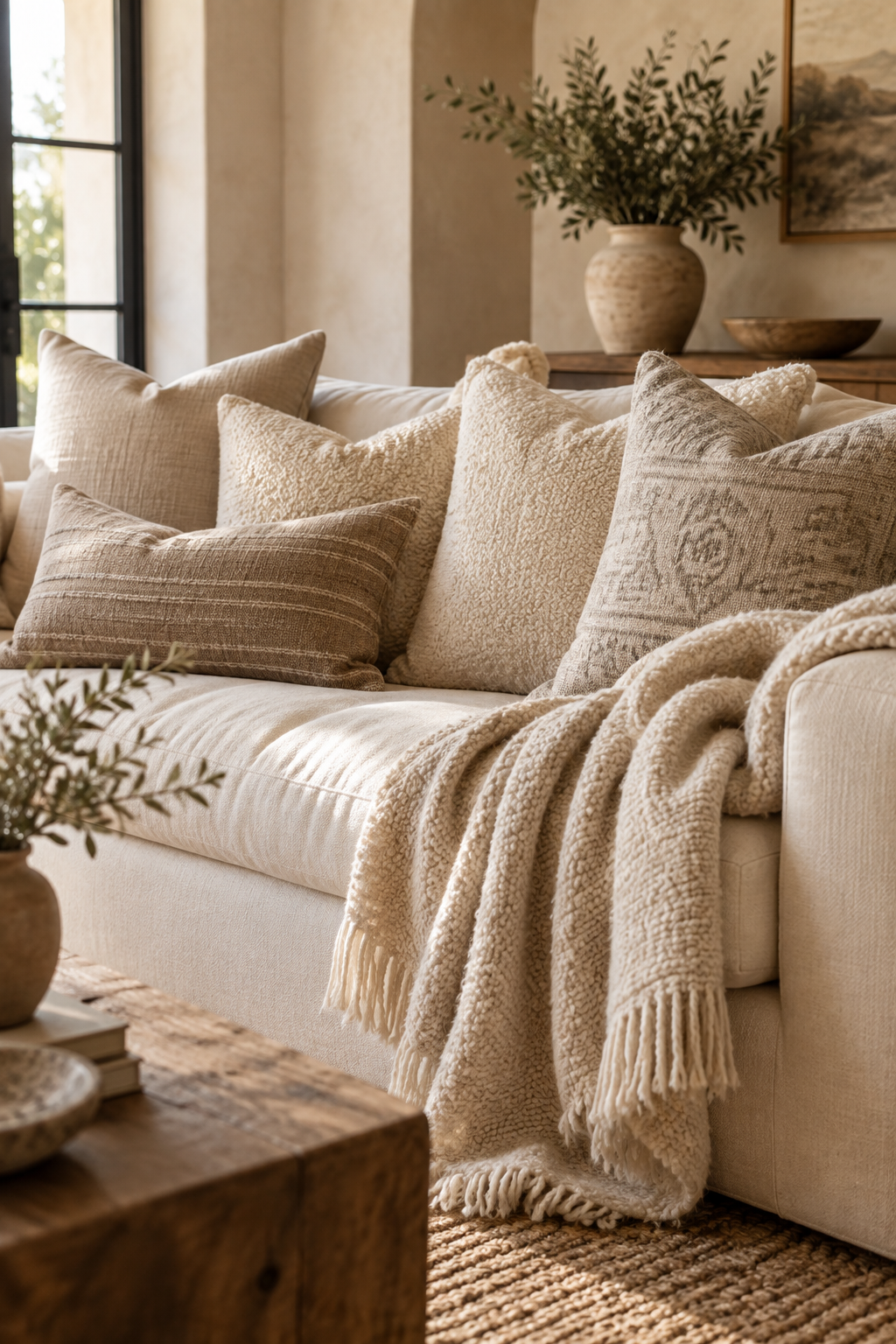
Textiles can make seating more comfortable and connect colors already in the room. Begin with how the sofa or bed is used. If pillows are moved to the floor every evening, there are probably too many.
Vary texture or scale rather than introducing unrelated colors, patterns, trims, and shapes at once. Removable, washable covers are valuable in homes with children, pets, allergies, or frequent guests. A throw should have an accessible storage place when it is not in use.
9. A tray: containment, not decoration for its own sake
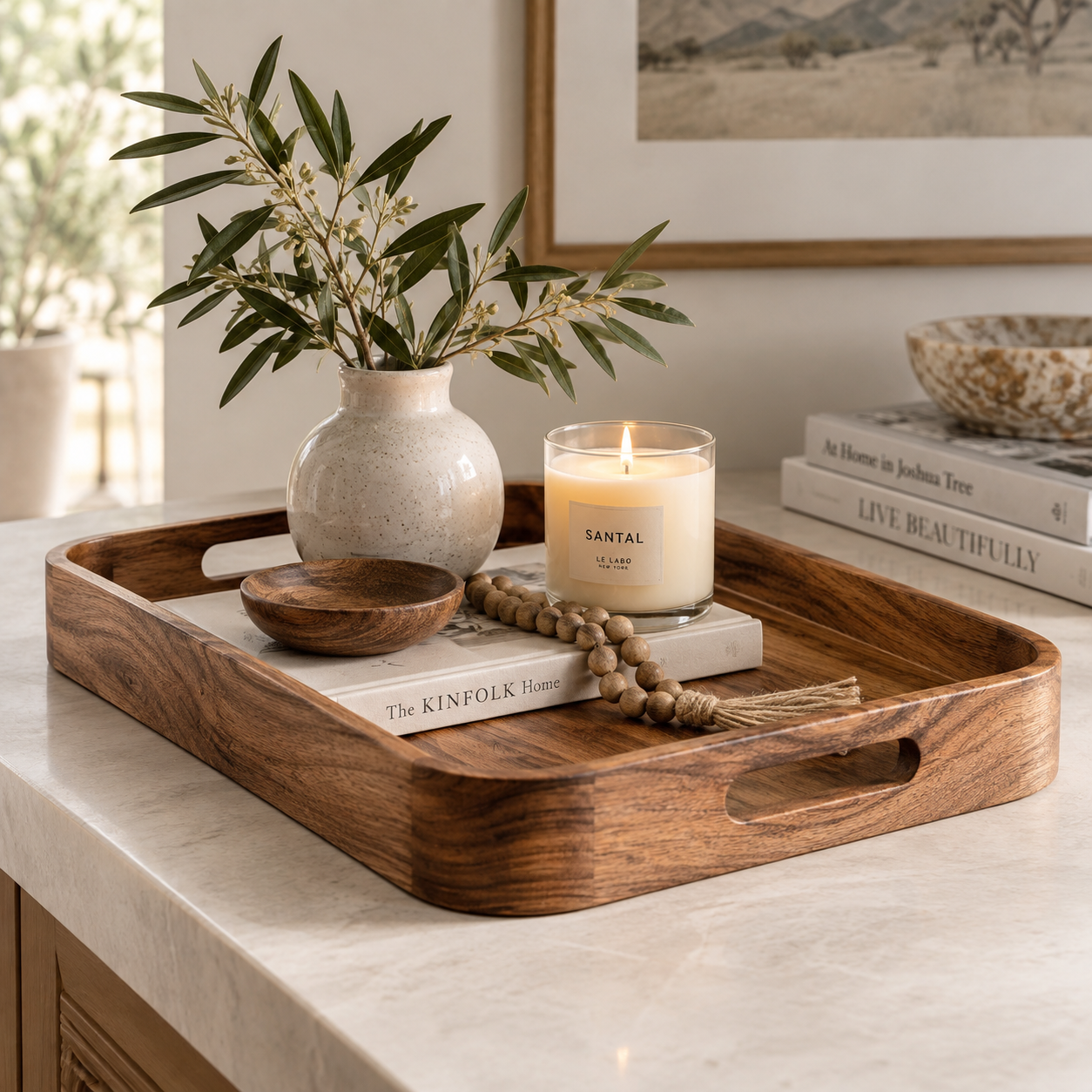
A tray earns its place when it gathers items that are regularly used: remotes, coasters, hand cream, keys, or coffee supplies. It creates a visible boundary, making a group easier to move and a surface easier to clean.
Choose a size that contains the necessary objects without consuming the whole table. A tray filled with decor can become clutter with a border, so leave part of it empty and remove objects that serve neither use nor meaning.
10. Flowers, branches, or one living element
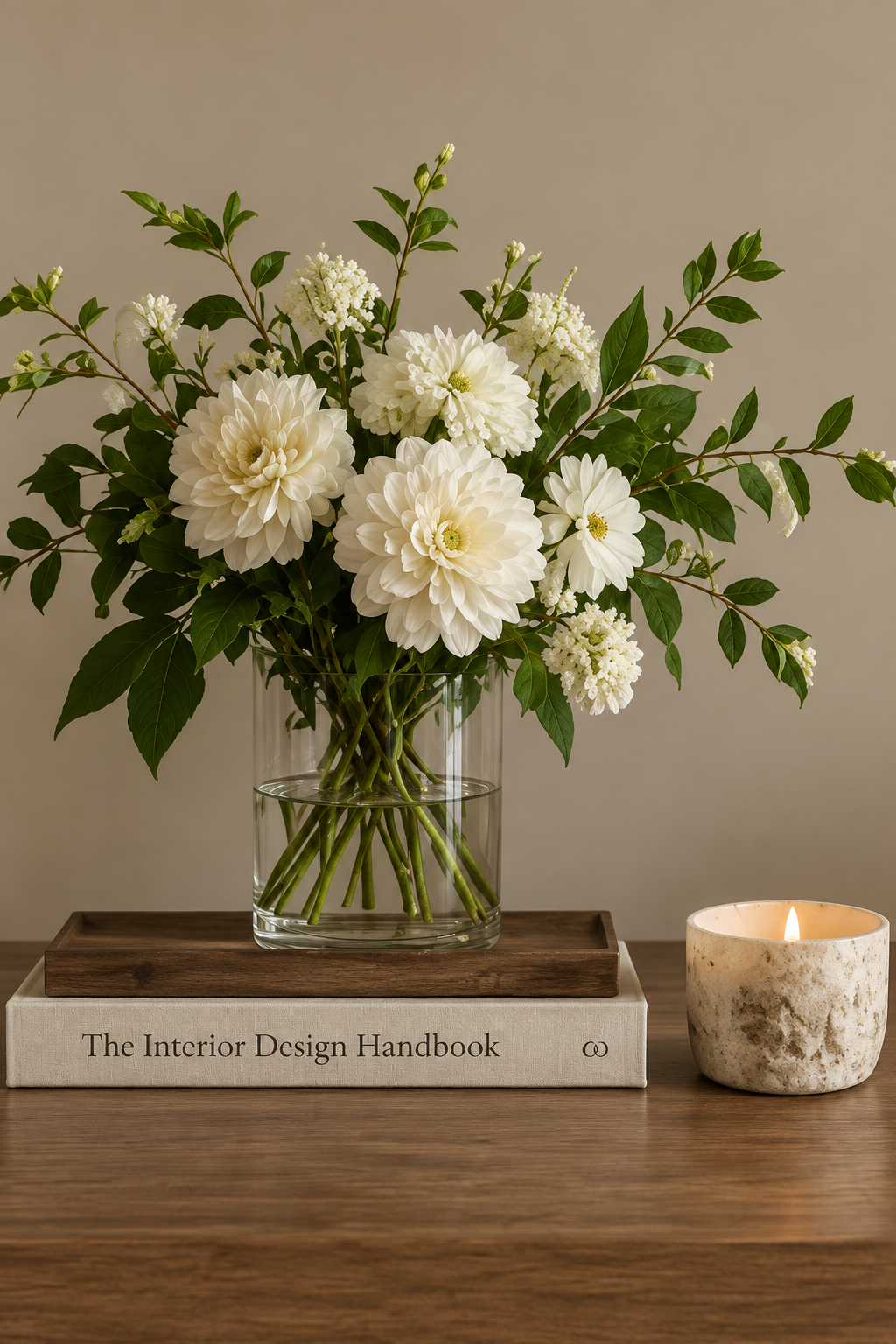
Plants, branches, and flowers introduce irregular shapes that contrast with furniture and architecture. A simple arrangement of one variety is often easier to place than a complicated bouquet.
Choose the option your household can maintain. Check whether a plant is appropriate for the available light and safe around pets or children. Dried or faux stems eliminate watering, but still need occasional dusting and editing. Empty space is also a valid choice.
Where to spend—and where to save
| Consider spending more on | Often safe to save on |
|---|---|
| A correctly sized rug that handles daily traffic | Seasonal pillow covers |
| Curtains with the required lining and fullness | Simple vases and trays from secondhand shops |
| Secure mirror hardware and professional installation when needed | Branches or clippings already available to you |
| Washable, durable textiles used every day | Decorative objects until the room’s scale is resolved |
Price does not automatically create an elevated result. Scale, placement, repetition, and restraint are usually more visible than the brand name.
A five-step accessory audit
- Remove small decorative objects from one room and photograph the quieter version.
- Name the actual problem: scale, light, texture, function, or personality.
- Measure the relevant wall, window, floor, or surface.
- Test the proposed size with tape, cardboard, or objects you already own.
- Add one solution, live with it for several days, and reassess before buying another.
Less—but more specific
The goal is not an empty room or a perfectly styled one. It is a room in which each visible object contributes function, comfort, proportion, or personal meaning.
If an accessory does none of those things, removing it may elevate the room more effectively than replacing it. Start with the room’s problem, not the product category.
How this guide was developed: The recommendations are organized around scale, function, maintenance, household safety, and visual balance. They are decision tools rather than rules requiring every home to own the same ten objects. Reviewed October 13, 2026.