How many times have you found yourself waiting for guests, setting the table at the last minute, and getting increasingly frustrated because somehow it just does not look right?
The plates are there. The glasses are there. The napkins are technically folded.
And yet, instead of looking effortless and beautiful, the table feels… unfinished.
Maybe you have had the opposite experience too: you go to a friend’s house, a dinner party, or even a restaurant and think:
Why does this table look so much better than mine?
Everything seems effortless. The plates work together. The napkins somehow look intentional. There are candles, glasses, maybe a vase or a bowl in the middle — and somehow none of it feels like too much.
The good news is that beautiful tables are usually not about owning expensive dinnerware or knowing obscure etiquette rules.
They are about a few simple design choices: layering, texture, proportion, repetition, and creating one clear mood.
Once you understand those, setting the table becomes a lot more fun — and a lot less mysterious.
And yes, you may eventually become the person whose guests walk in and think:
Okay. This is putting the table together properly.
Here are the basics first, followed by five different table styles you can recreate depending on the feeling you want.
What Actually Makes a Table Look Put Together?
Before choosing a style, there are a few things almost every beautiful table has in common.
1. Start With a Simple Base
You do not need to use a tablecloth every time.
A beautiful wood table can be the base. So can a neutral tablecloth, a linen runner, or simple placemats.
The goal is to create a foundation that feels intentional before you start adding smaller pieces.
If the base already has texture or character, you may need less decoration overall.
2. Layer Without Overcomplicating It
Layering is what makes a table feel finished.
That might mean a dinner plate with a smaller plate or bowl on top, a folded napkin, and one glass beside it.
You do not need five plates per person.
Two or three thoughtful layers usually look better than a table crowded with pieces nobody actually needs.
3. Add Texture
Texture is one of the easiest ways to make a table feel more interesting.
Linen napkins, woven placemats, stoneware, ribbed glass, wood, ceramic, or aged metal all add depth without requiring more decoration.
If everything is smooth, white, and perfectly matched, the table can sometimes feel a little flat.
Mixing a few different materials helps it feel more collected.
4. Give the Eye Somewhere to Go
Every table benefits from a focal point.
That can be flowers, branches, candles, fruit, a bowl, or a low arrangement running down the center.
Just keep one thing in mind:
People still need to see each other.
If your centerpiece requires guests to lean sideways to have a conversation, it may be beautiful — but it is not doing its job.
5. Repeat Something
Repetition makes a table feel cohesive.
Maybe every place setting has the same napkin fold. Maybe the same warm wood appears in the serving boards and candleholders. Maybe olive green shows up in the napkins, branches, and glassware.
It does not need to match perfectly.
It just needs to feel connected.
5 Table Styles to Try
Once you know the basics, the fun part is changing the mood.
The same dining table can feel completely different depending on the materials, colors, and textures you choose.
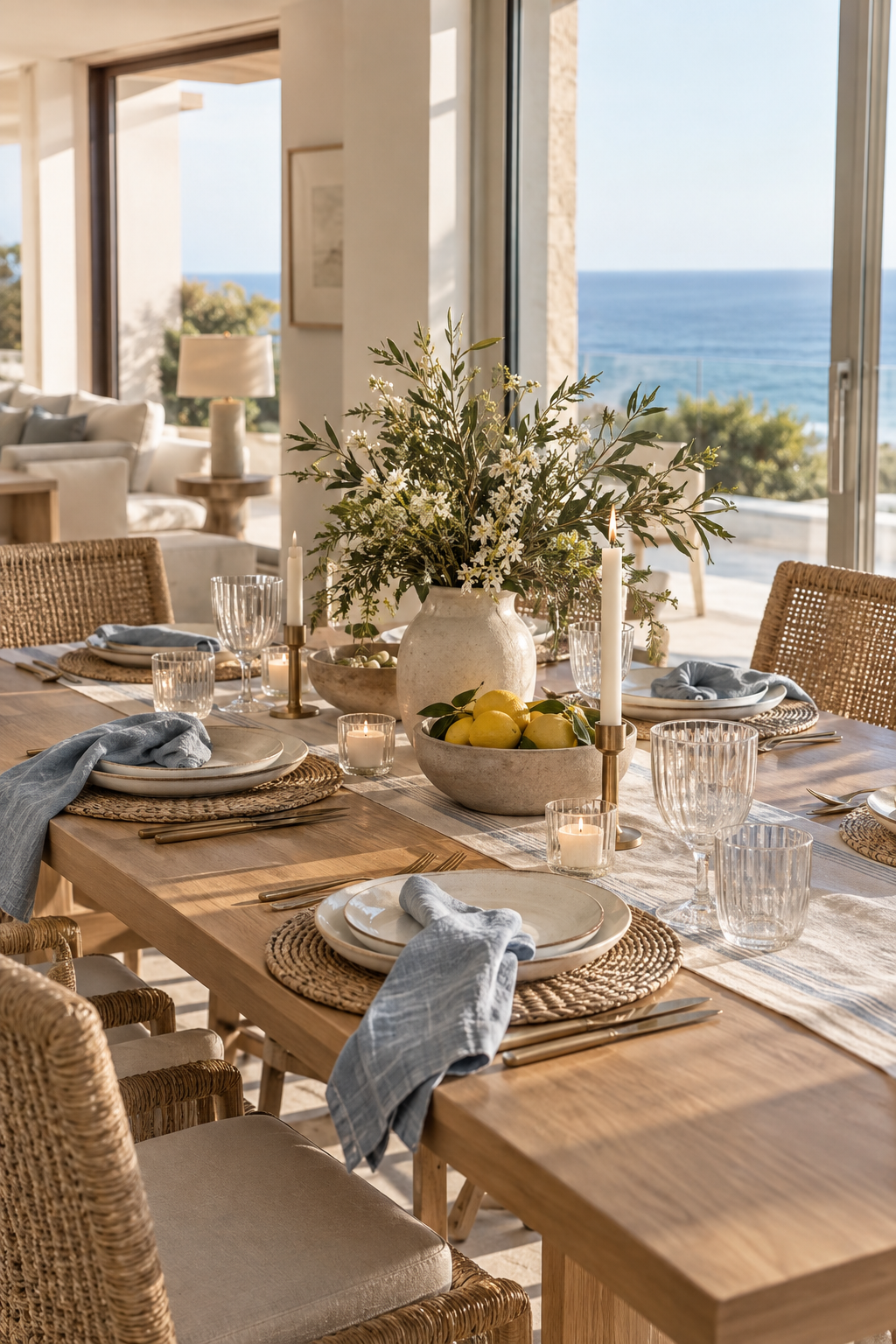
1. The Coastal Table
A coastal table should feel light, relaxed, and slightly sun-faded — not like you bought every seashell in the gift shop.
Think:
- white or pale blue linen
- clear or lightly textured glassware
- simple cream ceramics
- woven placemats
- light wood
- subtle brass or brushed metal
- olive branches or simple white flowers
- lemons or other fresh fruit
How to make it work
Keep the palette restrained.
White, sand, pale blue, and a little natural wood are enough.
Instead of relying on literal beach decorations, let the materials create the coastal feeling.
A slightly wrinkled linen runner, clear glassware, and a bowl of lemons in afternoon light often do more than ten decorative shells ever could.
The goal is coastal without looking themed.
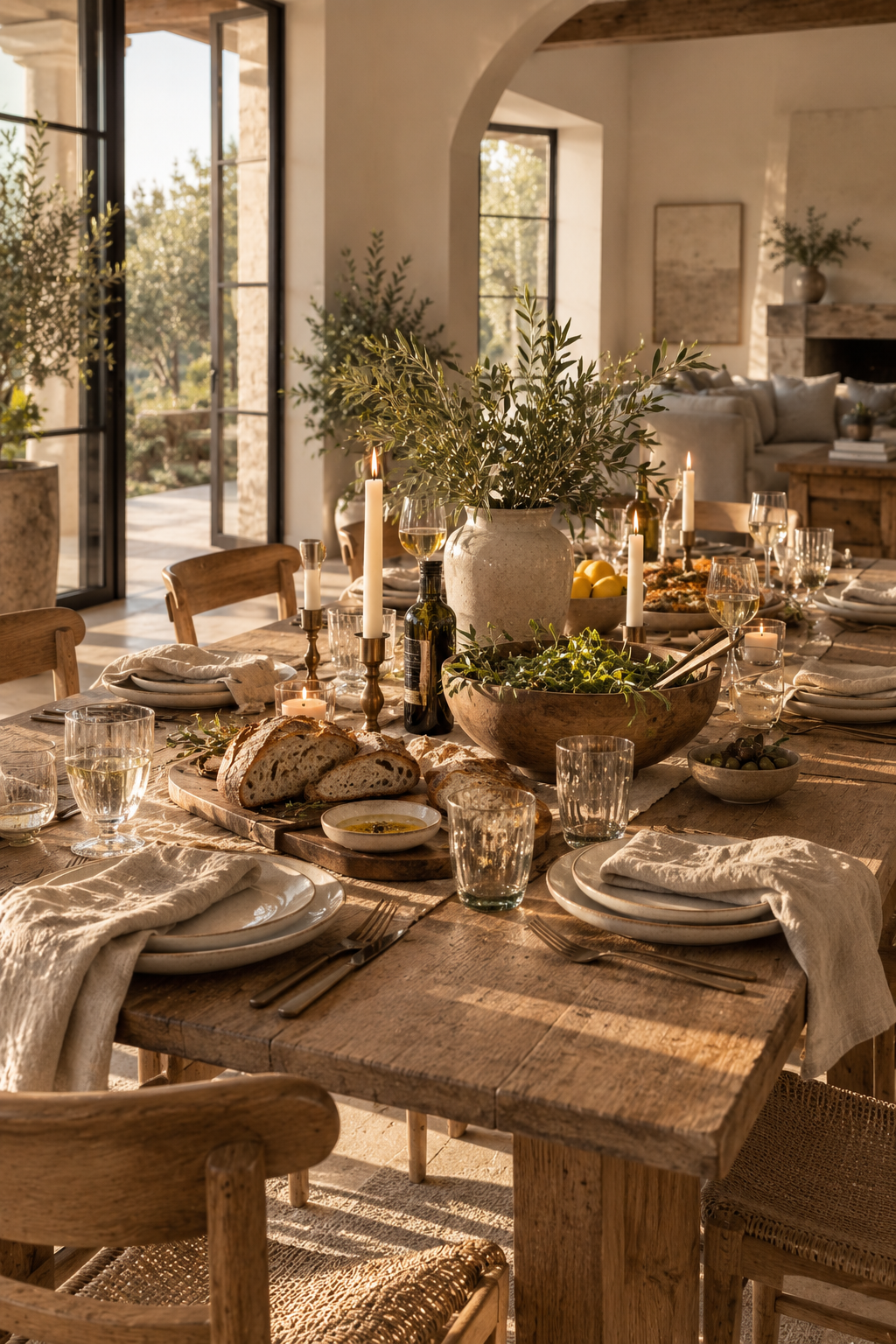
2. The Farmhouse Gathering Table
This table is less about perfection and more about making people want to sit down and stay.
Think warm wood, generous serving pieces, candles, stoneware, and food placed directly on the table.
It should feel abundant without feeling formal.
How to make it work
Try:
- a warm wooden table
- cream or earthy stoneware
- thicker linen napkins
- brass or dark metal candleholders
- serving bowls and platters at the center
- simple greenery
- bread boards or wooden serving pieces
This style looks best when it feels slightly lived-in.
Not messy — just not overly precious.
Leave room for bread baskets, serving bowls, drinks, and the things people will actually use.
A good farmhouse table should make people feel comfortable touching things.
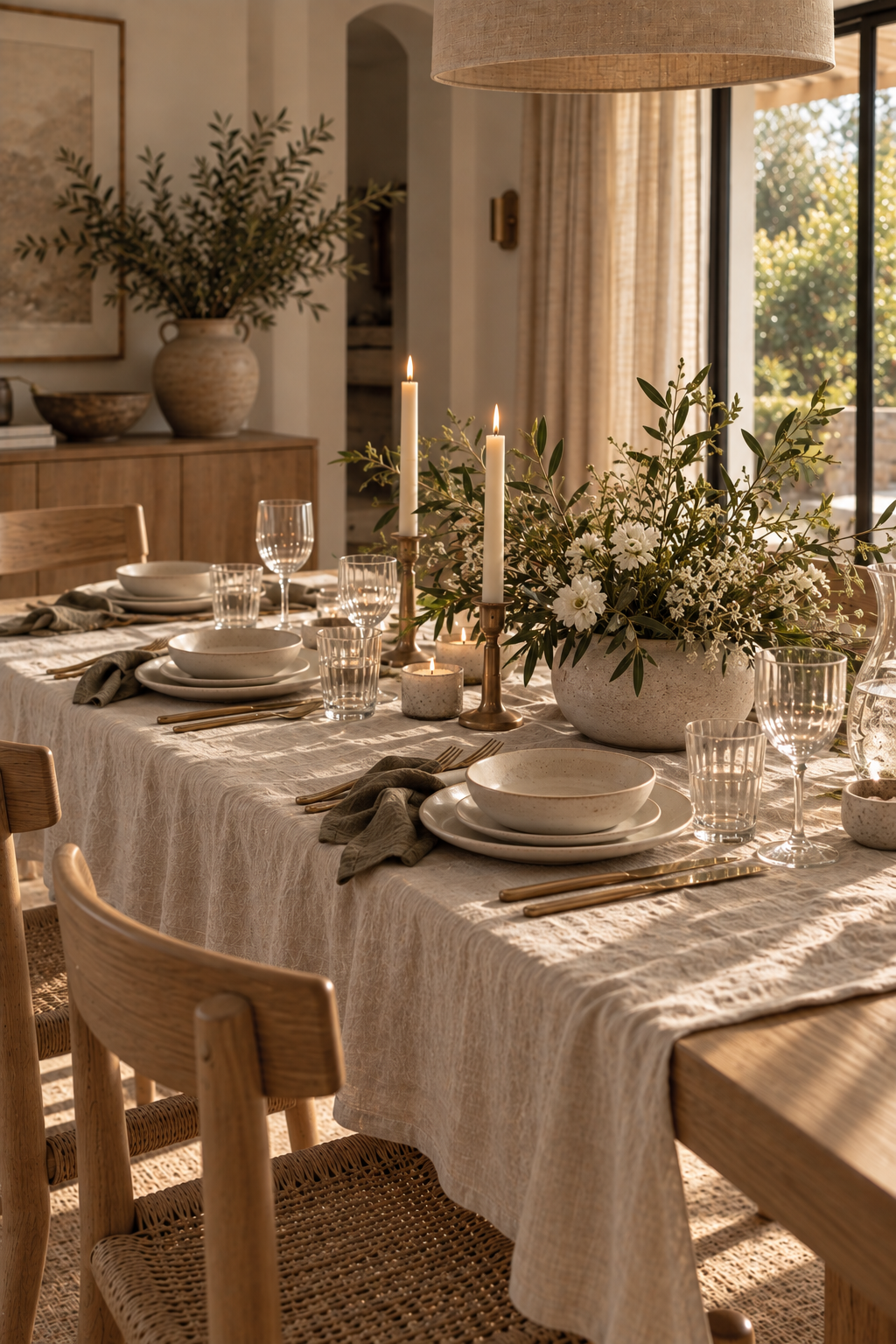
3. The Organic Modern Table
This is probably the most restrained of the five.
The beauty comes from shape, texture, and a quiet palette rather than lots of decorative objects.
Think:
- cream
- taupe
- olive
- warm gray
- natural wood
- matte ceramics
- simple glassware
- one sculptural centerpiece
How to make it work
Use fewer pieces, but make each one feel intentional.
A beautiful ceramic bowl, a few branches, linen napkins, and well-proportioned plates may be all you need.
This is the table where empty space matters.
Do not feel the need to fill every gap.
The restraint is part of the look.
If you are ever unsure whether to add one more thing, this is probably the style where the answer is no.
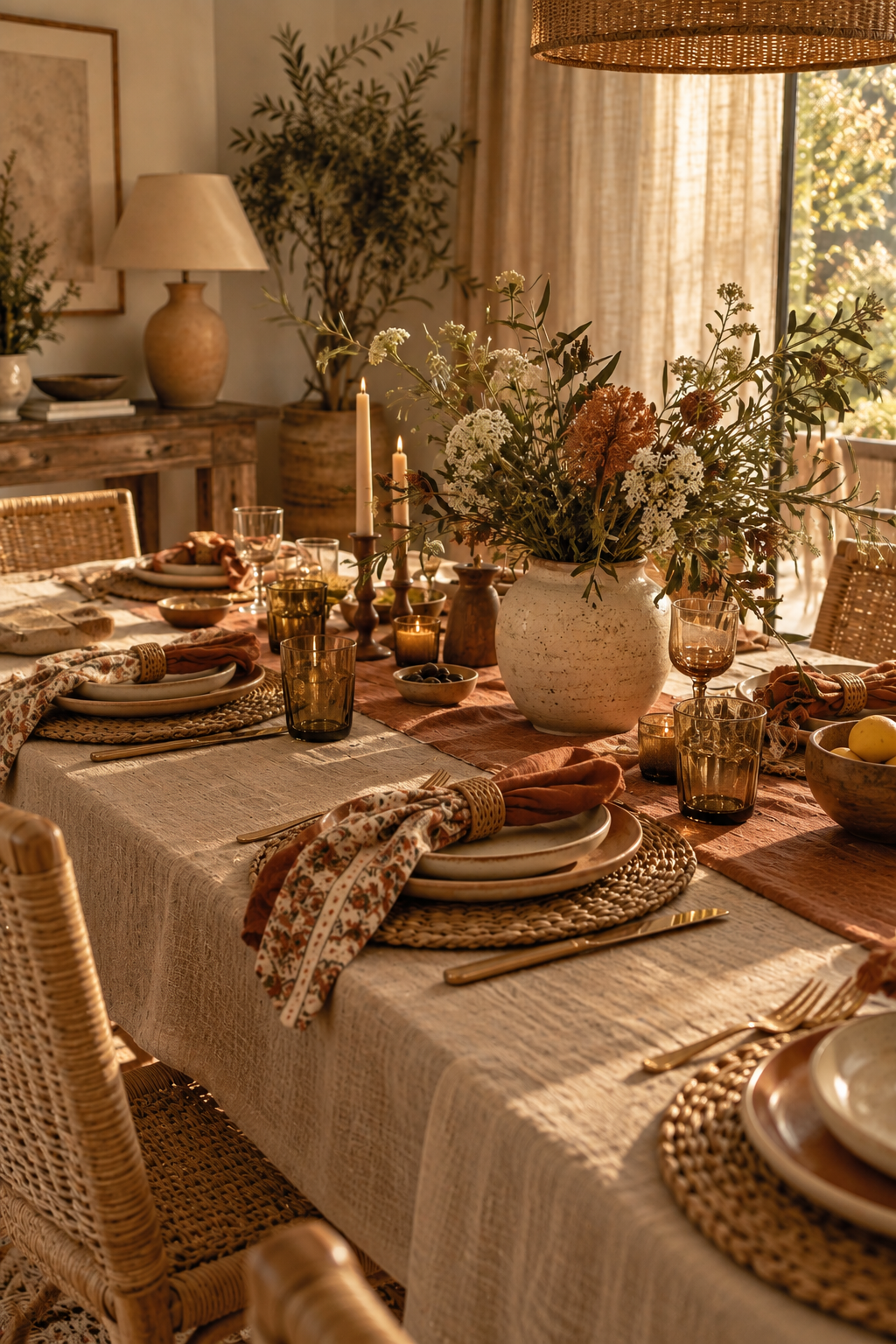
4. The Boho Table
The boho table gives you more room to play.
Color, pattern, texture, and slightly mismatched pieces can all work here.
But there is still a difference between layered and chaotic.
How to make it work
Choose one or two elements to repeat.
Maybe the plates are mismatched, but every napkin is the same color.
Maybe the glassware is colorful, but the tablecloth is neutral.
Maybe you mix patterns, but they all share similar earthy tones.
Try:
- woven placemats
- handmade ceramics
- patterned or textured napkins
- amber or colored glass
- relaxed flowers
- wood and rattan accents
The goal is collected, not random.
A successful boho table feels like the pieces were gathered over time — even if you planned the whole thing ten minutes before dinner.
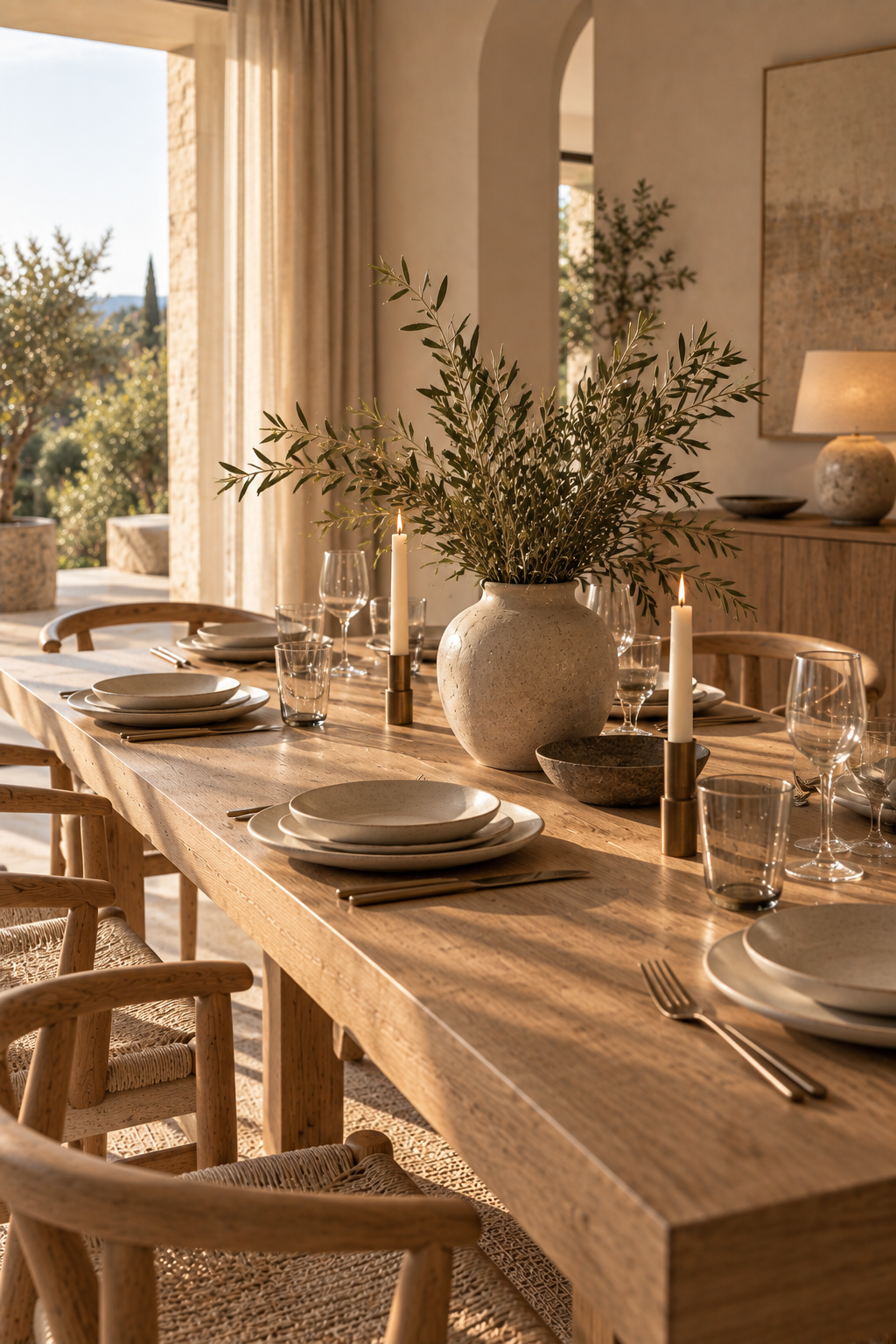
5. The Linen Aesthetic Table
This one is soft, understated, and almost impossible to overdo if you keep the palette quiet.
Think warm neutrals, natural fabrics, soft folds, candles, and a table that looks beautiful without looking staged.
How to make it work
Let linen do most of the work.
Use a linen tablecloth or runner, relaxed napkins, simple ceramics, clear glassware, and a few taper candles.
Do not worry about perfectly ironing everything.
A little movement and wrinkling is part of the charm.
Keep the centerpiece low and simple — branches, seasonal fruit, a few flowers, or even one beautiful bowl.
This is one of those styles where the table can look better because you did less.
A Few Things You Probably Do Not Need
One of the easiest ways to improve a table is sometimes simply removing something.
You probably do not need:
- a giant centerpiece
- several different candle styles
- too many plates
- three competing colors
- decorative objects with no purpose
- anything that makes it difficult to pass food or see the person across from you
A beautiful table still has to function.
If guests spend the evening moving decor out of the way, the styling has gone a little too far.
The Secret Is Not More Stuff
A beautifully set table is rarely about owning more.
It is about creating a little rhythm between the pieces you already have.
A plate.
A napkin.
A glass.
A little texture.
Something in the center.
A repeated color or material that ties everything together.
That is often enough.
And once you start seeing a table as a small design project rather than just somewhere to put dinner, you may find yourself looking for excuses to invite people over.
Which, honestly, might be the best outcome of all.
Plan from the meal backward
Before choosing linens or flowers, decide how food and drinks will be served. A family-style meal needs clear center space for bowls and platters. A plated dinner can support a narrow centerpiece. A buffet needs less on the dining table and more organization at the serving surface.
| Meal format | Protect this space | Useful centerpiece |
|---|---|---|
| Family style | Center and passing routes | Small pieces that lift away quickly |
| Plated meal | Comfortable place settings | One low arrangement or repeated bud vases |
| Buffet | Guest seating and water | A simple focal point with no serving conflict |
| Casual snacks | Reachable shared plates | Skip decor if food provides the visual center |
A practical place-setting order
- Place only the plate or bowl needed for the first course.
- Put the fork to the left and the knife to the right with its blade facing the plate; add other utensils only when the menu requires them.
- Place the drinking glass where it is easy to reach without crossing another setting.
- Fold or place the napkin where it will not interfere with food service.
- Check that every guest has elbow room and an unobstructed view.
This is a functional starting point, not a formal-etiquette test. Adapt it for children, left-handed guests, mobility needs, cultural traditions, and the dishes actually being served.
Run the seated-view test
Sit in several chairs before guests arrive. Confirm that flowers do not block faces, taper candles do not sit at eye level, chairs pull out freely, and a guest can reach water without leaning over a flame.
Remove anything unstable or difficult to pass around. Keep open flames away from foliage, fabric, hair, children, pets, and busy serving paths; never leave them unattended. Flameless candles are a practical alternative when needed.
Design for cleanup as well as arrival
Leave a clear landing area in the kitchen for used dishes. Put trivets and serving utensils out before hot food arrives. Choose washable linens and finishes appropriate for the meal, and avoid fragile layers when the gathering is informal or includes young children.
A table that can transition naturally from dinner to conversation usually feels more hospitable than one that requires protecting the styling all evening.
A ten-minute table using what you have
- Clear the table completely.
- Choose the plates and glasses the meal requires.
- Add one textile: runner, cloth, placemats, or napkins.
- Repeat one color or material twice.
- Use food, fruit, branches, or one low vessel as the focal point.
- Sit down, remove anything obstructive, and stop.
For an everyday seasonal variation, see quiet ways to welcome a new season. For hosting beyond the table, use the welcoming-home guide.
How this guide was developed: The table styles are secondary to menu, sightlines, reach, safety, guest comfort, and cleanup. The framework uses only the layers needed for the actual meal instead of treating formal rules or additional purchases as requirements. Reviewed October 13, 2026.