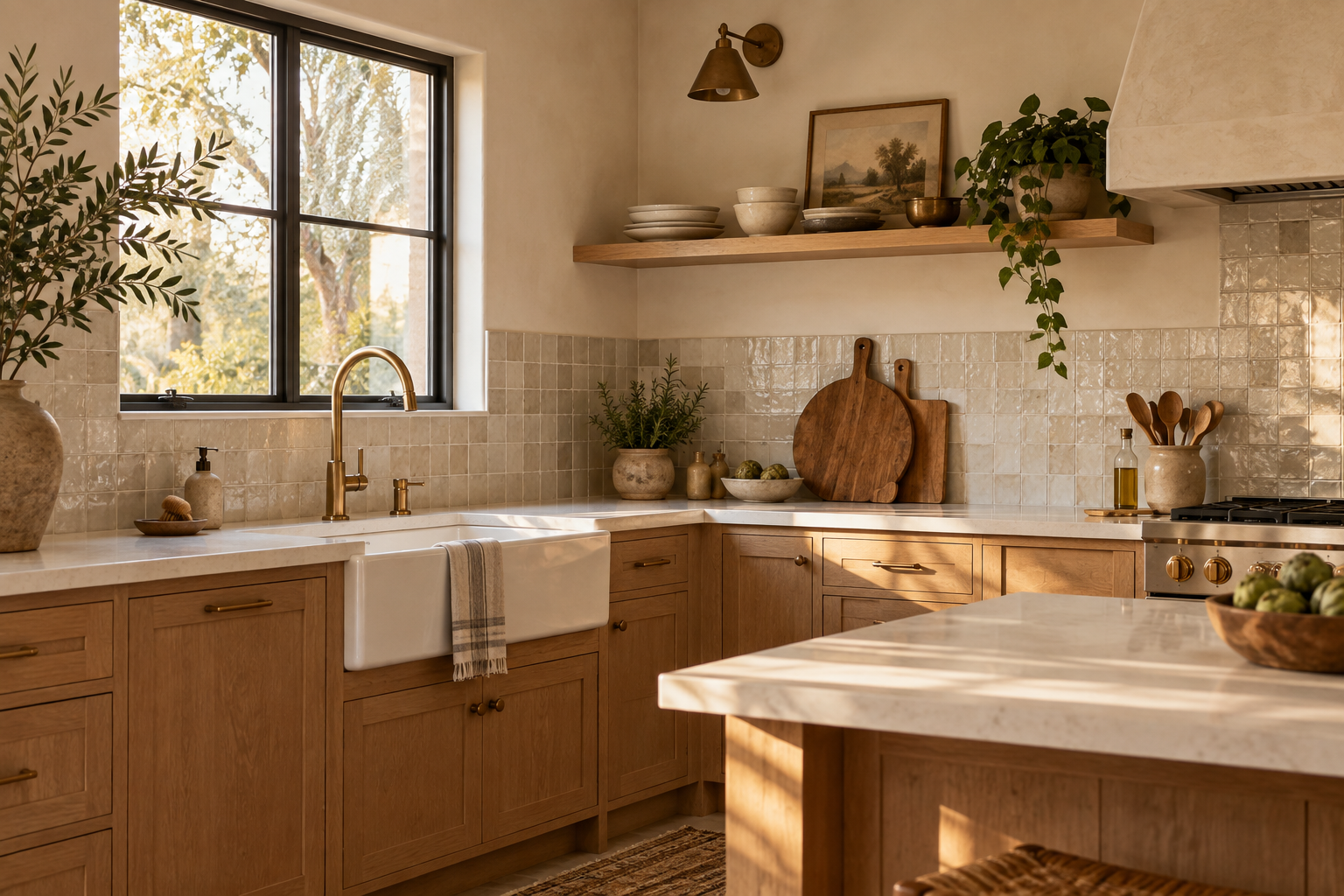
Peel-and-stick tile looks almost too good to be true.
No grout. No demolition. No contractor. No week-long kitchen renovation.
You peel off the backing, press it onto the wall, and suddenly your backsplash looks completely different. At least, that is the promise.
The reality is a little more nuanced.
Some peel-and-stick products can look surprisingly good and hold up well in the right place. Others start lifting at the corners, bubbling near heat, collecting grease around the edges, or looking unmistakably temporary after a few months.
The difference is usually not just the product. It is where you use it, what surface you install it on, how well you prep the wall, and what you expect it to survive.
So instead of asking, Is peel-and-stick tile good?, it is probably more useful to ask: Is peel-and-stick tile good for this wall?
1. Where Peel-and-Stick Tile Actually Works
Peel-and-stick tile works best when the surface is smooth, dry, stable, and not exposed to constant heat or moisture.
Good places to consider
- Decorative kitchen backsplash areas away from intense heat
- Laundry rooms
- Powder rooms
- Utility spaces
- Rentals
- Temporary updates
- Small accent walls
- Low-moisture areas
- Spaces you may want to change again later
It can also be especially useful when you are not ready to commit to a full renovation. Maybe you just moved in. Maybe you are renting. Maybe the kitchen is fine, but the backsplash is making the entire room feel dated.
In those situations, peel-and-stick can be a very practical bridge.
2. Where It Often Fails
This is where expectations matter. Peel-and-stick tile is not designed to behave exactly like ceramic or porcelain tile in every environment.
The hardest places tend to be
- Directly behind intense heat sources
- Walls exposed to constant steam
- Very greasy cooking zones
- Textured walls
- Dusty or chalky paint
- Uneven surfaces
- Areas that are constantly scrubbed
- Walls with moisture problems
Why this matters
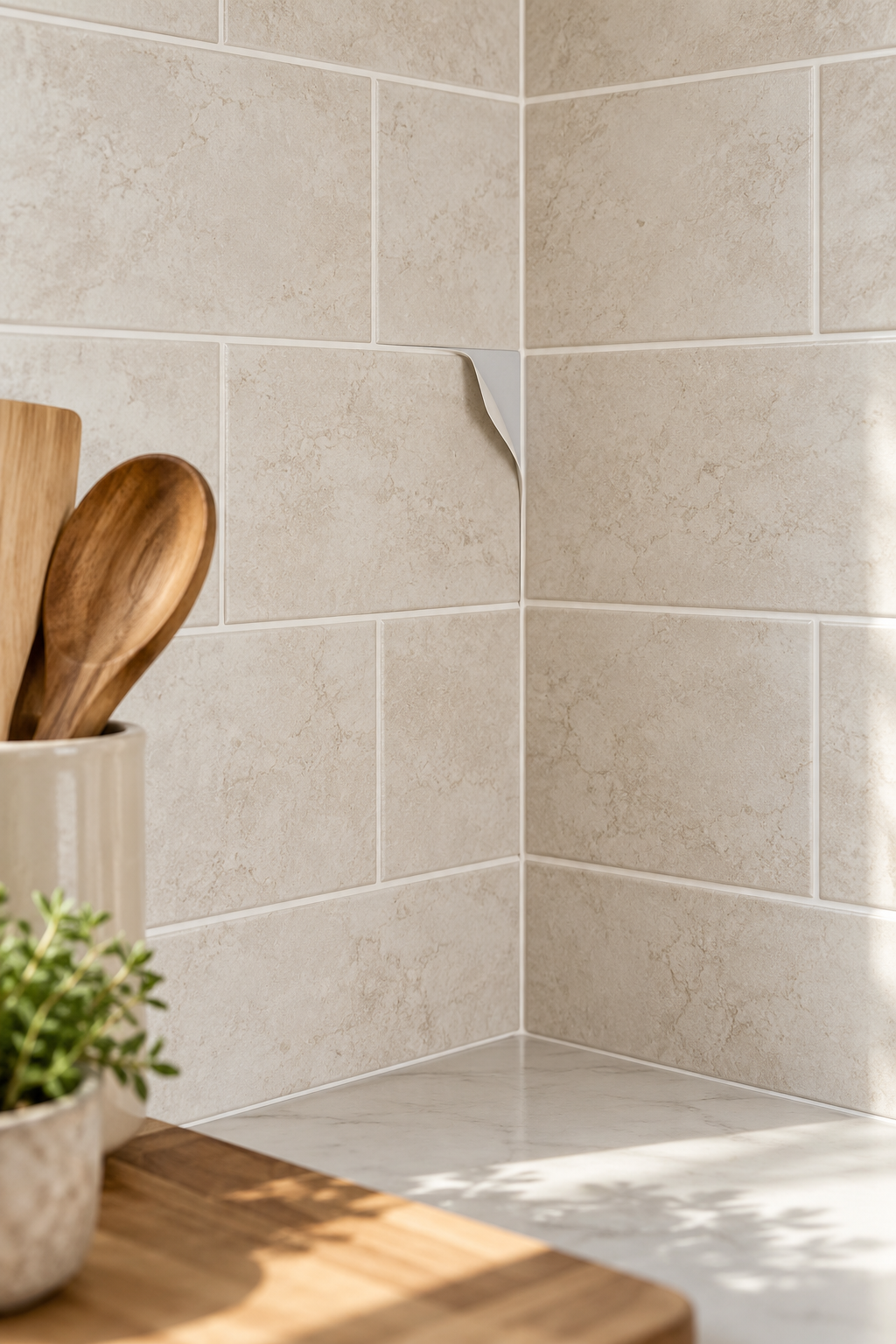
Adhesive needs a stable surface. If the wall is dusty, greasy, textured, damp, or constantly heating and cooling, the product may eventually start to lift.
That does not necessarily mean the product is bad. It may simply mean the location is asking too much from it.
3. Surface Prep Matters More Than You Think
A lot of peel-and-stick failures start before the first piece even goes on the wall.
The wall needs to be clean. Really clean. Especially in kitchens.
A surface may look clean and still have an invisible layer of cooking grease on it.
Before installation
Make sure the wall is:
- Clean
- Dry
- Smooth
- Free of dust
- Free of grease
- Free of peeling paint
- Fully cured if recently painted
Degreasing is especially important around kitchens. And if the paint underneath is weak or unstable, the adhesive may stick better to the paint than the paint sticks to the wall. That is not ideal.
4. Not All Peel-and-Stick Tile Is the Same
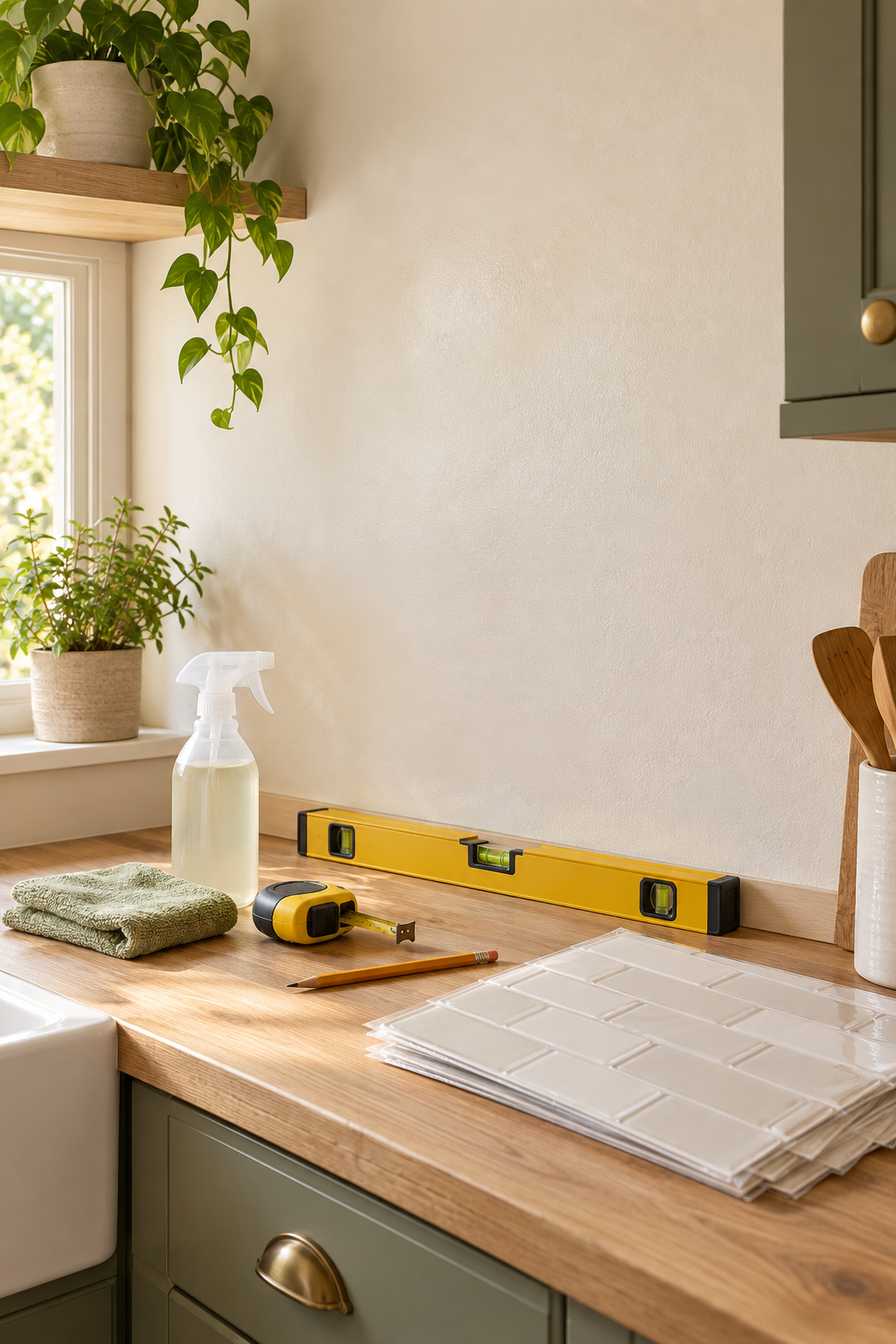
This category is much broader than it looks.
Some products are basically thin printed vinyl. Others are thicker and textured. Some mimic ceramic. Some use gel or raised surfaces. Some are made with real stone or metal. Some have much stronger adhesives than others.
Common types include
Thin vinyl sheets
Usually the most affordable and easiest to cut.
3D gel-style tiles
Designed to look more dimensional and more like real tile.
Rigid peel-and-stick panels
Thicker and often more realistic.
Real-material peel-and-stick options
Some use actual stone, metal, or other hard surfaces with adhesive backing.
The more realistic options are usually thicker, heavier, and more expensive. So when someone says “peel-and-stick tile,” that can mean very different products.
5. Heat Is One of the Biggest Questions
This is probably the biggest issue in kitchens. Not every peel-and-stick product is designed for high-heat areas.
The wall behind a stove can get much hotter than people expect.
Before installing near heat
Always check the manufacturer’s instructions. Look for:
- Maximum temperature
- Required clearance
- Whether the product is approved for backsplash use
- Whether it can be installed behind a stove
- Whether direct heat exposure is allowed
If the manufacturer says not to use it there, do not assume adhesive strength alone will make it okay.
The safer approach
If you love peel-and-stick but are worried about heat, use it on lower-risk walls and keep traditional tile or another heat-safe material directly behind the cooking area.
6. Moisture and Steam Can Be a Problem Too
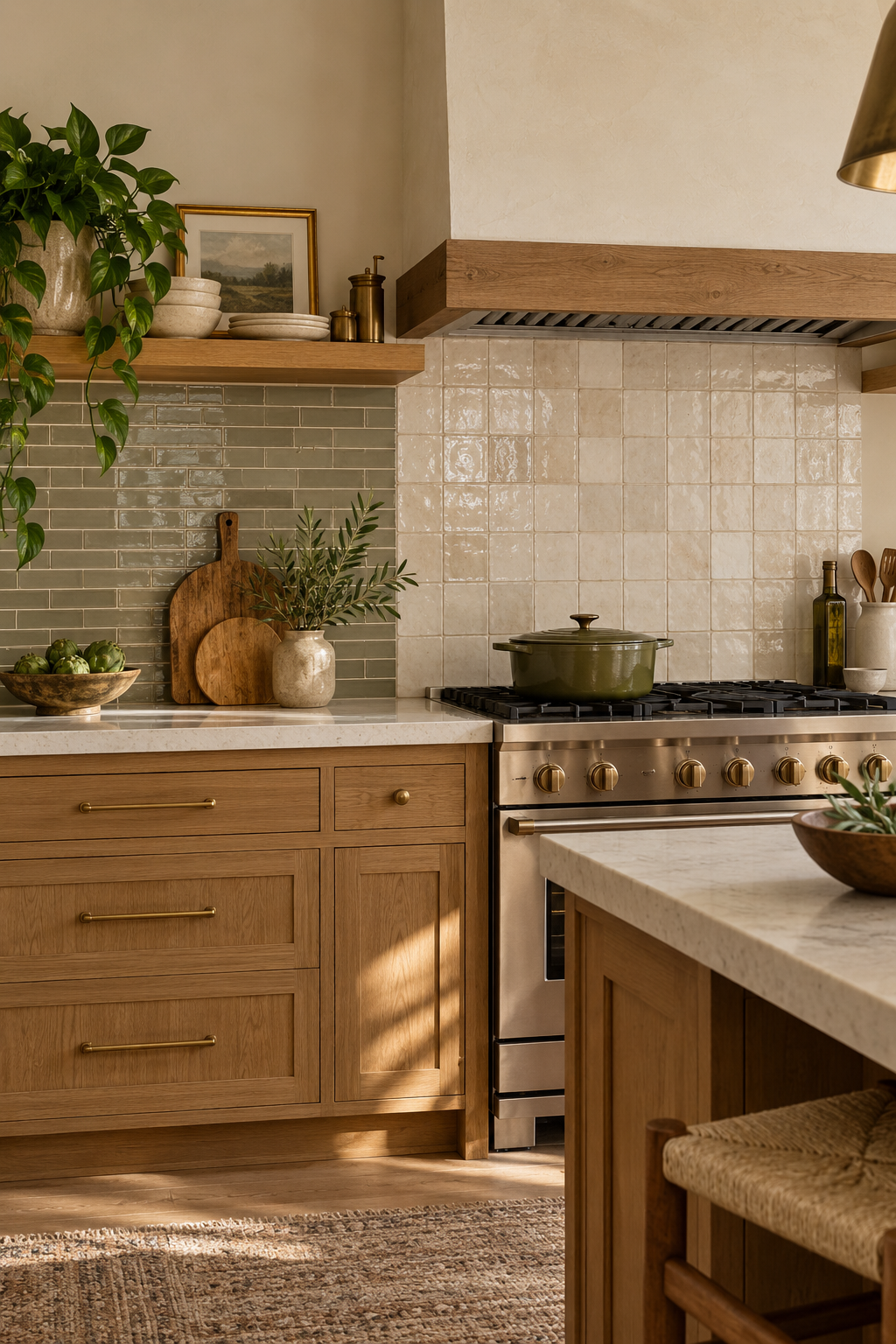
Water resistance and waterproofing are not the same thing.
Some peel-and-stick products tolerate light splashes very well. That does not mean they are designed for constant moisture.
They may work well around
- Low-splash sinks
- Powder rooms
- Laundry spaces
- Decorative walls
Be more cautious with
- Showers
- Constantly wet walls
- Areas with poor ventilation
- Locations exposed to repeated steam
- Surfaces with existing dampness
Moisture can work its way behind edges over time. Once that happens, adhesion can start to fail.
7. Can Peel-and-Stick Tile Actually Look Expensive?
Yes. But product choice matters a lot.
The difference between convincing and obviously fake often comes down to details.
Look for
- Believable grout lines
- Subtle texture
- Realistic scale
- Natural variation
- Matte or softly reflective finishes
- Patterns that do not repeat too obviously
What tends to look cheaper
- Extremely glossy finishes
- Obvious printed shadows
- Repetitive patterns
- Unrealistic grout
- Tiles that are too thin for the style they are copying
Simple designs often perform better visually. A clean white rectangular tile or subtle stone look is easier to fake convincingly than a highly detailed handmade tile with dramatic variation.
8. Installation Quality Changes the Final Look
Even a good product can look temporary if the installation is rushed.
Misaligned grout lines are noticeable. So are uneven cuts, bubbles, and corners that do not meet properly.
Take your time
Measure before you start. Use a level. Plan the pattern. Start from a logical reference point. Dry-fit difficult corners if possible. Press firmly. And avoid assuming you can fix everything at the end.
Peel-and-stick is easier than traditional tile. That does not mean it is impossible to install badly.
9. How Long Does Peel-and-Stick Tile Last?
There is no single answer.
Longevity depends on product quality, wall preparation, heat, moisture, cleaning, surface texture, installation quality, and adhesive type.
In the right environment, it may last for years. In the wrong one, edges can start lifting much sooner.
The important distinction
Traditional tile is generally a long-term building finish. Peel-and-stick is better thought of as a flexible decorative surface.
That does not make it worse. It just means the expectations should be different.
10. Is Peel-and-Stick Tile Actually Rental-Friendly?
Sometimes. This is one of its biggest selling points.
But “removable” does not always mean “zero damage.”
Adhesive can sometimes pull paint away during removal, especially if the paint is old, poorly applied, not properly primed, or the product has been installed for a long time.
Before covering an entire rental kitchen
Test a small hidden area. Leave it in place for a while. Then remove it carefully and see what happens.
That small test is much better than discovering the answer across an entire wall.
11. Cleaning Can Make or Break It
A kitchen backsplash exists in a messy environment: grease, tomato sauce, oils, steam, and fingerprints.
Some peel-and-stick surfaces clean beautifully. Others are more sensitive.
Look for products that can tolerate
- Gentle wiping
- Common kitchen mess
- Repeated cleaning
- Mild soap
Be careful with harsh chemicals or abrasive scrubbing unless the manufacturer specifically says the surface can tolerate them. Edges and seams are usually the areas worth watching most closely.
12. When Traditional Tile Is Probably Worth It
There are situations where traditional tile is simply the stronger choice:
- A long-term renovation
- A forever home
- Heavy daily cooking
- High heat exposure
- Frequent splashing
- A resale-focused renovation
- Areas that need to tolerate years of aggressive cleaning
- Situations where you want maximum durability
Traditional tile is more work upfront. But in demanding areas, that extra effort may make more sense long term.
13. When Peel-and-Stick Might Actually Be the Smarter Choice
There are also situations where installing traditional tile can be more commitment than you need.
Peel-and-stick may make a lot of sense when you are renting, want a quick update, have a limited budget, are not ready for renovation, may change the design again soon, want to test a look first, or only need a small decorative area covered.
Sometimes the temporary solution is actually the more rational one.
Peel-and-Stick vs Traditional Tile: Quick Comparison
| Consideration | Peel-and-Stick | Traditional Tile |
|---|---|---|
| Upfront cost | Usually lower | Usually higher |
| Installation | Easier | More involved |
| DIY-friendly | Very | Moderate |
| Easy to change | Yes | No |
| Heat resistance | Product-dependent | Usually much better |
| Moisture resistance | Product-dependent | High when installed correctly |
| Durability | Moderate | High |
| Rental-friendly | Potentially | Usually not |
| Cleaning | Varies | Generally easy |
| Commitment level | Low | High |
| Best for | Temporary or low-impact updates | Long-term, high-use areas |
How to Tell If Peel-and-Stick Makes Sense for Your Space
Before buying anything, ask yourself:
Is this wall exposed to serious heat?
If yes, traditional tile or another heat-rated finish may be safer.
Is the wall smooth?
Adhesive products perform best on smooth, stable surfaces.
Is the area constantly wet?
If yes, be cautious.
How long do I want this solution to last?
One year and ten years are very different expectations.
Am I choosing this because it is practical here—or only because installation looks easy?
Easy installation is useful, but it should not be the only reason.
The Real Question Is Not Whether Peel-and-Stick Tile Is Good
Peel-and-stick tile is not fake tile pretending to be permanent tile. It is a different tool.
Used in the right place, it can be a smart, affordable way to change a room quickly. Used in the wrong place, it can become one more thing you have to fix six months later.
The question is not really: Is peel-and-stick tile good?
It is: Is peel-and-stick tile good for this wall?
And once you ask that question, the decision usually becomes much easier.
Still deciding between finishes? Read our practical comparison of paint vs tile in the kitchen.
Use the exact product’s technical sheet
“Peel-and-stick tile” is a category, not one construction system. Before purchase, locate the current installation instructions and confirm:
- approved substrates and prohibited surfaces;
- paint cure time and cleaning preparation;
- service-temperature limits and appliance clearances;
- whether wet, damp, or splash locations are permitted;
- minimum room and surface temperature during installation;
- recommended cutting and edge-sealing method;
- cleaning products that are permitted;
- removal procedure and warranty exclusions.
If the manufacturer does not provide the information required for the proposed location, uncertainty is part of the decision.
Perform a full-system sample test
- Choose a small, inconspicuous section of the actual wall.
- Prepare it exactly as the instructions require.
- Install complete pieces, a seam, and an edge or corner if possible.
- Leave the sample for the manufacturer’s stated bonding or cure period.
- Expose it only to normal conditions approved for the product.
- Test approved cleaning and then assess lifting, movement, staining, and removal.
A sample on loose cardboard cannot predict adhesion to the paint or wall underneath.
Do not confuse a decorative surface with a building assembly
A self-adhesive decorative tile should not be assumed to provide waterproofing, fire protection, structural repair, or remediation for dampness. Existing moisture, loose paint, damaged wallboard, or movement should be resolved appropriately before covering the surface.
For permanent ceramic or porcelain work, the Tile Council of North America publishes recognized installation guidance and standards information. For moisture and mold prevention, consult current EPA guidance.
Calculate the real project cost
Include wall repair, cleaning products, tools, extra material for cuts and pattern alignment, outlet or edge details, possible removal, and repainting. A temporary finish is still poor value if it damages an unsuitable substrate or must be replaced repeatedly.
How this guide was developed: The comparison treats performance as a complete system of product, substrate, preparation, exposure, installation, cleaning, and removal. Manufacturer instructions control the final decision because products within the category vary substantially. Reviewed October 13, 2026.