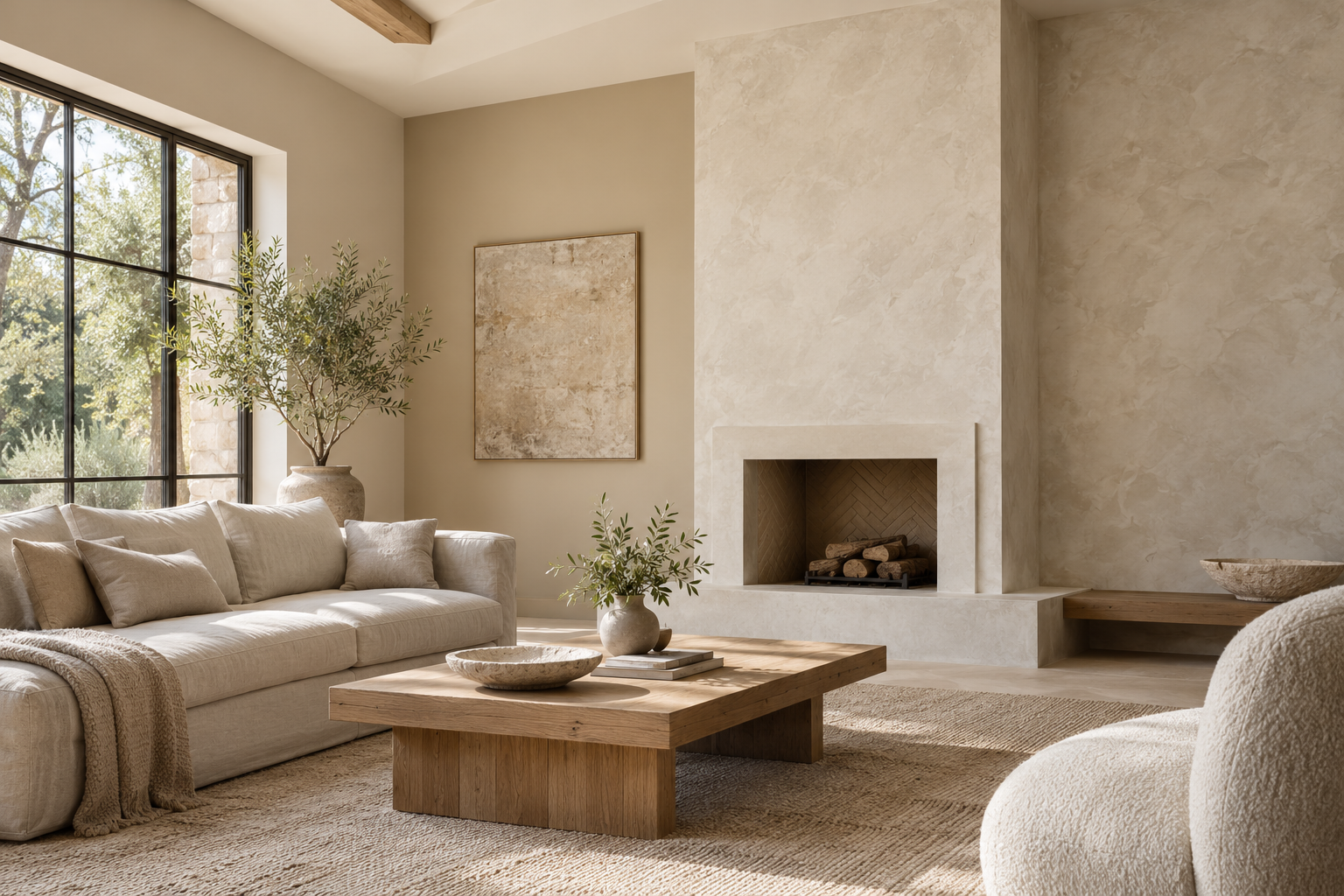
Walls are no longer treated only as a background. A finish can add softness, depth, movement, or a more architectural feeling—but the names used online are often confusing.
The short answer: regular paint is usually the most flexible and easiest to maintain; traditional limewash is a breathable mineral finish with natural variation; and Venetian plaster is a family of decorative plaster systems whose performance depends heavily on the exact product, substrate, installer, and sealer.
Editorial note: “limewash” and “Venetian plaster” are sometimes used as broad marketing labels. Before buying, compare the manufacturer’s technical data sheet—not only the inspiration photo.
Quick comparison
| Finish | Typical appearance | Best reason to choose it | Main caution |
|---|---|---|---|
| Regular interior paint | Even color; sheen from flat to gloss | Flexible, familiar, easier to clean or repaint | Flat finishes can mark; glossy finishes highlight wall defects |
| Traditional mineral limewash | Soft, matte, cloudy movement | Mineral character and vapor permeability on compatible masonry | Not automatically suitable for every drywall, wet area, or previously painted wall |
| Limewash-effect coating | Brushed tonal variation | A similar decorative look with a proprietary modern system | Composition and performance vary; it may not behave like traditional limewash |
| Venetian plaster system | Layered, stone-like; matte to polished | Architectural depth and a seamless decorative surface | Skill, preparation, sealing, and repair requirements vary greatly |
1. Regular paint: the most adaptable option
Regular paint remains the practical baseline. It is available in thousands of colors and several sheen levels, and most professional painters already understand the system. Future color changes are usually simpler than with a specialty finish.
Paint makes sense when you value:
- a predictable, consistent result;
- easy access to matching products;
- a lower-complexity installation;
- washability in busy rooms;
- the freedom to repaint later;
- a realistic DIY project.
The sheen matters as much as the color. Matte and flat paint can soften uneven walls but may be less scrub-resistant. Satin or semi-gloss is often easier to wipe, but reflected light can reveal patches and surface flaws. Always check the product label for the recommended room, substrate, cleaning method, and cure time.
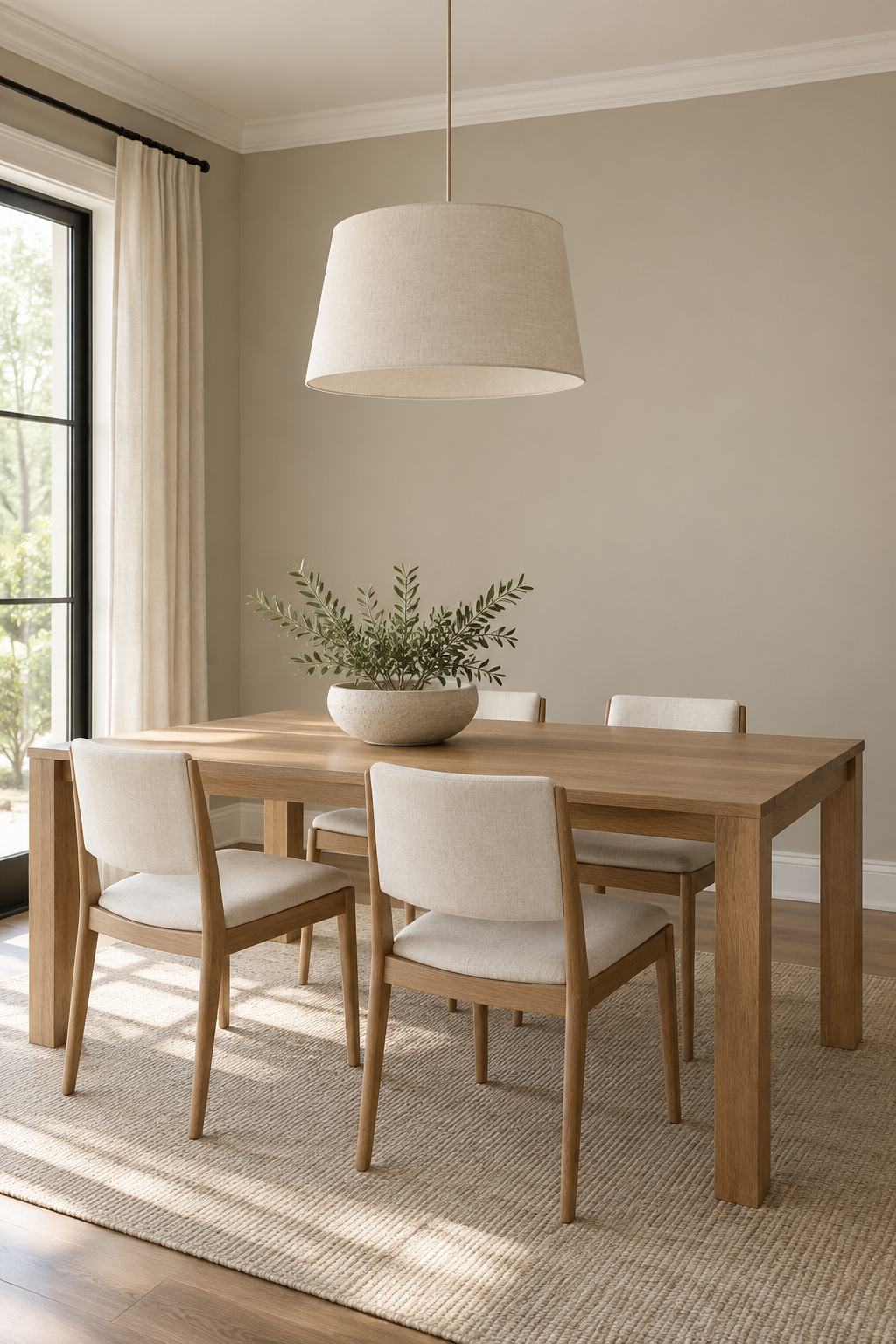
2. Limewash: first identify which kind
Traditional limewash is made from lime and water and has a long history on compatible masonry. It does not create the same plastic-like film as conventional acrylic paint. As it cures, it produces a very matte, mineral surface with subtle color movement.
That traditional definition is important because many current products use “limewash” to describe a decorative effect. Some are genuine mineral coatings; others are proprietary coatings formulated to produce a similar cloudy appearance. Neither category is automatically bad, but they are not interchangeable.
Traditional limewash generally suits
- compatible mineral substrates;
- projects where vapor permeability matters;
- rooms where tonal variation is welcome;
- an intentionally aged or softly imperfect aesthetic.
Questions to ask before using it
- Is the wall bare masonry, lime plaster, drywall, or already painted?
- Does the manufacturer require a mineral primer?
- How many coats are part of the tested system?
- Will the finished surface chalk or transfer?
- Is it approved for the room’s moisture and cleaning conditions?
Breathable does not mean waterproof. Do not assume a lime-based finish belongs inside a shower or behind a sink simply because it is mineral. The whole wall assembly—not just the visible finish—must be appropriate for water exposure.
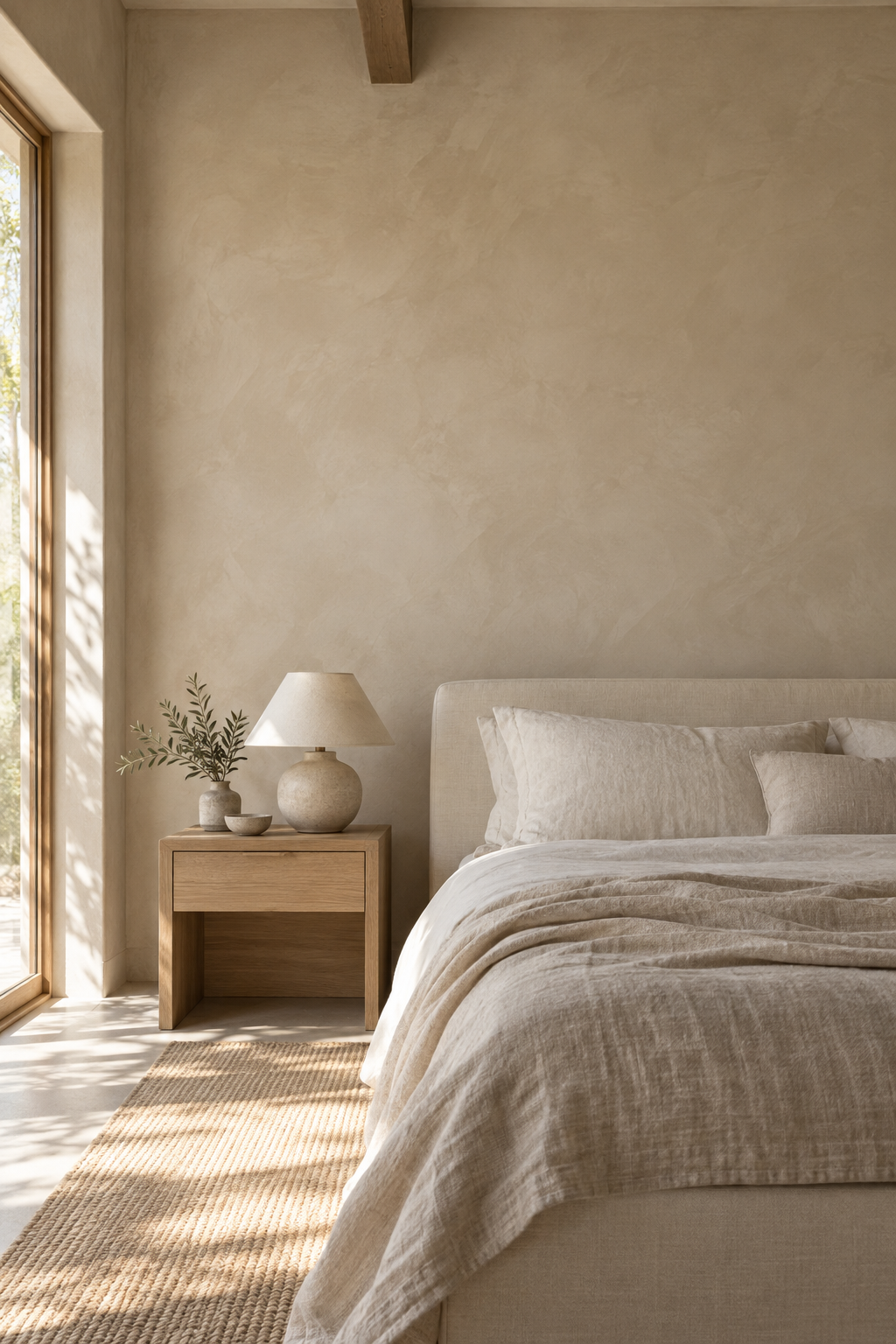
3. Venetian plaster: a category, not one formula
“Venetian plaster” can refer to several layered decorative finishes. Some are lime-based; some contain marble dust; others use modern binders. They can be left matte, burnished to a satin sheen, polished, or protected with wax or another compatible sealer.
This explains why two Venetian plaster projects can behave very differently. A polished, sealed powder-room wall is not the same system as a soft matte finish in a living room.
Venetian plaster is most compelling when you want:
- visible depth rather than a single flat color;
- a continuous architectural surface;
- a feature wall, fireplace surround, entry, or powder room with presence;
- a finish developed through several thin layers by a skilled applicator.
It is also the option most likely to disappoint when the substrate is poorly prepared. Cracks, movement, inconsistent primer, and rushed application can telegraph through the finish. Ask the installer to specify the complete system and how future damage would be repaired.
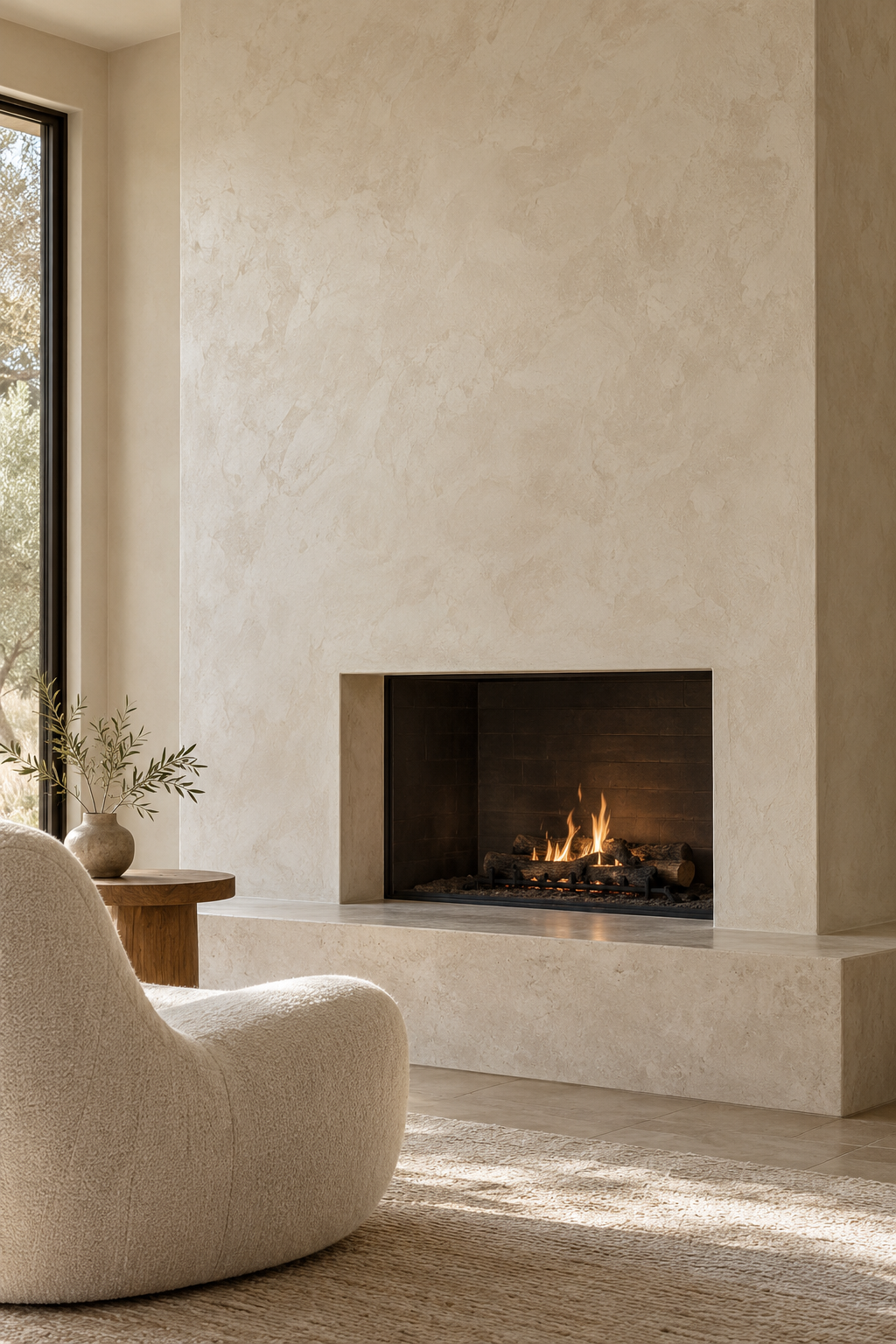
4. Appearance: natural, refined, or consistent?
For soft tonal movement, limewash usually reads as the most relaxed and organic. Venetian plaster can feel more dimensional and sculptural. Regular paint offers the most visually consistent field of color.
- Paint: controlled color and familiar sheen.
- Limewash: matte variation with visible brush movement.
- Venetian plaster: layered depth that can range from chalky to polished.
These are tendencies, not guarantees. Lighting, color, application technique, wall flatness, and photography can dramatically change the result.
5. Compare the installed system—not the price per container
Regular paint is often the least expensive complete system, especially if the wall is already sound. Specialty finishes can require additional preparation, proprietary primers, more coats, sample boards, skilled labor, and sealers.
Request a quote that separates:
- repair and substrate preparation;
- primer or bonding coat;
- number of finish coats;
- labor and expected working days;
- optional polishing, wax, or sealer;
- protection of floors, trim, and adjacent rooms;
- the cost and method of future repairs.
A lower material price can be misleading if the finish needs specialist labor. Conversely, a small powder room may be a reasonable place to spend more because the surface area is limited.
6. DIY difficulty
Regular paint: the most approachable. Good preparation and patient cutting-in still matter, but the process is familiar and errors are usually recoverable.
Limewash: possible for a confident DIYer when the chosen product explicitly supports that use. Consistent mixing, wet edges, brush direction, and coat timing affect the final movement.
Venetian plaster: generally the least forgiving. Trowel pressure, layer thickness, drying time, burnishing, and sealing can all change the finish. A small sample is essential; a professional is sensible for large uninterrupted walls or high-visibility spaces.
7. Repairability and touch-ups
Paint is usually the easiest to repair, but even matching paint can flash if the original finish has aged or the sheen differs. Repainting from corner to corner often gives a cleaner result.
Limewash repairs may blend into its natural variation, or they may create an obvious new patch. Venetian plaster can be locally repaired by a skilled applicator, but matching color, movement, and polish is not guaranteed. Ask this question before installation: If the wall is scratched in two years, who can repair it and what area must be redone?
8. Kitchens, bathrooms, and humidity
No decorative finish should be selected for a damp or wet location based on appearance alone. First identify whether the surface receives occasional humidity, cleaning splashes, direct water, grease, or frequent scrubbing.
| Location | What to verify |
|---|---|
| Kitchen wall away from cooking | Washability, stain resistance, and touch-up method |
| Backsplash or behind a range | Explicit approval for heat, grease, cleaning agents, and splash exposure |
| Bathroom outside splash zones | Ventilation, humidity rating, cure time, and mildew-cleaning guidance |
| Shower or direct-water zone | A complete manufacturer-approved waterproof wall system; decorative appearance alone is insufficient |
A sealer can change color, sheen, breathability, and repairability. Never add a generic sealer unless the finish manufacturer lists it as compatible.
9. The sample-board test
Digital images are unreliable for choosing a textured finish. Before committing, create or order a large sample board using the exact planned primer, color, number of coats, application tool, and sealer.
- Use a substrate that matches the wall as closely as possible.
- Apply the entire specified system—not one decorative coat.
- Let it cure for the manufacturer’s full stated time.
- View it upright in morning, afternoon, and artificial light.
- If permitted, test gentle wiping and a small water splash.
- Place it beside the floor, trim, stone, wood, and fabrics.
A small color chip cannot reveal movement, reflectivity, texture, or repair behavior.
10. Technical data sheet checklist
Before purchasing any of the three finishes, look for written answers to these questions:
- Which substrates are approved?
- Is a specific primer required?
- How many coats and what tools are specified?
- What are the drying and full-cure times?
- Is the product approved for damp rooms or direct splash?
- Is a topcoat, wax, or sealer required?
- How should the surface be cleaned?
- What does the manufacturer say about VOCs or emissions?
- How are repairs performed, and what does the warranty exclude?
“Low VOC” or “zero VOC” is not, by itself, a complete health assessment. The U.S. Environmental Protection Agency notes that VOC labels do not automatically indicate whether a product is safer than another. Follow label directions, provide ventilation during painting, and consider the full product formulation.
11. Which finish makes sense for you?
Choose regular paint if you want practical maintenance, predictable color, easier repainting, or a manageable DIY project.
Choose limewash if you want a very matte mineral character and your exact product is compatible with the substrate and room conditions.
Choose Venetian plaster if the wall itself is an important design feature, the budget includes skilled preparation and application, and you have a clear plan for sealing and repair.
For many homes, the smartest answer is a mix: durable paint in high-traffic or frequently cleaned rooms, and one carefully sampled specialty finish where its depth can be appreciated.
Editorial sources and further reading
- U.S. National Park Service: Limewash—An Old Practice and a Good One
- U.S. National Park Service: Durability of Traditional and Modified Limewashes
- Historic England: Redecorating traditional buildings
- U.S. EPA: VOCs in household products
- U.S. EPA: VOCs and indoor air quality
Editorial methodology: This guide compares finish categories using preservation guidance, indoor-air guidance, common specification criteria, and practical maintenance questions. Product formulas vary, so the manufacturer’s current technical data sheet controls the final decision. Reviewed October 13, 2026.