At first glance, Organic Modern and Mediterranean interiors can look surprisingly similar.
Warm neutrals.
Natural materials.
Soft textures.
Wood, stone, linen, ceramics.
Both feel calm, earthy, and collected.
But they are not the same.
Organic Modern is cleaner, quieter, and more edited.
Mediterranean style is warmer, more textured, more architectural, and usually a little more relaxed.
And the good news?
They can work beautifully together.
In fact, if you love the softness of Organic Modern but want your home to feel less polished and more soulful, Mediterranean influences may be exactly what is missing.
Editorial note: these are working design definitions, not rigid historical categories. “Mediterranean” covers many regions and traditions, while “Organic Modern” is a contemporary umbrella term. This guide compares the visual language commonly associated with each—not every home or culture connected to those labels.
Before You Compare Them: Look at Four Design Axes
| Design axis | Organic Modern tendency | Mediterranean tendency |
|---|---|---|
| Line | Clean, low, sculptural | Architectural, arched, substantial |
| Surface | Smooth with controlled texture | Tactile, irregular, visibly handmade |
| Age | Mostly new pieces with natural materials | Patina, inherited character, or an aged appearance |
| Composition | Edited and spacious | Layered and collected |
Most rooms are not purely one style. Mark where your existing room falls on each axis. That produces a more useful plan than choosing a label first and buying objects to match it.
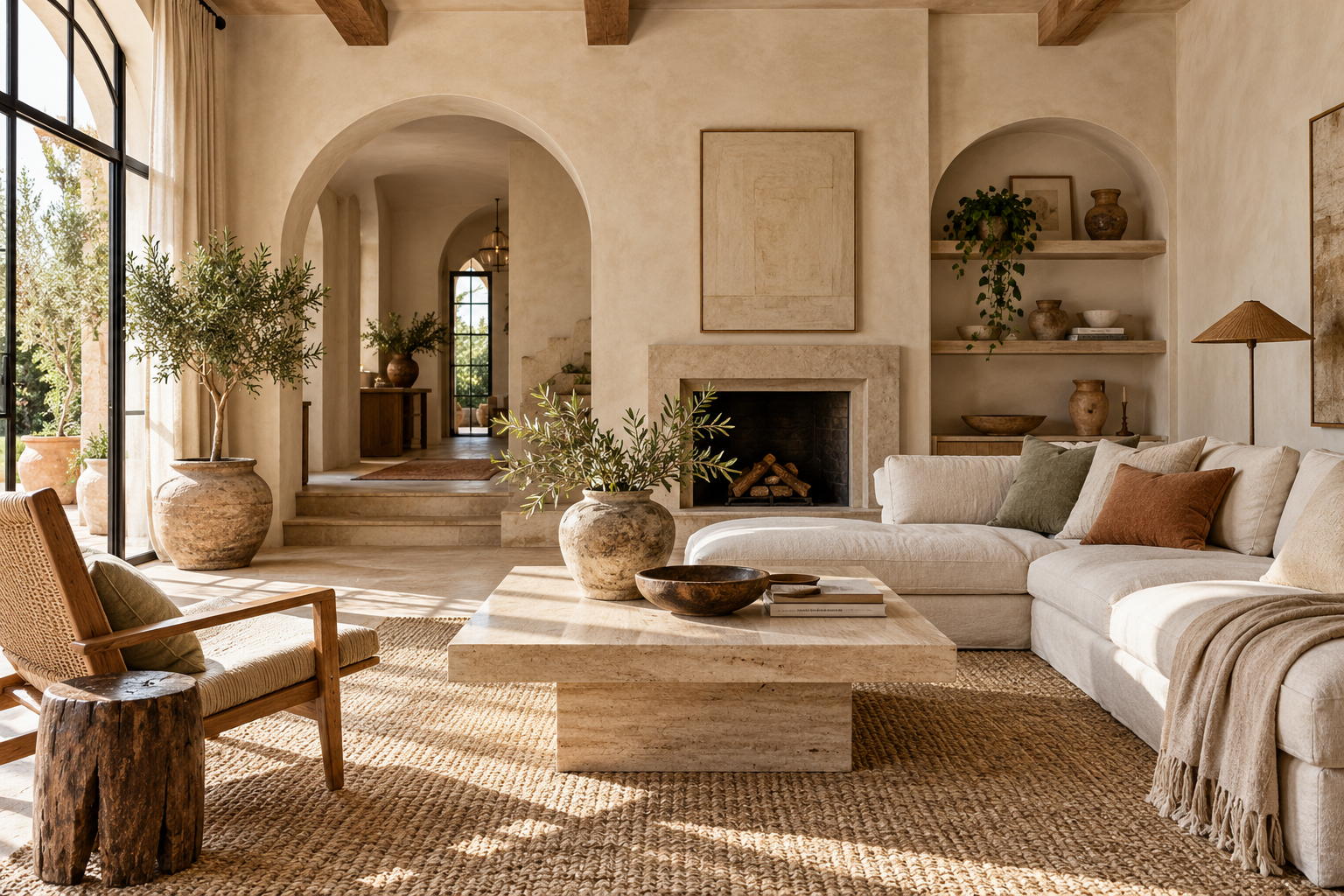
1. What Organic Modern Actually Is
Organic Modern is all about balance.
It combines the clean lines and simplicity of modern design with warmer, more natural materials.
Instead of cold minimalism, you get:
- warm wood
- stone
- linen
- wool
- soft neutral colors
- rounded furniture
- simple shapes
- very intentional decor
The result feels calm and polished, but not sterile.
The key idea
Organic Modern usually edits things down.
There is less visual noise.
Fewer objects.
Cleaner silhouettes.
More negative space.
Everything tends to feel considered.
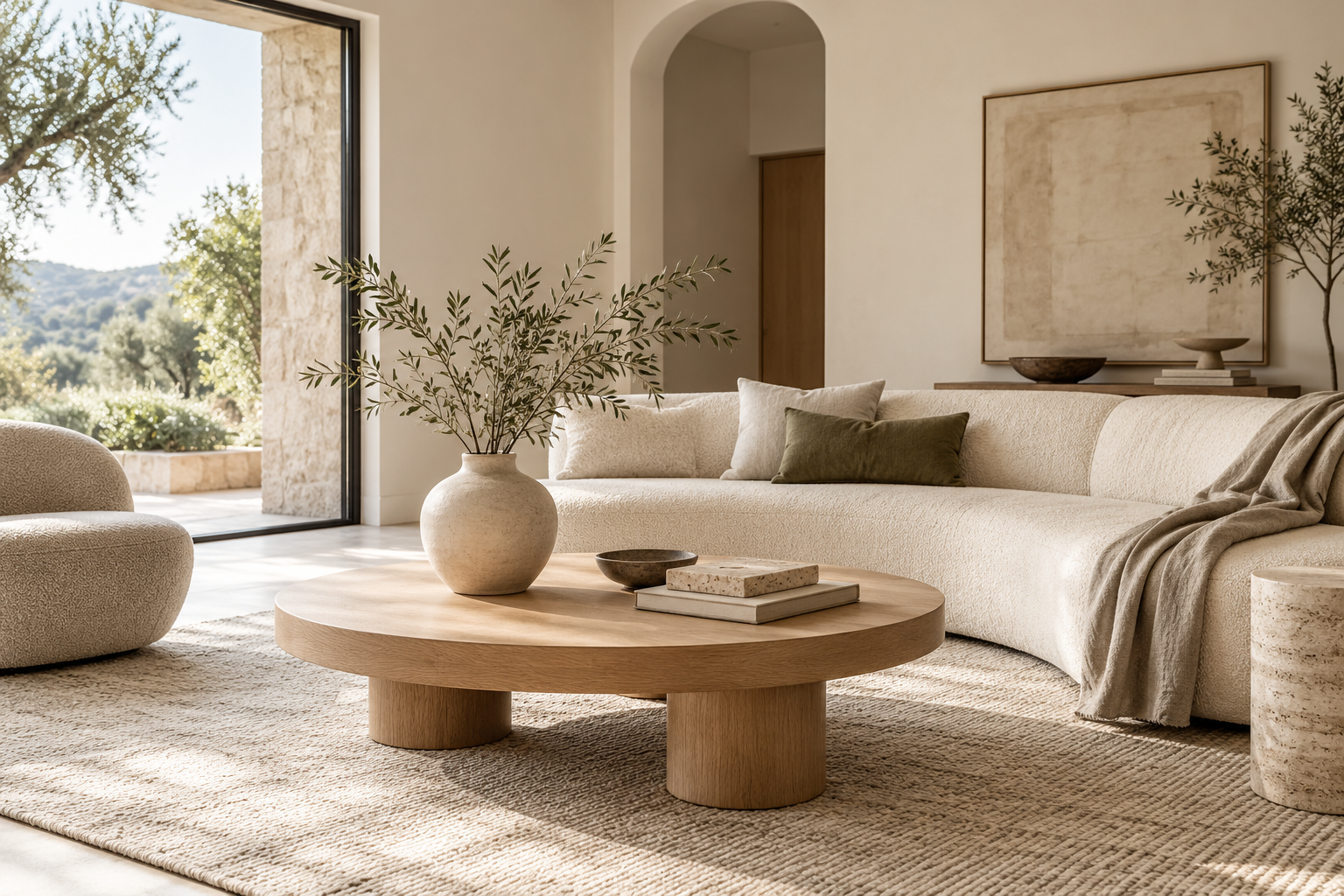
2. What Mediterranean Style Actually Is
Mediterranean interiors are more rooted in texture, architecture, age, and warmth.
Think:
- plaster walls
- terracotta
- aged wood
- stone
- wrought iron
- woven materials
- ceramics
- warm whites
- earthy tones
- arched shapes
Mediterranean style usually feels more relaxed and layered.
It does not mind a little imperfection.
Actually, that imperfection is often part of the charm.
The key idea
Mediterranean interiors tend to feel collected rather than edited.
There is more texture.
More patina.
More history.
More visible craftsmanship.
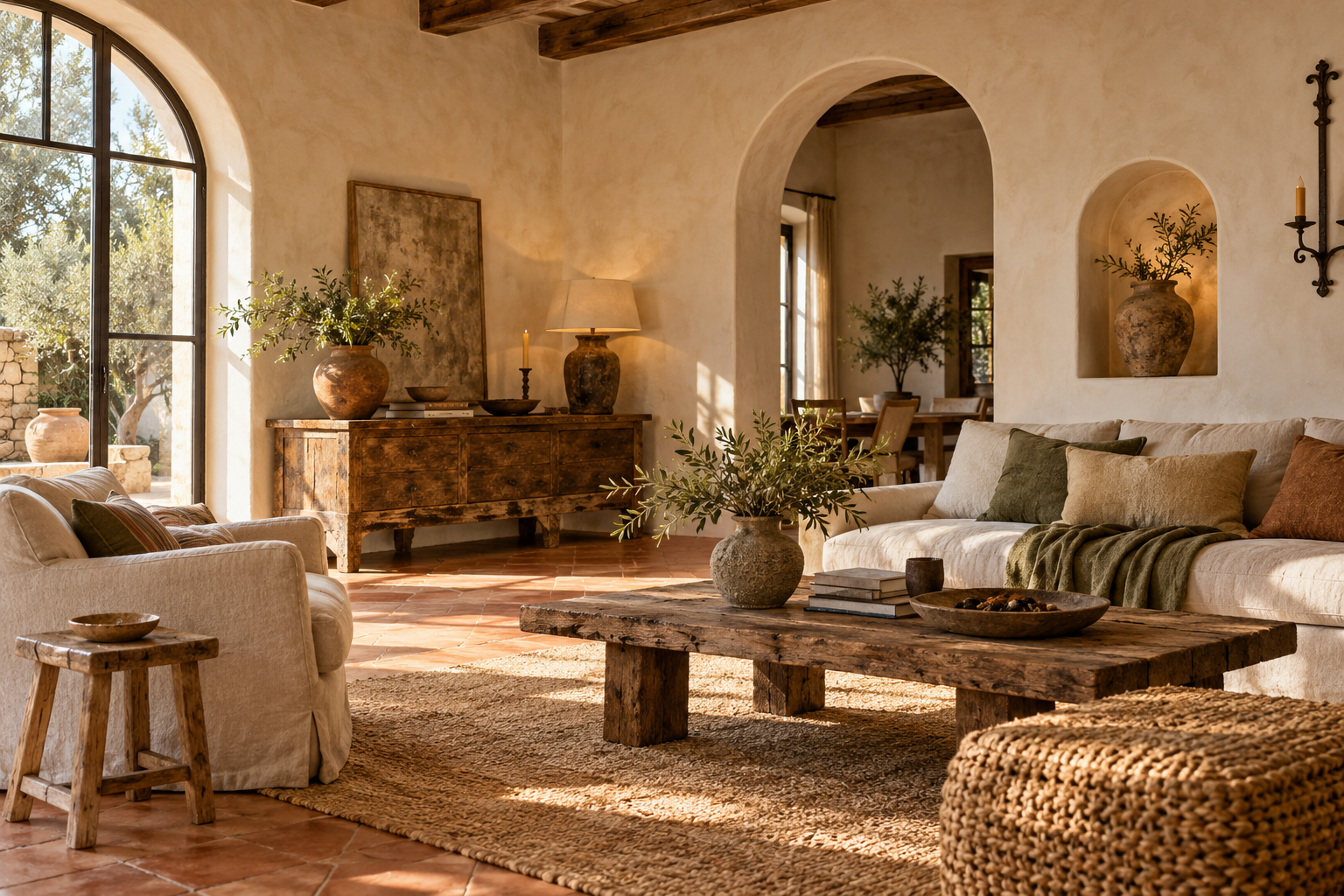
3. The Biggest Difference Is Not Beige vs. Terracotta
The most useful distinction is how the room creates interest.
Organic Modern usually creates interest through silhouette and restraint: the curve of a sofa, the proportion of a table, the grain of pale wood, and the empty space around each object.
Mediterranean-inspired rooms usually create interest through surface and architecture: plaster movement, stone edges, handmade tile, deeper wood, arches, niches, and pieces that look as though they have a history.
This distinction prevents a common mistake: assuming that adding terracotta accessories turns an Organic Modern room into a Mediterranean one. Color can support the style, but the hierarchy of shapes, surfaces, and materials does more of the work.
4. Color Palette
Both styles use warm neutrals, which is one reason they are easy to confuse.
But the way they use color is slightly different.
Organic Modern colors
Think:
- cream
- beige
- taupe
- warm gray
- soft brown
- muted olive
- black in small amounts
The palette is usually restrained.
Mediterranean colors
Think:
- warm white
- sand
- terracotta
- clay
- ochre
- muted green
- dusty blue
- deep brown
There is often more earth and more contrast.
The easiest way to tell them apart
Organic Modern usually feels softer and more tonal.
Mediterranean usually feels warmer and more sun-baked.
5. Materials
This is where the styles overlap beautifully.
Both love natural materials.
But they use them differently.
Organic Modern materials
- smooth oak
- travertine
- limestone
- linen
- bouclé
- wool
- matte ceramics
Everything usually feels refined and subtle.
Mediterranean materials
- rougher wood
- terracotta
- handmade tile
- plaster
- natural stone
- iron
- woven fibers
- aged ceramics
The finishes often feel more tactile and imperfect.
6. Furniture Shapes
Organic Modern furniture tends to be soft but clean.
Curved sofas.
Rounded coffee tables.
Simple wood chairs.
Low-profile silhouettes.
Mediterranean furniture can feel heavier, older, or more substantial.
You may see:
- thicker wood
- carved details
- rustic tables
- iron bases
- woven seating
- vintage-inspired pieces
The difference
Organic Modern curves usually feel sculptural.
Mediterranean shapes feel more handcrafted.
7. Walls and Architecture
This is one of the biggest differences.
Organic Modern often relies on furniture and materials to create warmth.
Mediterranean style uses the architecture itself.
Think:
- arches
- niches
- plaster
- exposed beams
- stone
- textured walls
- tiled details
The room structure becomes part of the style.
That is why Mediterranean interiors often feel more immersive.
The style is not just sitting inside the room.
It is built into the room.
8. Textiles
Organic Modern textiles usually feel soft and simple.
Linen curtains.
Neutral pillows.
Wool rugs.
Subtle texture.
Mediterranean textiles can feel slightly more relaxed and layered.
You might see:
- striped linens
- woven rugs
- embroidered cushions
- heavier natural fabrics
- slightly more color
Still natural.
Just less restrained.
9. Decor and Accessories
Organic Modern is usually selective.
One sculptural vase.
One oversized bowl.
A few books.
A branch.
Done.
Mediterranean decor can be more collected.
Ceramic vessels.
Wooden bowls.
Candles.
Vintage pieces.
Woven baskets.
Handmade pottery.
The main difference
Organic Modern asks:
Do we really need this?
Mediterranean asks:
Does this add character?
Both are valid.
They just create different kinds of rooms.
10. Which One Will Feel Warmer in Your Home?
The answer depends less on the label and more on the materials, lighting, and contrast already present.
- An Organic Modern room with warm oak, wool, layered lamps, and personal art can feel deeply welcoming.
- A Mediterranean-inspired room with cold gray tile and harsh overhead lighting can still feel austere.
- Texture adds visual warmth, but color temperature, daylight, upholstery, and acoustics affect how warmth is actually experienced.
Instead of asking which style wins, identify what your room lacks: softness, age, contrast, architectural interest, storage, or breathing room.
11. Which One Is Easier to Live With?
Neither style is automatically easier. Maintenance follows the specific materials and the amount of open display.
| If this bothers you… | Favor… | Why |
|---|---|---|
| Visible clutter | An Organic Modern editing approach | Fewer displayed objects and stronger closed storage |
| Small scratches or variation | Mediterranean-influenced finishes | Patina and irregularity can belong to the visual language |
| Constant styling | Either style with fewer, larger objects | Scale matters more than the label |
| High-maintenance surfaces | Tested, practical substitutes | Porcelain, washable textiles, and protected finishes can preserve the mood |
A realistic room should be designed around daily behavior. If a surface, textile, or open shelf requires a routine you will not maintain, it is not the right choice simply because it fits the mood board.
12. Common Organic Modern Mistakes
Organic Modern can go wrong when it becomes too beige, too empty, or too showroom-like.
Watch out for:
- too many pale neutrals
- no contrast
- overly matching furniture
- lack of texture
- too few personal objects
- everything looking brand new
The room should feel calm.
Not anonymous.
13. Common Mediterranean Mistakes
Mediterranean style can go wrong when it becomes too themed.
Too many terracotta objects.
Too much blue-and-white.
Too many arches added artificially.
Too many “rustic” pieces.
The goal
You want Mediterranean influence.
Not a restaurant set.
Natural materials and architecture should lead.
Decor should support them.
14. Can You Mix Organic Modern and Mediterranean?
Absolutely.
And honestly, the combination can be better than either one on its own.
Organic Modern gives you:
- calm
- simplicity
- clean lines
- visual breathing room
Mediterranean gives you:
- warmth
- texture
- age
- character
- soul
Together, they create something that feels refined but not overly polished.
15. How to Blend Them Without Making the Room Feel Confused
Start with an Organic Modern base.
Keep the large pieces simple.
Neutral sofa.
Clean wood furniture.
Soft rug.
Minimal color palette.
Then bring in Mediterranean texture.
Add things like:
- plaster or limewash walls
- terracotta
- aged wood
- handmade ceramics
- woven baskets
- linen curtains
- vintage-inspired lighting
- stone
- iron accents
You do not need all of them.
A few strong materials are enough.
16. Use 60/30/10 as a Planning Tool, Not a Shopping Formula
The numbers are not measurements and they do not require three separate shopping lists. They are simply a way to establish visual hierarchy.
60%: the quiet foundation
Let the architecture and largest surfaces carry the calmer language: wall color, flooring, major upholstery, and the overall layout. In a blended room, this foundation is often Organic Modern because it creates breathing room.
30%: the character layer
Bring Mediterranean influence through two or three substantial choices rather than many themed accessories. Examples include a plaster-like wall finish, aged wood table, warm stone, linen curtains, or a large woven light fixture. Our guides to wall finishes and wood vs. porcelain flooring explain the practical tradeoffs behind two of these choices.
10%: the personal evidence
Use ceramics, art, books, textiles, or vintage objects that have a reason to be there. This layer should make the room feel inhabited rather than styled from a single product collection.
A practical living-room example
- Foundation: simple warm walls, restrained seating, and a natural rug.
- Character: one aged wood table, textured wall treatment, and warm metal lighting.
- Personal layer: a handmade bowl, collected art, and books that are actually used.
17. The Best Blend Usually Feels Slightly Imperfect
This is probably the most important part.
If everything is too coordinated, the room starts losing character.
Let the wood tones vary slightly.
Use handmade ceramics.
Mix smooth surfaces with rough ones.
Let linen wrinkle.
Choose one old piece instead of buying an entire matching set.
The goal is not perfect consistency.
It is harmony.
Apply the Blend Room by Room
Living room
Keep the seating plan and main silhouettes quiet. Add character through one architectural surface, an aged central table, substantial ceramics, and lighting with a handmade quality.
Kitchen
Use modern function behind the scenes, then introduce warmth through stone, wood, plaster-like finishes, simple open display, or aged metal. Avoid adding decorative arches or rustic details that interfere with storage and workflow.
Bedroom
Let Organic Modern lead through calm bedding and a limited palette. Add Mediterranean influence with limewashed color, heavier linen, a carved or aged bedside piece, or one large woven element.
Bathroom
Choose construction requirements first, then build the mood through warm tile, rounded mirrors, wood tones, and layered lighting. See the practical notes in our Mediterranean bathroom guide.
A Five-Sample Test Before You Buy
- Collect one sample each for the wall, floor, primary wood, main textile, and metal finish.
- Place them together in the actual room—not under showroom lighting.
- Check them in morning, afternoon, and evening light.
- Remove the most obviously “themed” sample and see whether the palette becomes calmer.
- Photograph the group in black and white. If every value is nearly identical, the finished room may need more contrast.
This small test reveals undertone conflicts and over-coordination before they become expensive.
Organic Modern vs Mediterranean: Quick Comparison
| Style | Overall Feel | Materials | Color Palette | Decor | Best For |
|---|---|---|---|---|---|
| Organic Modern | Calm and refined | Smooth wood, stone, linen | Soft neutrals | Minimal | Clean, peaceful spaces |
| Mediterranean | Warm and soulful | Plaster, terracotta, aged wood | Earthy warm tones | Collected | Texture and character |
| Blended | Refined but relaxed | Natural + aged | Warm neutral + earthy | Edited but personal | Balanced real-life interiors |
How This Comparison Was Built
This guide uses four repeatable criteria—line, surface, age, and composition—to compare the styles. The categories are editorial tools for making design decisions, not claims that every Mediterranean region or every Organic Modern interior follows one fixed formula.
Last editorial review: October 13, 2026.
So, Which One Should You Choose?
Choose Organic Modern if you love:
- simplicity
- visual calm
- clean lines
- fewer objects
- softer neutral palettes
Choose Mediterranean if you love:
- texture
- warmth
- patina
- architectural details
- collected interiors
Or blend them.
Because if Organic Modern gives you calm and Mediterranean gives you character, the best combination is often somewhere in between.
Clean enough to feel peaceful.
Textured enough to feel interesting.
Polished enough to feel intentional.
Imperfect enough to feel lived in.
And that is usually where a home starts feeling really good.