
There is a very specific kind of frustration that happens when a room still does not feel right — even though you have already decorated it.
You add another pillow.
Then a vase.
Then maybe a lamp.
Then something for the empty corner.
And somehow the room still feels unfinished.
The problem is that sometimes a home does not need more decor.
It needs better decisions.
A sofa may be too large for the room. The rug may be floating in the middle instead of anchoring the furniture. The curtains may be making the ceiling feel lower. A pile of everyday clutter may be ruining a perfectly beautiful surface.
Before buying anything else, it is worth looking at the things that already shape the way a room feels and functions.
These are ten places to start.
How to Know If Your Room Needs More Decor — or Just a Better Setup
Before buying anything, take a step back and look at the room as a whole.
Ask yourself:
- Does the room feel empty, or does it simply feel disconnected?
- Is there actually something missing, or are the proportions off?
- Does the space look unfinished because it needs decor, or because everyday clutter is taking over?
- Is there enough lighting?
- Can you move through the room comfortably?
- Are the things you use most actually where you need them?
A room that needs more decor usually has genuine visual gaps.
A room that needs a better setup often already has plenty of things — they just are not working together yet.
That distinction can save you a surprising amount of money.
Sometimes the solution is a new lamp or piece of art.
Sometimes it is moving the sofa six inches.
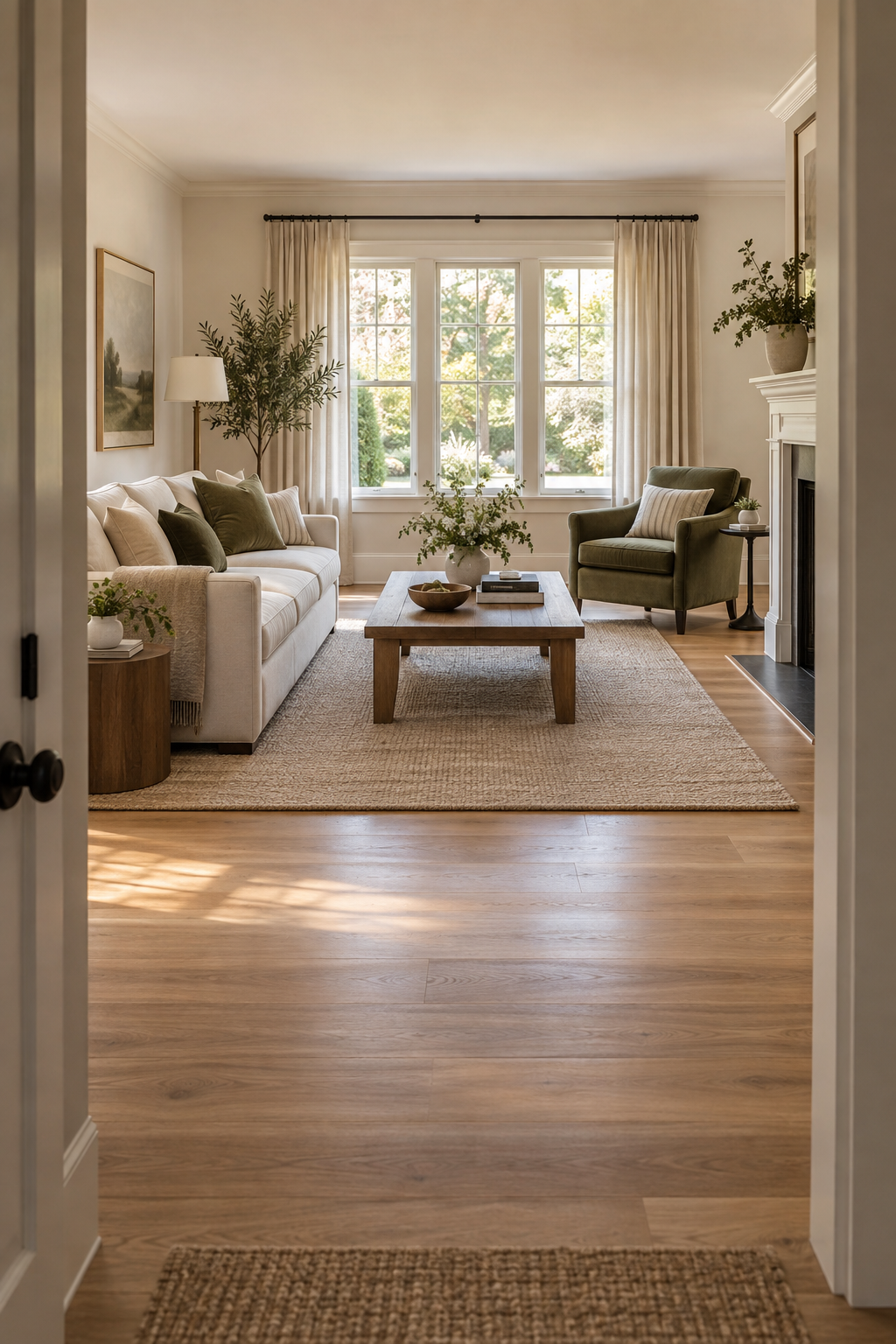
1. Fix the Furniture Flow
Before changing the decor, look at how you actually move through the room.
Do you have to walk around a chair every time you enter?
Is the coffee table constantly in the way?
Does opening a cabinet require moving something first?
A beautiful room becomes frustrating very quickly when circulation is awkward.
Try this first
Walk through the room as if you were arriving home with groceries, carrying laundry, or moving from one space to another.
Notice where you naturally hesitate or change direction.
Sometimes moving one chair twenty inches solves more than adding three decorative pieces ever could.
2. Check the Scale of the Furniture
Rooms often feel “off” because the proportions are fighting each other.
A tiny coffee table with a huge sectional.
A small rug under oversized furniture.
Three little pieces filling a wall where one substantial piece would feel calmer.
Scale has a huge effect on how intentional a room feels.
Try this first
Instead of asking whether the furniture is beautiful, ask whether it feels appropriately sized for the room and for the pieces around it.
Often, fewer pieces at the right scale will make a room feel more finished than lots of small ones.
3. Look at the Rug Before Anything Else
A rug is one of the biggest visual anchors in a room.
When it is too small, the furniture can look disconnected — almost as if every piece is floating separately.
Try this first
In a living room, see whether at least the front legs of the main furniture can sit on the rug.
If the rug is already there and cannot be changed, experiment with the furniture placement before assuming you need a new one.
Sometimes the problem is not the rug itself.
It is what is happening around it.
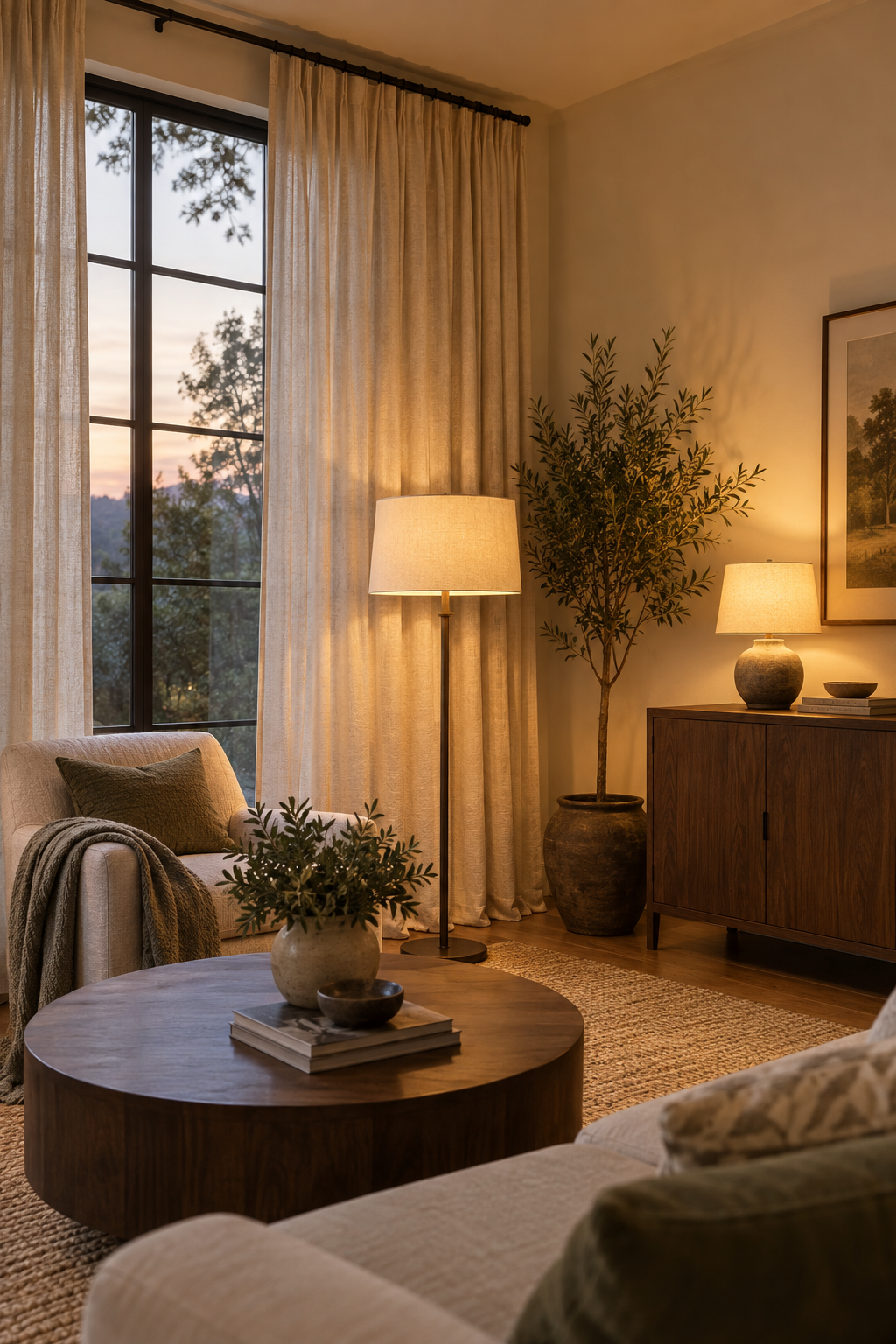
4. Raise the Curtains
Curtains have a surprisingly large effect on how a room feels.
When the rod sits directly above the window frame, the eye reads the window as smaller and the ceiling as lower.
Try this first
If possible, hang the curtain rod higher and slightly wider than the window.
Let the fabric reach the floor.
You may already own perfectly good curtains. They might simply need to be hung differently.
This is one of those changes that can make a room feel taller and more polished without adding anything new.
5. Stop Relying on One Overhead Light
A room can be beautifully decorated and still feel flat under one bright ceiling fixture.
Lighting changes the mood more than almost any decorative object.
Try this first
Look at the lamps you already own.
Could one move from a bedroom to the living room?
Could you use a smaller lamp in a dark corner?
Could you turn off the overhead light in the evening and rely on two or three lower sources instead?
Layering light often makes existing furniture and decor look completely different.
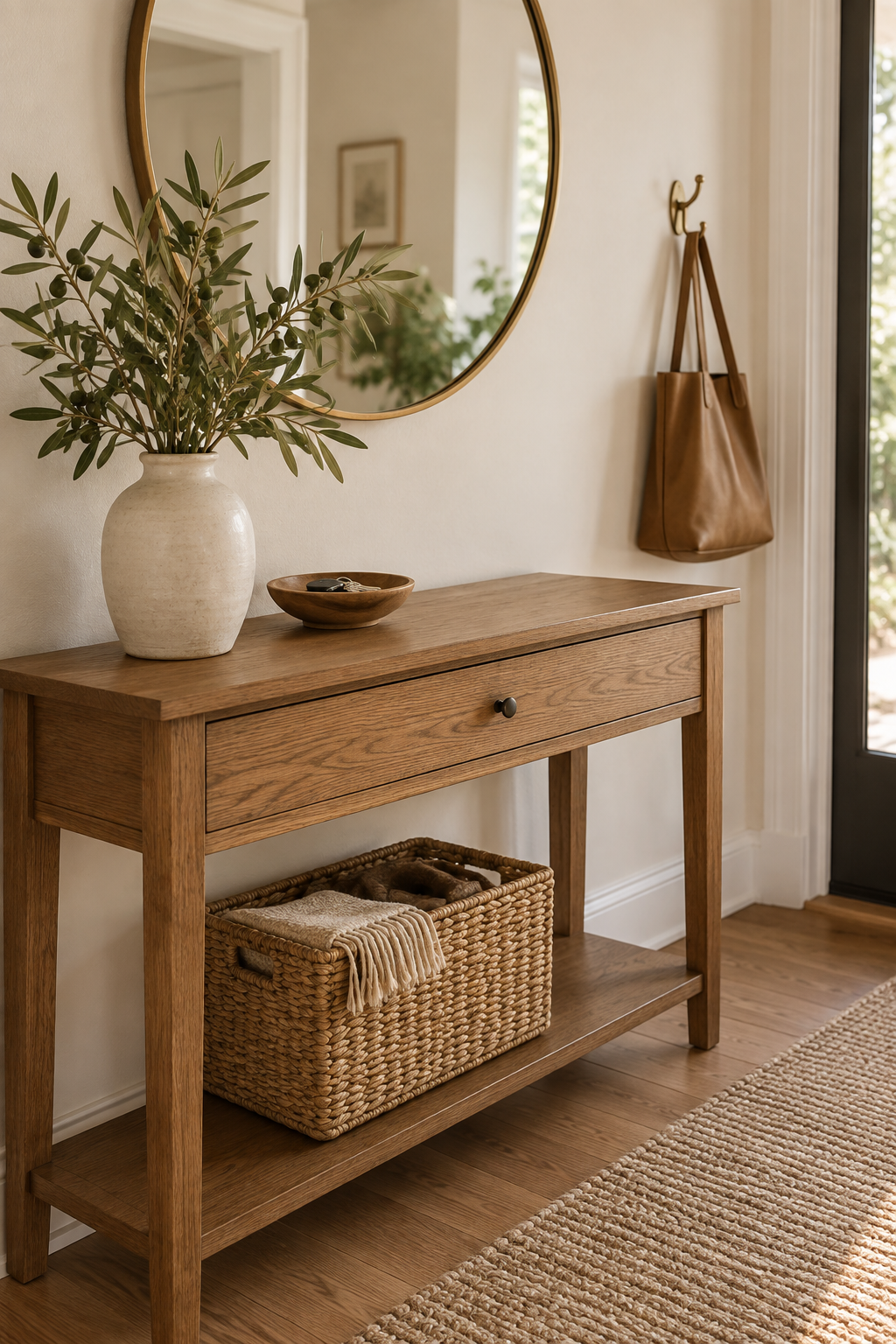
6. Find the Clutter Hotspots
Every house has them.
The corner of the counter where mail appears.
The chair that becomes temporary clothing storage.
The entry table where keys, receipts, sunglasses, and mysterious objects quietly gather.
Buying another decorative item for that surface usually makes the problem worse.
Try this first
Identify the places where clutter naturally accumulates.
Then ask why.
Does the mail need a drawer nearby?
Do the keys need a bowl?
Does the blanket need a basket?
Does the bag need a hook?
Clutter is often less about discipline and more about objects not having a convenient place to land.
7. Clear One Surface Completely
If a room feels visually busy, resist the urge to restyle everything.
Choose one surface and clear it completely.
A console.
A coffee table.
A kitchen island.
A bedside table.
Then slowly add back only what you actually want there.
You may discover that what the room needed was not another object.
It needed some empty space.
8. Fix What You Already Own
Sometimes a room feels tired because small things need attention.
A crooked frame.
A loose handle.
A lampshade sitting unevenly.
A chair that needs tightening.
A throw that never seems to stay folded.
A plant that has outgrown its pot.
None of these are exciting purchases.
But collectively, they affect how cared-for a home feels.
Try this first
Do a fifteen-minute walk through the room and make a list of small repairs or adjustments.
A home often feels more elevated when the things already in it are simply maintained well.
9. Move Things Between Rooms
We tend to think of objects as belonging permanently to one room.
But sometimes the easiest refresh is already somewhere else in the house.
Try this first
Move the lamp from the guest room.
Try the bedroom chair in the living room.
Swap two pieces of art.
Move a vase.
Switch the side tables.
Use a stool as a plant stand.
Changing context can make familiar pieces feel completely new.
And if something looks better in its new spot, you have improved the room without adding anything.
10. Decide What the Room Actually Needs to Do
This may be the most important one.
Sometimes a room feels wrong because we are decorating for the way we imagine using it instead of the way we actually use it.
Maybe the formal dining room is really where homework happens.
Maybe the living room also needs toy storage.
Maybe the entry needs somewhere to sit.
Maybe the spare bedroom is actually a workspace most of the week.
Good design gets easier when the room has a clear job.
Ask yourself
What happens here every day?
What regularly feels inconvenient?
What needs to be within reach?
What is taking up space but rarely gets used?
Function first does not mean beauty second.
Usually, once the room works better, it starts looking better too.
5 Questions to Ask Before Buying Something New for Your Home
Before adding something to your cart, ask:
1. What problem is this actually solving?
Is the room missing something specific, or do you simply like the object?
Both are valid reasons to buy something — but it helps to know which one it is.
2. Do I already own something that could do the same job?
Maybe the lamp you need is sitting unused in another room.
Maybe a stool can work as the side table you were about to buy.
Look around the house first.
3. Where exactly will it go?
Not “somewhere in the living room.”
Exactly where.
If you cannot immediately picture its place, size, and purpose, it may be worth waiting.
4. Will it make the room better — or simply fuller?
This one can stop a lot of unnecessary purchases.
A room does not automatically become more finished when more objects are added to it.
Sometimes the opposite happens.
5. Would I still want this if I waited a week?
Not every home purchase has to be deeply considered.
But for larger or purely decorative pieces, a little time can tell you whether you genuinely love something or whether you were just in the mood to change the room.
If you still want it after a few days, great.
If you completely forgot about it, you may already have your answer.
Before You Buy Anything Else
There is nothing wrong with buying something beautiful for your home.
But decor works best when it is supporting a room that already functions.
Before adding another vase, pillow, basket, lamp, or piece of art, try adjusting what is already there.
Move the furniture.
Clear a surface.
Raise the curtains.
Fix the lighting.
Give everyday clutter somewhere to go.
You may find that the room was never missing more stuff.
It was missing a little clarity.
And sometimes that is all a home needs to feel new again.
Triage the room in the right order
| Priority | Examples | Response |
|---|---|---|
| Safety or building issue | Electrical concern, active leak, instability, persistent dampness | Stop decorating the symptom and use an appropriate qualified professional |
| Function | Blocked path, missing task light, unusable storage | Adjust layout or system |
| Maintenance | Loose hardware, damaged finish, worn textile | Repair or clean according to product guidance |
| Scale and visual structure | Small rug, isolated art, crowded furniture | Measure and rearrange |
| Decoration | Color, texture, meaningful objects | Add only after the earlier layers work |
Do not cover staining, cracks, moisture, heat damage, or electrical problems simply because a decorative finish hides them. Determine the cause first.
Use a room evidence sheet
Photograph every wall and record the room dimensions, furniture footprints, window and door movement, outlet positions, task zones, storage volume, and three recurring frustrations. This turns “the room feels wrong” into a finite set of testable conditions.
Make only one large change at a time. If you move furniture, live with the layout before buying a rug. If you change the lighting, reassess the paint before repainting.
A no-buy repair weekend
- Clear the primary walking path.
- Tighten or repair only items you can address safely and correctly.
- Remove unrelated objects from visible surfaces.
- Move one existing lamp to the task that needs it.
- Test furniture footprints with tape.
- Create one landing point for the worst clutter hotspot.
- Photograph the result and wait seven days.
Know when “fix” means professional work
Electrical, gas, plumbing, structural, fire-safety, and persistent moisture issues are not styling projects. Use qualified local professionals and follow applicable codes and manufacturer instructions. Cosmetic advice should begin only after the room is safe and sound.
For a deeper lighting diagnosis, see how to make a dark room feel brighter. For what to add afterward, use the accessory decision guide.
How this guide was developed: The sequence prioritizes safety, function, maintenance, circulation, scale, lighting, storage, and only then decoration. It is intended to reduce unnecessary purchasing without encouraging readers to perform work outside their skills. Reviewed October 13, 2026.