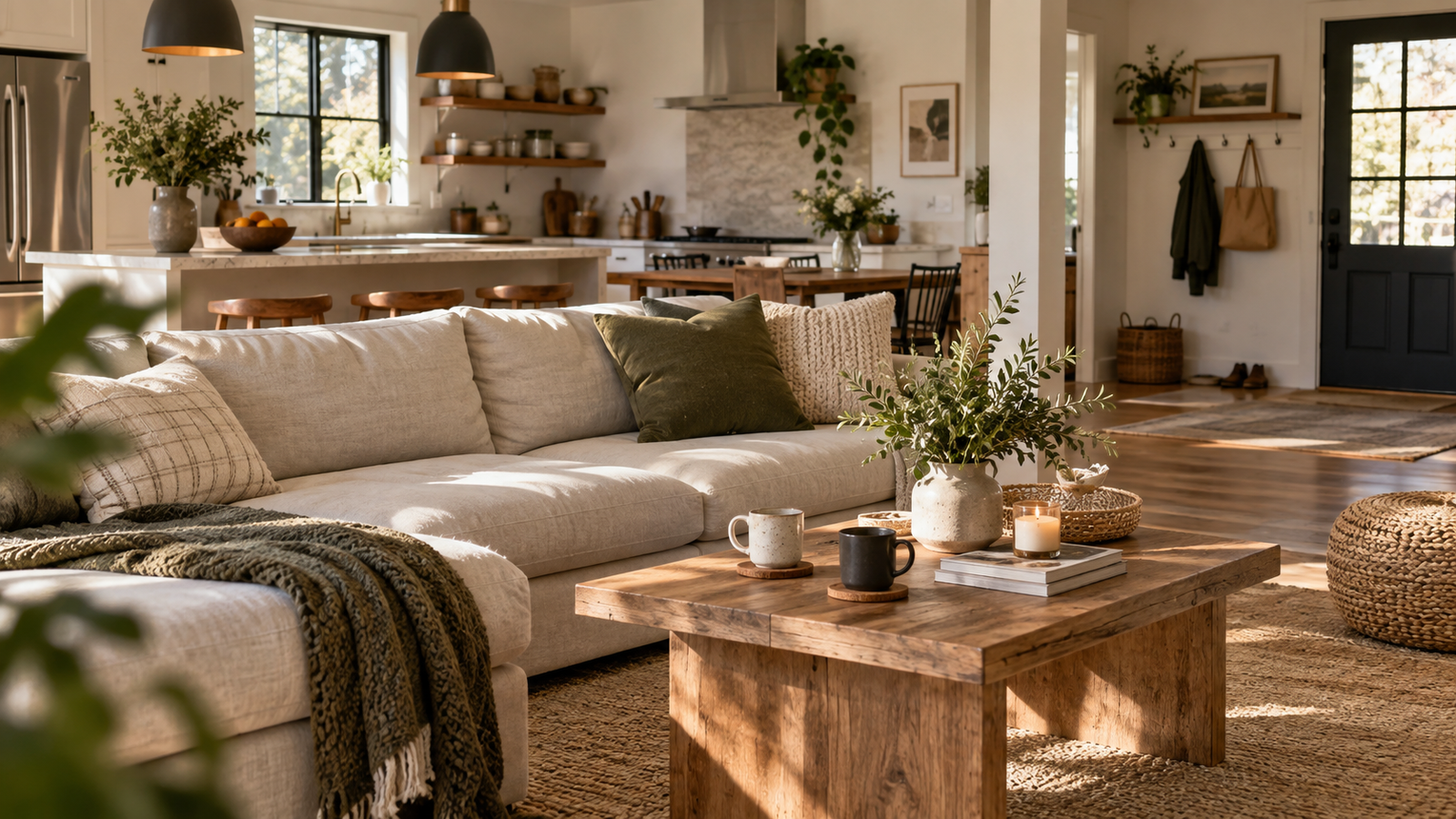
Have you ever wondered how two people who get along perfectly can somehow become annoyed with each other over a towel, a pile of clothes, or who forgot to buy coffee?
So… you have just started living together.
You are both super excited to wake up in the same place, cook dinner together, decorate your first home, watch movies on the sofa, invite friends over, and finally stop saying goodbye at the end of the night.
And then real life arrives.
You realize you barely see each other during the day, and when you finally do, one of you is unloading groceries while the other is answering messages, someone still has to cook, the laundry somehow exists again, there are dishes in the sink, and one of you has been meaning to take the trash out for three hours.
Suddenly, the time you used to spend simply enjoying each other starts sharing space with errands, chores, schedules, and all the tiny responsibilities that come with running a home.
And that can be surprisingly frustrating.
Not because something is wrong with the relationship.
But because living together adds a whole new layer to it.
Two people can love each other deeply and still have completely different habits, schedules, definitions of “tidy,” ways of relaxing, and ideas about how a home should work.
The goal is not to make both people live exactly the same way.
It is to create a home that makes those differences easier to live with.
1. Stop Trying to Make Both People Live the Same Way
One of the easiest ways to make living together harder is to assume there is one correct way to do everything.
One person puts things away immediately.
The other leaves things out because they are “still using them.”
One person wants the kitchen completely clear before bed.
The other genuinely does not notice the pan in the sink.
One person likes silence in the morning.
The other starts a conversation before coffee.
None of these differences automatically means someone is doing something wrong.
Try this instead
Notice which habits are actually causing problems and which ones are simply different.
Not every difference needs to be corrected.
Some just need a little room.
The goal is not to turn two people into one perfectly synchronized household.
It is to make the differences less exhausting.
2. Fix the Things You Keep Arguing About
Most shared-home frustrations are not dramatic.
They are repetitive.
The keys are always missing.
Someone leaves shoes in the same doorway.
The bathroom counter is constantly full.
Nobody knows whether there is milk until there is suddenly no milk.
These tiny things are easy to dismiss, but repetition is what makes them annoying.
Look for the pattern
If the same issue keeps coming up, try changing the setup before having the same conversation again.
Maybe the keys need a bowl near the door.
Maybe there needs to be a second laundry basket.
Maybe toiletries need individual drawers.
Maybe the grocery list needs one shared place.
Sometimes the easiest way to reduce tension is not better discipline.
It is better design.
3. Give Each Person a Few Non-Negotiable Spaces
Sharing a home does not mean every inch of it has to be shared in exactly the same way.
It can be incredibly helpful for each person to have a few spaces they can use without negotiating every detail.
That might be:
- one drawer in the bathroom
- one side of the closet
- one nightstand
- one shelf
- one desk
- one chair
- one corner of a room
It sounds small, but having a place that feels fully yours can make shared spaces feel easier.
Keep it simple
This does not need to become a territorial map of the house.
The idea is just to reduce unnecessary overlap.
If one person knows exactly where their things belong, fewer objects end up drifting into shared spaces.
4. Design Around Different Schedules
Living together does not necessarily mean doing everything together.
One person may wake up at 6 a.m.
The other may function best at midnight.
One works from home.
The other leaves early.
One needs quiet.
The other likes music playing constantly.
Instead of forcing both routines into the same pattern, make the house work around them.
Small changes can help
Keep morning essentials somewhere they can be accessed quietly.
Use task lighting instead of turning on every light in the room.
Create a place to leave things for the next morning.
If one person stays up later, give them a space where they can read, work, or watch something without disturbing the other.
A good shared home allows two schedules to overlap without constantly colliding.
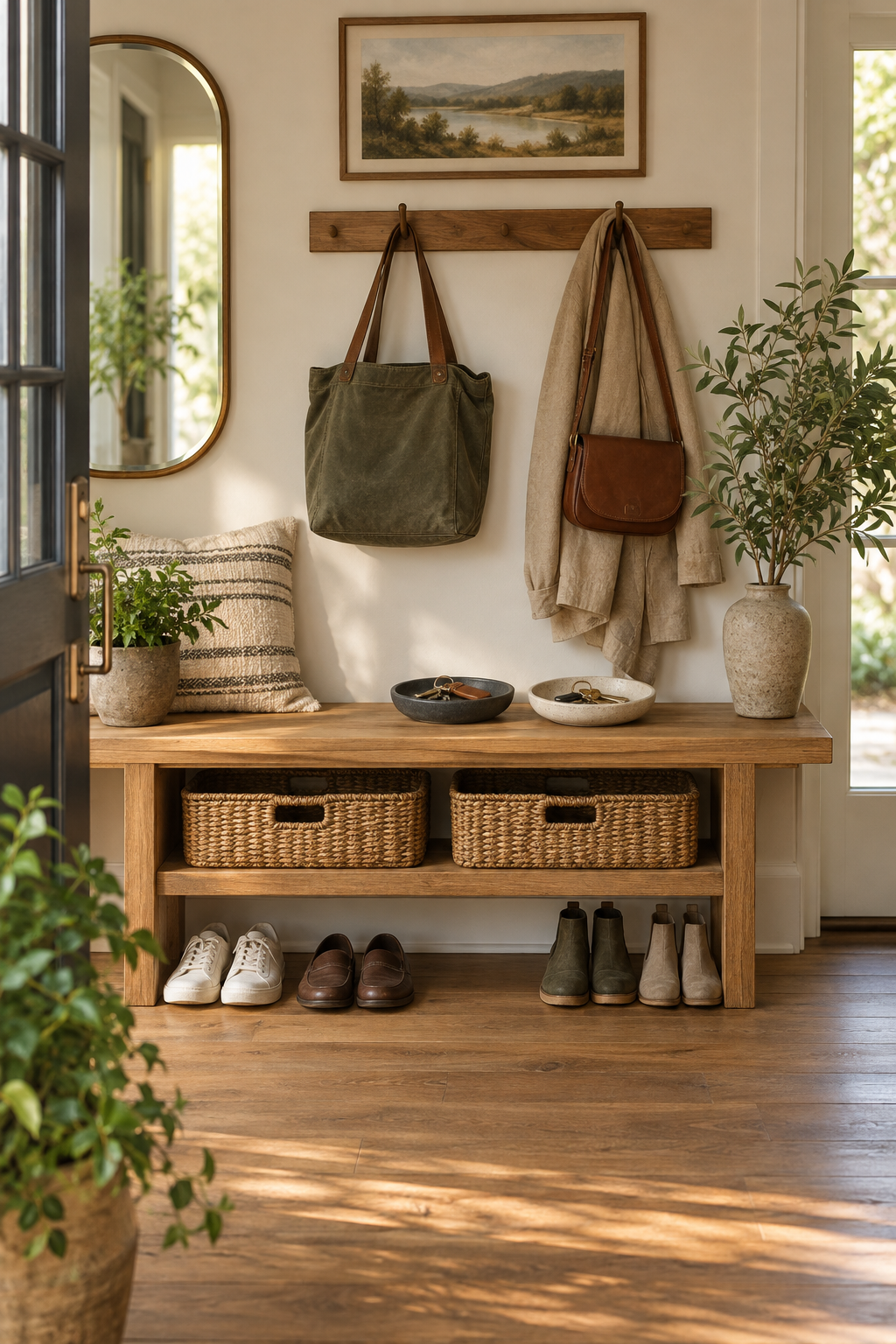
5. Make the Entry Work for Both of You
The entry is one of the first places where shared-home chaos shows up.
Two sets of shoes.
Two sets of keys.
Two bags.
Jackets.
Packages.
Receipts.
Random objects that came in from the car.
Give each person a landing spot
It can be as simple as two hooks, two baskets, or separate sections of the same drawer.
The goal is not to create perfect symmetry.
It is to stop one person’s things from constantly ending up underneath the other person’s things.
A good entryway removes decisions.
You come home, and your things already know where to go.
6. Decide What “Tidy Enough” Actually Means
This one matters more than people expect.
“Tidy” is incredibly subjective.
One person may feel relaxed with a few things left out.
The other may feel stressed the second the coffee table has three objects on it.
Neither person is necessarily unreasonable.
They may just be working with completely different thresholds.
Find a shared baseline
Instead of trying to agree on what “perfectly clean” looks like, agree on what makes the home feel comfortable for both of you.
Maybe that means:
- kitchen counters mostly clear
- no clothes on the living-room furniture
- dishes dealt with before bed
- entryway floor kept open
- one room allowed to be messier than the rest
The goal is not perfection.
It is having a shared definition of “good enough.”
7. Make Shared Spaces Neutral Enough for Both
Sometimes the friction is not about mess at all.
It is about taste.
One person loves minimal interiors.
The other loves color.
One wants clean lines.
The other keeps bringing home vintage objects.
This can actually make a home more interesting — if one style does not completely erase the other.
Try building a common base
Use larger pieces both people can live with.
Then let personality come through in smaller layers.
Artwork.
Books.
Textiles.
Objects.
Lighting.
Plants.
Personal pieces.
A shared home does not need to look like one person designed it and the other moved in later.
It should feel like both people belong there.

8. Give Each Person One Area That Feels Fully Theirs
There is something nice about having one place in the home where you do not have to compromise quite as much.
Maybe one person chooses the office.
The other gets more say in the bedroom.
Maybe one has a reading corner.
The other gets the balcony or workshop.
It does not need to be a whole room.
Why it works
When each person has somewhere to express their preferences more freely, it can take pressure off the shared spaces.
Not every design decision has to become a committee meeting.
Sometimes one corner can just be yours.
9. Stop Turning Every Chore Into a Moment Together
When you first move in together, there is a temptation to do everything together.
Cook together.
Shop together.
Clean together.
Run errands together.
Sometimes that is lovely.
Sometimes it means every evening turns into a list of joint responsibilities.
Protect the enjoyable time
Not every task needs to be shared.
One person can cook while the other does something else.
One can run an errand alone.
One can handle groceries while the other gets dinner started.
The goal is not to divide every responsibility perfectly.
It is to stop household logistics from consuming all the time you used to spend simply enjoying each other.
Living together should add shared life.
It should not make the relationship feel like one long admin meeting.
10. Create a Few Small Routines That Actually Help
You do not need a color-coded household schedule.
You do not need a Sunday meeting with a clipboard.
But a few predictable habits can remove a surprising amount of friction.
Maybe:
- whoever finishes something adds it to the grocery list
- keys always go in the same place
- packages are opened near the recycling
- dinner decisions happen before 7 p.m.
- one person handles one recurring task and the other handles another
The best routines are often barely noticeable.
They simply prevent the same tiny problem from requiring a new conversation every week.

11. Make Room for Different Ways of Relaxing
Sharing a home does not mean relaxing in exactly the same way.
One person may want to watch a show.
The other wants to read.
One wants music.
The other wants silence.
One wants to host friends.
The other wants a quiet Saturday night.
Let the home support both
A comfortable chair slightly away from the television.
Headphones stored nearby.
A reading lamp in one corner.
A small table where someone can work or draw while the other watches something.
Tiny spatial decisions can make it easier to be together without needing to do the exact same thing.
And that can be one of the nicest parts of living with someone.
12. Protect the Time That Is Not About the House
This may be the most important part.
A shared home always generates something that needs doing.
There will always be groceries.
Laundry.
Bills.
Appointments.
Something to fix.
Something to organize.
Something that needs to be bought.
If you wait until everything is finished before relaxing together, you may be waiting forever.
Let some things wait
Have dinner before the kitchen is perfect.
Sit outside while there is still laundry to fold.
Watch the movie.
Go for the walk.
Invite people over even if the spare room is not finished.
A home is supposed to support your life together.
Not become the entire project.
A Shared Home Does Not Need Perfect Synchronization
Living together is partly about learning another person in a completely new context.
Not just what they like.
But how they wake up.
Where they drop their keys.
How much quiet they need.
What “clean” means to them.
Which tasks they notice immediately and which ones are somehow completely invisible.
There will probably always be differences.
That is not necessarily something to solve.
The goal is to create enough structure around everyday life that those differences stop taking up so much space.
A hook in the right place.
A drawer that belongs to one person.
A shared grocery list.
A room that reflects both styles.
A little flexibility.
And enough time left at the end of the day to remember why you were excited to live together in the first place.
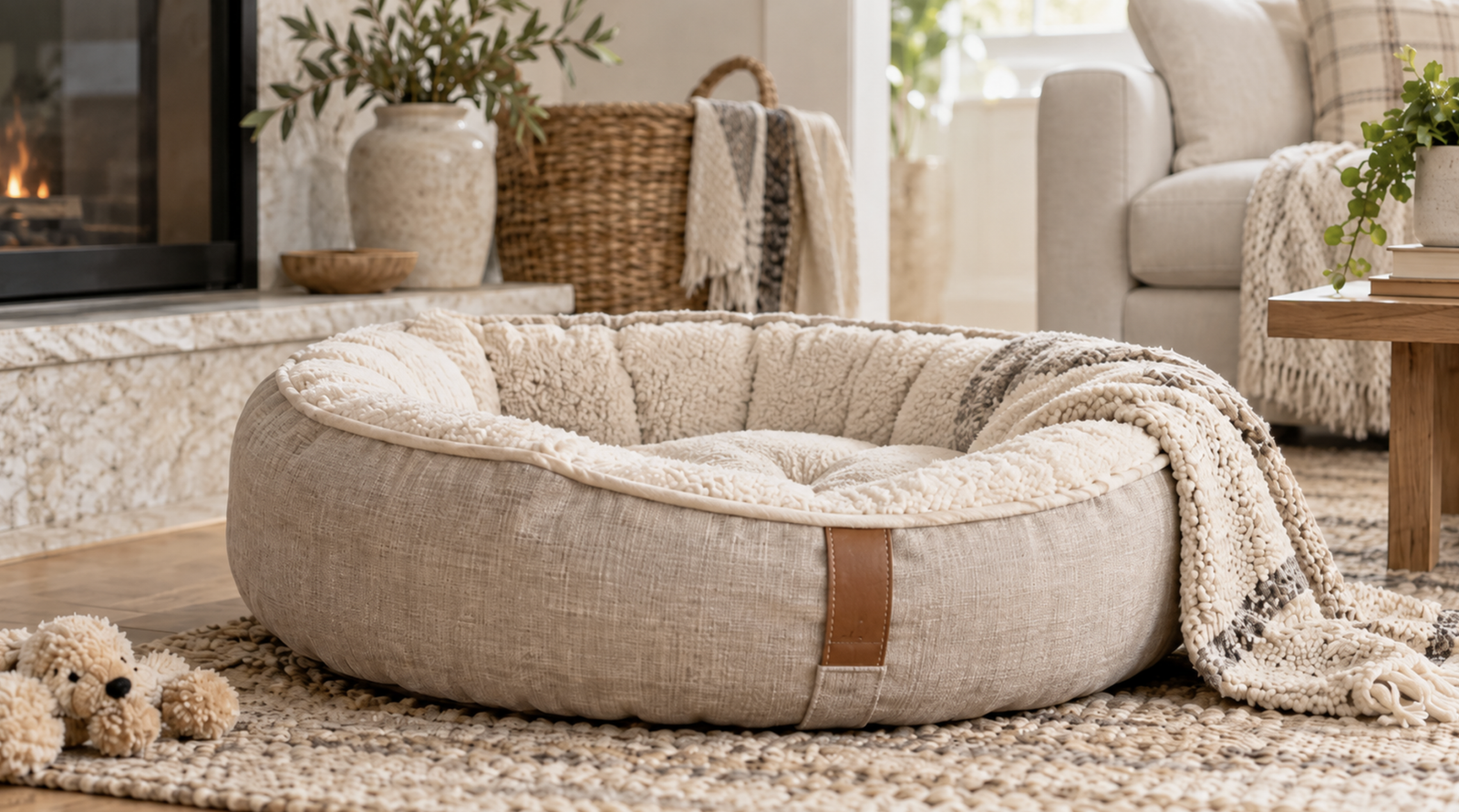
P.S. And You Thought Getting a Dog Right Now Was a Good Idea?
Yes.
The new love of your life.
Your first fur baby somehow tends to arrive right around this stage too — just when you are still figuring out how two people are supposed to share a home.
Suddenly there are two schedules, two sets of habits… and one tiny creature with absolutely no interest in either of them.
The good news is that this usually gets easier too.
What helps most is agreeing on a few basics early:
- who handles mornings and who handles evenings
- how walks fit into your schedules
- who notices when food, treats, or supplies are running low
- which routines can be shared and which are easier to divide
- what happens on the days when one of you is exhausted or gets home late
You do not need a perfect system.
You just need enough coordination that the dog does not become another tiny responsibility you renegotiate from scratch every single day.
And honestly, the chaos is usually worth it.
Stay tuned — the next post is all about making life with a dog work beautifully in a shared home.
Translate complaints into design requirements
| Repeated complaint | Possible requirement | One-week test |
|---|---|---|
| “Your things are everywhere” | Separate landing and personal zones | Give each person one open target near the point of use |
| “It is never quiet” | Different sound or schedule zones | Set quiet hours and create a headphone location |
| “I always have to remember” | Visible ownership and triggers | Assign primary responsibility for one recurring category |
| “There is nowhere for my things” | Fair—not necessarily identical—storage | Measure each category and divide usable capacity |
| “We never relax together” | A stopping rule for household work | Choose one evening when non-urgent tasks wait |
This reframing does not solve every disagreement, but it separates a practical environment problem from assumptions about another person’s character.
Create a one-page household agreement
Keep it short enough to remember. Agree on:
- the shared baseline for kitchen, bathroom, entry, and laundry;
- which spaces or storage areas are personal;
- who owns recurring tasks and how backup works;
- how purchases for shared rooms are approved;
- quiet, work, sleep, and hosting expectations;
- where shared information and shopping lists live;
- when the arrangement will be reviewed.
The agreement should reduce repeated negotiation, not create a system for monitoring each other.
Use fair capacity rather than identical capacity
Equal shelf width is not automatically fair if one category genuinely occupies more space. Inventory the objects, protect each person’s essential access, and discuss overflow before purchasing more furniture.
Keep some neutral capacity for shared items and future needs. Avoid allowing one person’s belongings to become the default contents of every shared surface.
Review after a life change
Work-from-home changes, illness, travel, a new pet, a child, a move, or a different schedule can invalidate a formerly successful system. Review the setup without treating adaptation as failure.
For pet responsibilities, continue with the shared-home dog guide. For the entrance itself, use the five-zone entryway system.
How this guide was developed: The framework separates personal zones, shared standards, task ownership, schedule differences, capacity, design taste, and protected rest. It is a household-design tool, not relationship counseling or a claim that all conflicts can be solved through organization. Reviewed October 13, 2026.