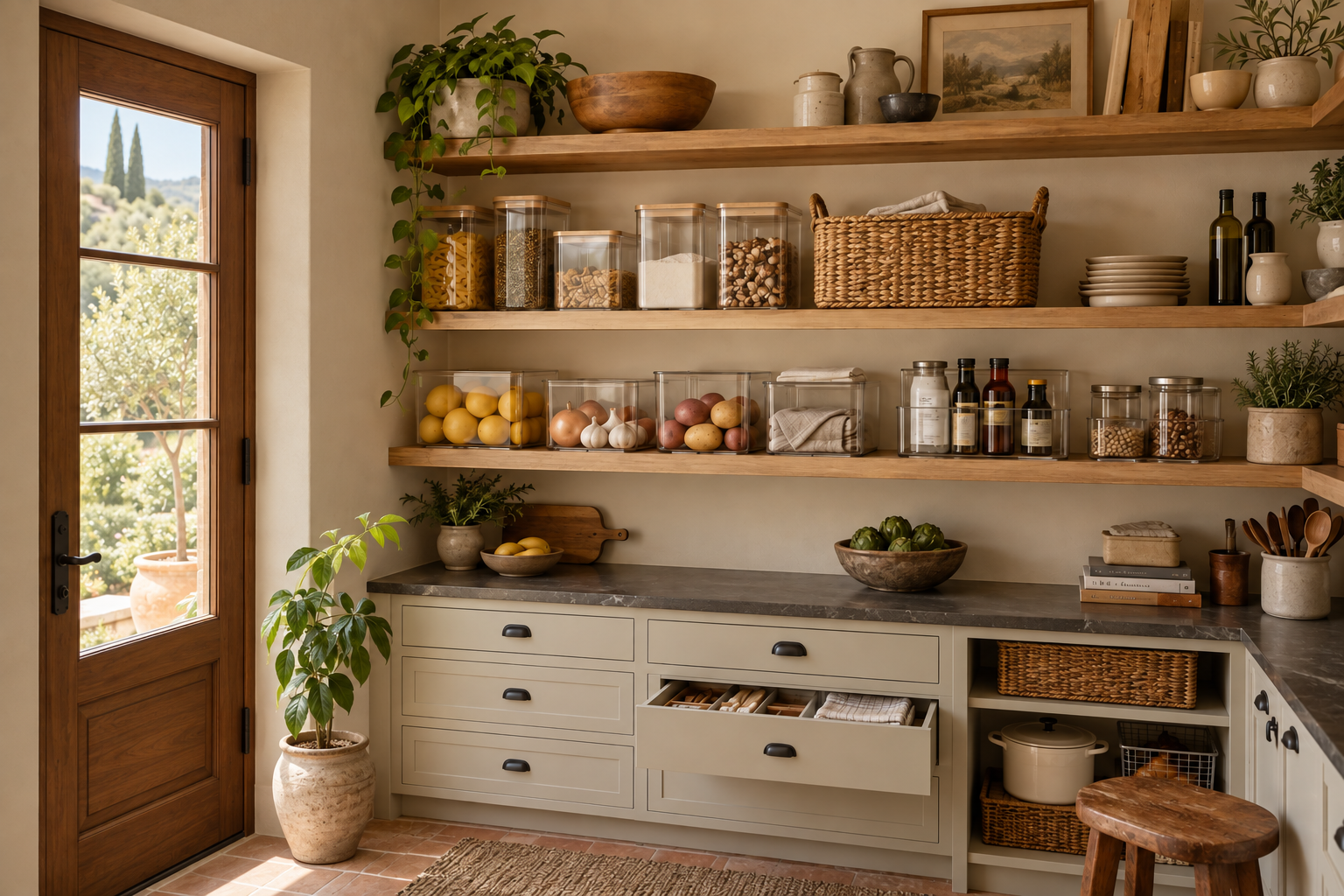
There is a very specific kind of optimism that happens when you buy a new storage product.
You see the photo.
Everything is perfectly arranged.
The labels match.
The pantry looks like nobody has ever opened a bag of chips in it.
You think:
This is it. This little plastic container is going to change my life.
And sometimes, it actually does.
Other times, three weeks later, you have the exact same clutter — except now the clutter lives inside a very aesthetic beige basket.
Good storage should make everyday life easier.
It should help you find things, put them away quickly, use the space you already have better, and reduce the number of tiny decisions you make around the house.
If a storage system creates extra steps, hides things you use constantly, or requires you to reorganize it every Sunday afternoon, it may not be solving much at all.
So before buying another set of matching containers, here are some of the most popular storage solutions — what actually works, what is mostly clever marketing, and where each one makes sense.
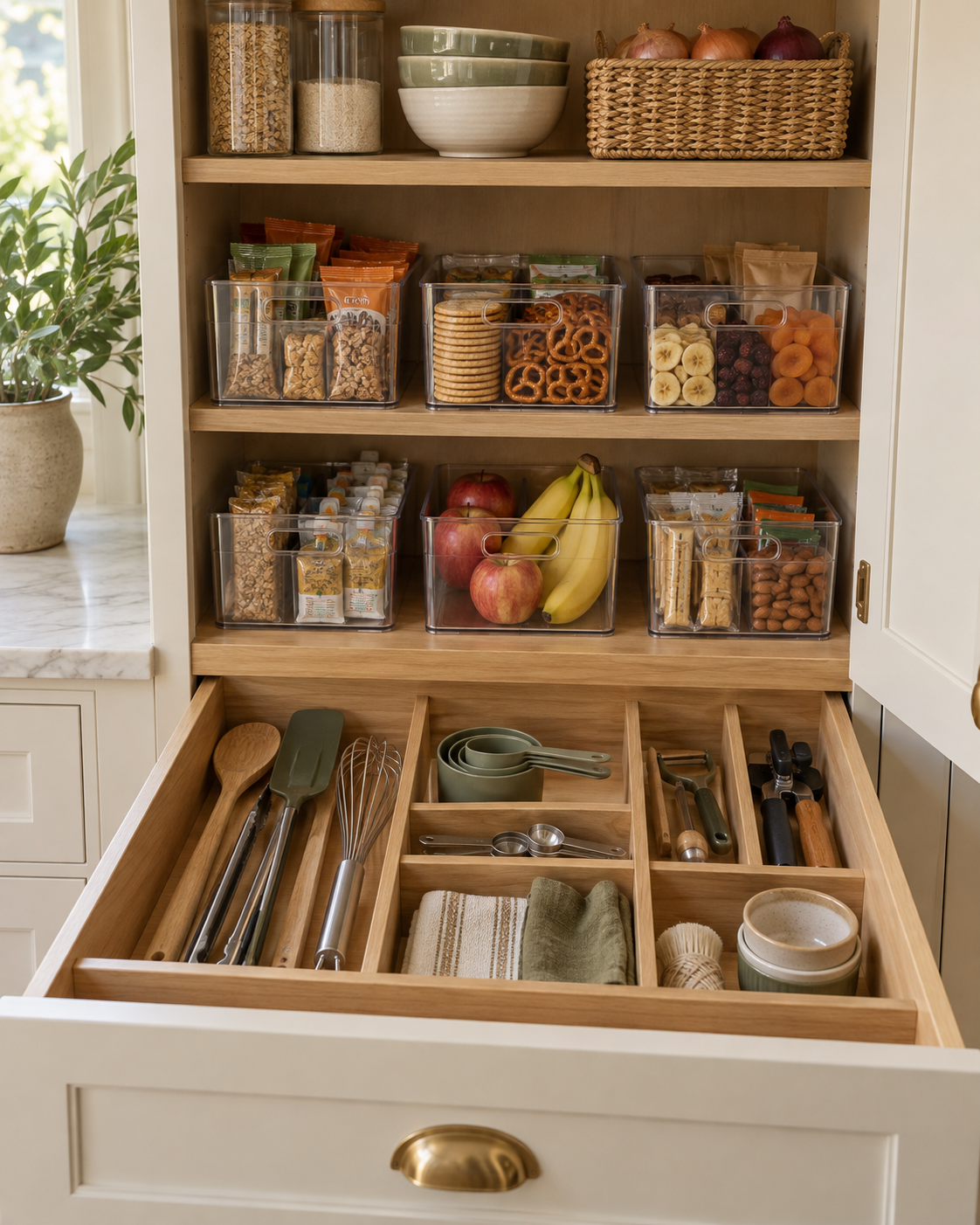
1. Clear Storage Bins
What they promise
Visibility.
You can see everything at once, nothing gets lost, and apparently your refrigerator will begin looking like a boutique grocery store.
When they actually work
Clear bins are genuinely useful when you need to group lots of similar items while still being able to see what you have.
They work especially well for:
- pantry snacks
- refrigerator items
- cleaning supplies
- bathroom backups
- craft supplies
- utility closets
They can also help contain categories that would otherwise spread across an entire shelf.
When they become bait
When every single object gets its own container.
If you have to pull out a bin, remove a lid, take out the item, replace the lid, and put the bin back every time you want something you use daily, the system is adding friction.
And twenty clear boxes do not automatically equal organization.
Sometimes they just make your clutter transparent.
The better rule
Use bins to contain categories, not individual objects.
2. Drawer Dividers
What they promise
Every item has its own tiny little home.
And unlike some storage trends, drawer dividers can actually be excellent.
When they actually work
They are particularly useful when a drawer contains several small categories that constantly mix together.
Think:
- cutlery
- kitchen tools
- makeup
- office supplies
- bathroom items
- socks and underwear
- small accessories
A divider stops everything from becoming one mysterious drawer ecosystem.
When they become bait
When the compartments are so specific that the drawer only works if everything is returned to the exact centimeter where it belongs.
If putting something away feels like a puzzle, the system is probably too complicated.
The better rule
Separate categories enough to make them easy to find.
You do not need a custom compartment for every lip balm you own.
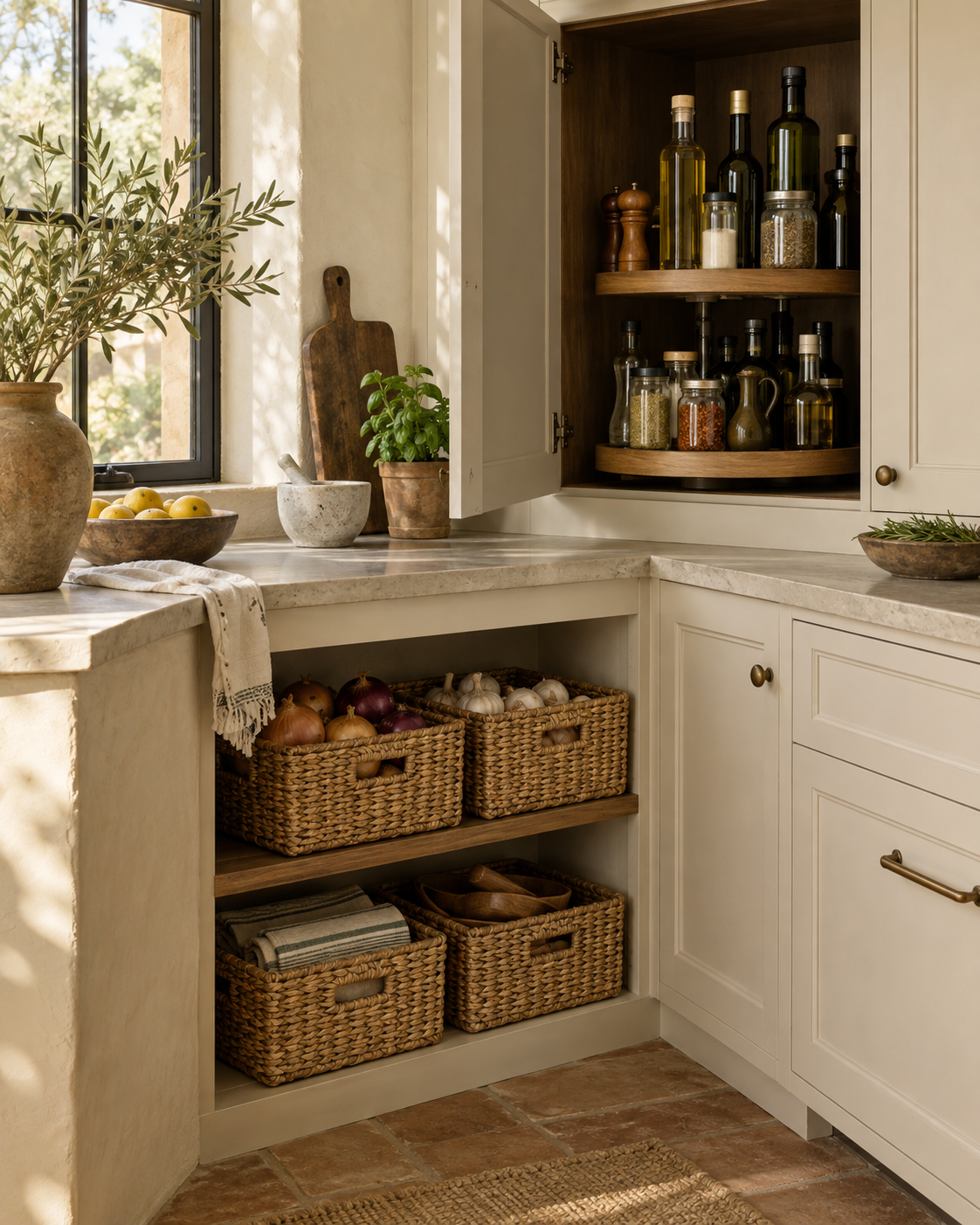
3. Matching Baskets
What they promise
Calm.
Cohesion.
The immediate feeling that your entire life is under control.
And visually? They can absolutely help.
When they actually work
Baskets are great for loose categories that need a quick place to land:
- blankets
- pet toys
- kids’ toys
- extra towels
- toilet paper
- scarves
- cleaning cloths
They are especially useful in visible spaces where you want practical storage to blend into the room.
When they become bait
When you buy the basket before deciding what it is supposed to hold.
This is how we end up with baskets full of completely unrelated objects that nobody wants to deal with.
The basket looks organized.
The contents are basically witness protection.
The better rule
Decide what needs containing first.
Then buy the basket.
Not the other way around.
4. Lazy Susans
What they promise
A magical spinning solution to every awkward cabinet.
And honestly, in the right place, they are fantastic.
When they actually work
Lazy Susans are great when the problem is depth.
They work particularly well for:
- oils and sauces
- condiments
- spices
- skincare
- cleaning bottles
- deep pantry shelves
- hard-to-reach cabinet corners
Instead of moving six things to reach the bottle at the back, you rotate the tray.
That is genuine friction reduction.
When they become bait
When they are placed on shallow shelves where everything was already easy to reach.
Now you have a circular organizer occupying rectangular space and potentially reducing the usable surface.
The better rule
Use them where reaching the back is genuinely annoying.
If you can already see and grab everything, you probably do not need one.
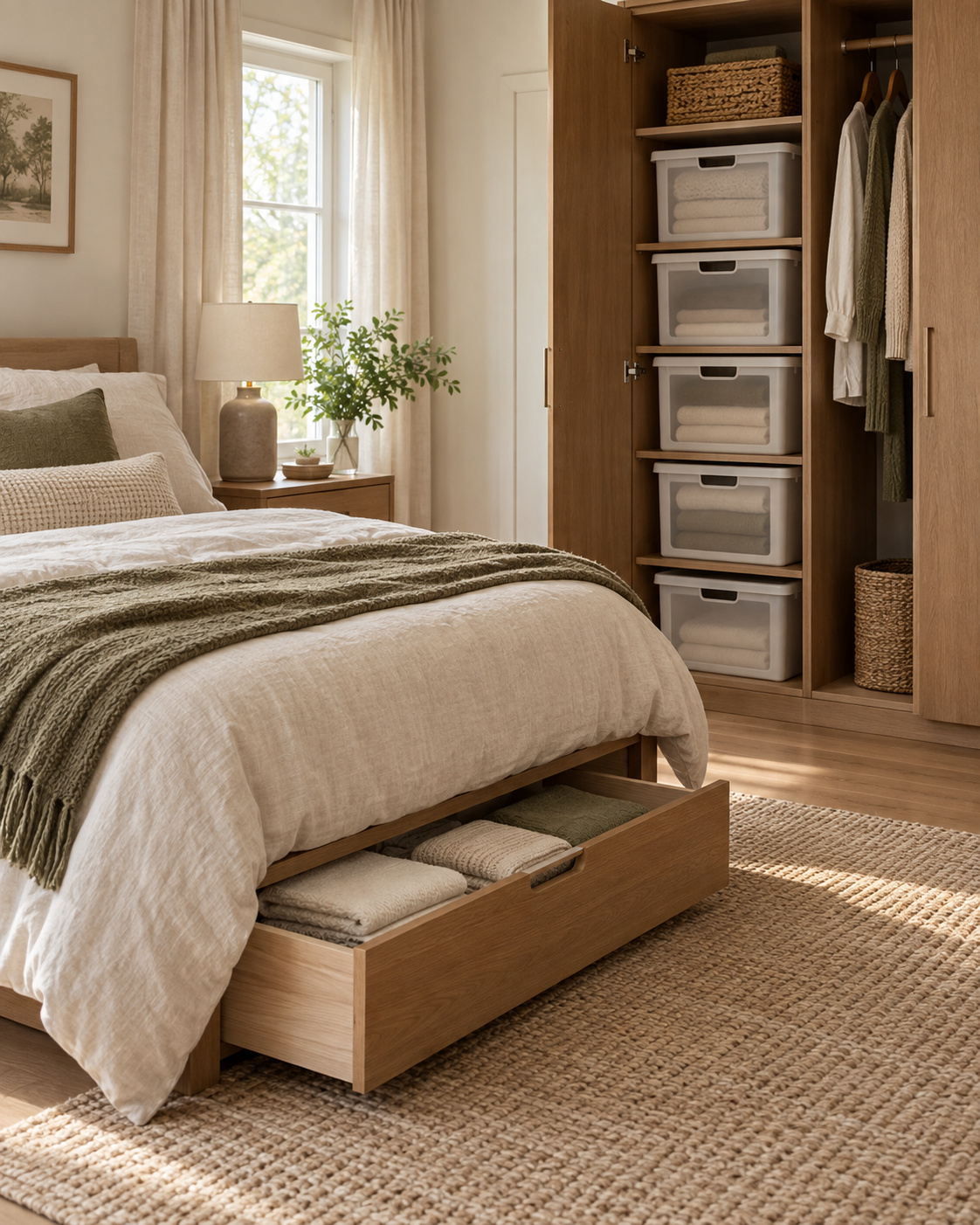
5. Stackable Bins
What they promise
Vertical space.
Which is important because a lot of storage problems are really unused-height problems.
When they actually work
Stackable storage can be brilliant in:
- utility closets
- under sinks
- pantries
- wardrobes
- garages
- bathroom cabinets
Especially when shelves are tall and there is a lot of wasted air between objects.
When they become bait
When getting to the bottom bin requires dismantling an architectural structure.
If you constantly need something stored underneath three other containers, you will eventually stop putting it back.
Or stop using it entirely.
The better rule
Stack frequently used things only when each level is independently accessible.
If not, reserve the lower layers for items you use less often.
6. Under-Bed Storage
What it promises
Free square footage.
And for small homes, this can be genuinely valuable.
When it actually works
Under-bed storage is excellent for things that are used occasionally rather than every day.
For example:
- seasonal bedding
- spare linens
- out-of-season clothing
- luggage accessories
- sentimental items
- extra blankets
Closed containers are usually best because the area underneath a bed naturally collects dust.
When it becomes bait
When the space becomes a permanent hiding place for things you forgot you owned.
The fact that something fits under the bed does not necessarily mean it should live there forever.
The better rule
Use under-bed space for clear, intentional categories — not miscellaneous overflow.
7. Vacuum Storage Bags
What they promise
Your giant winter duvet will suddenly become approximately the size of an envelope.
Not quite.
But vacuum bags can save a surprising amount of space.
When they actually work
They are useful for bulky, soft items you are not using for a while:
- seasonal clothing
- extra duvets
- blankets
- pillows
- winter coats
They are particularly helpful when closet space is limited.
When they become bait
When you use them for things you regularly need.
Vacuum sealing, reopening, repacking, and resealing something every few weeks gets old very quickly.
And because everything becomes compressed and opaque-looking, it can also become easy to forget exactly what is inside.
The better rule
Vacuum bags are for longer-term seasonal storage, not daily organization.
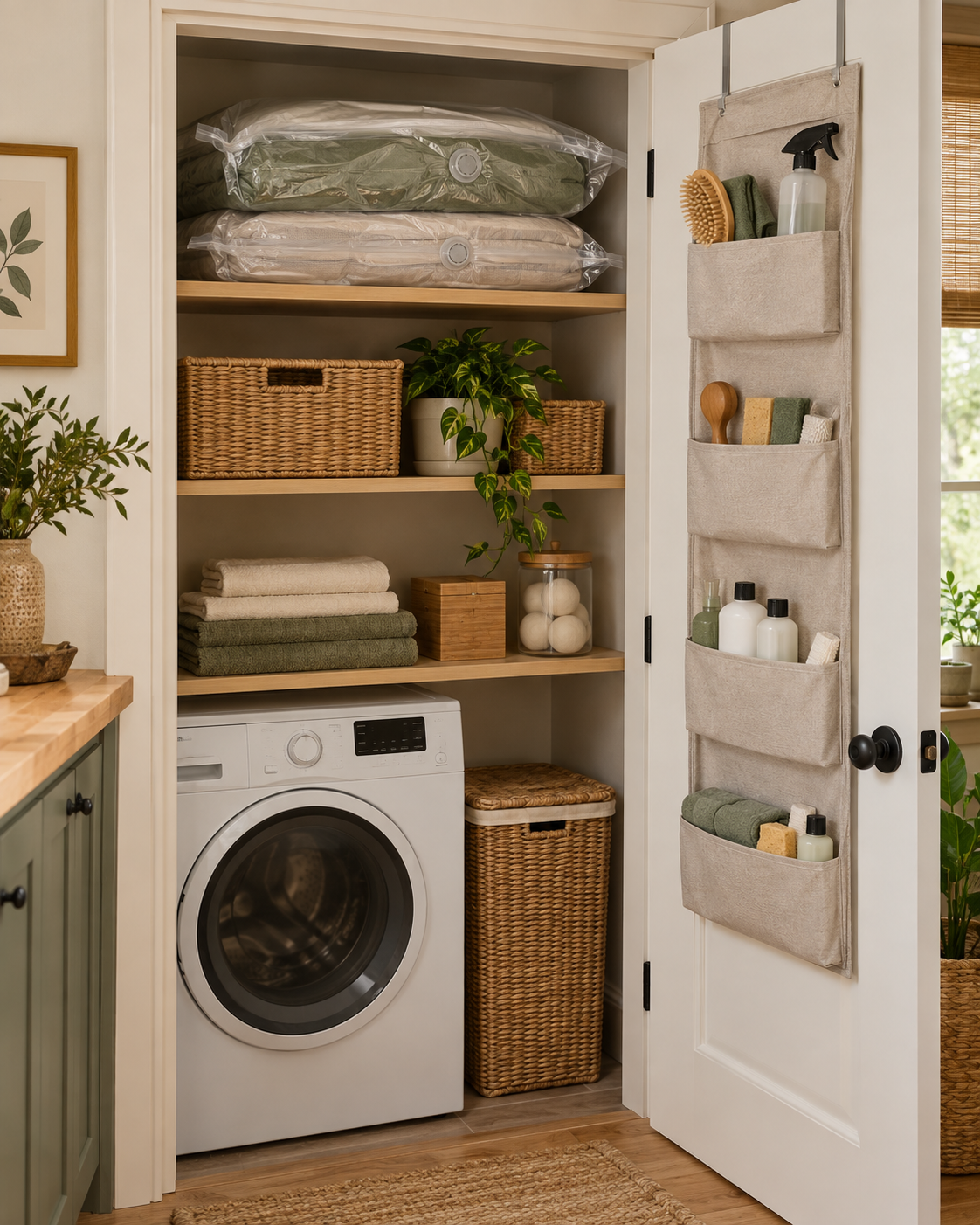
8. Over-the-Door Organizers
What they promise
Storage from space you were not using at all.
Which is actually a smart idea.
When they actually work
They can be very useful in spaces where function matters more than a perfectly minimal appearance.
For example:
- cleaning closets
- bathrooms
- laundry areas
- kids’ rooms
- craft spaces
- utility closets
They are especially good for small items that otherwise disappear into drawers.
When they become bait
When you put one on every visible door and suddenly the house feels like a storage aisle.
Sometimes the visual clutter outweighs the practical benefit.
The better rule
Use them behind doors where the storage is useful but not visually dominant.
9. Shoe Organizers
What they promise
A beautiful little apartment complex for every pair of shoes you own.
When they actually work
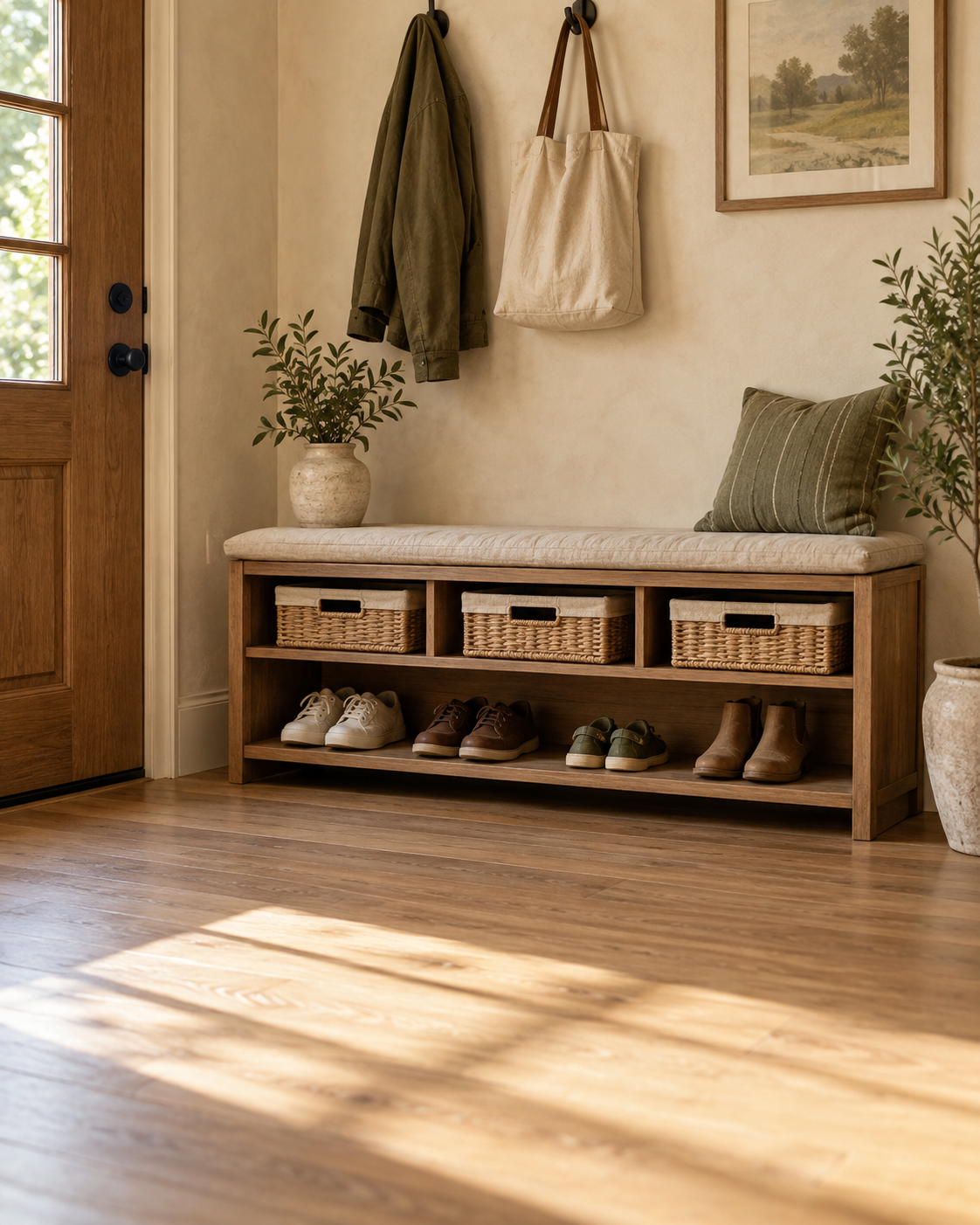
The best shoe storage is usually simple and accessible.
Low shelves.
A shallow cabinet.
A bench with storage.
A rack near the entrance.
Anything that lets you put shoes away without rearranging five other pairs first.
When they become bait
Complicated stacking systems can technically fit more shoes into a space while making every pair more annoying to access.
If you have to remove shoes to reach other shoes, the storage system may be creating the problem it claims to solve.
The better rule
Prioritize access over maximum capacity.
You are storing shoes, not playing Tetris.
10. Labels Everywhere
What they promise
You will never again wonder where anything belongs.
And labels can be extremely useful.
When they actually work
They are especially helpful when:
- several people use the same storage
- categories are not immediately obvious
- containers are opaque
- there are multiple similar bins
- you are organizing pantry or utility items
Labels reduce the amount of remembering required.
When they become bait
When you label things nobody could reasonably confuse.
If a transparent container contains six rolls of toilet paper, you probably do not need a label announcing TOILET PAPER.
You knew.
The better rule
Label when it removes uncertainty.
Not because the label itself looks organized.
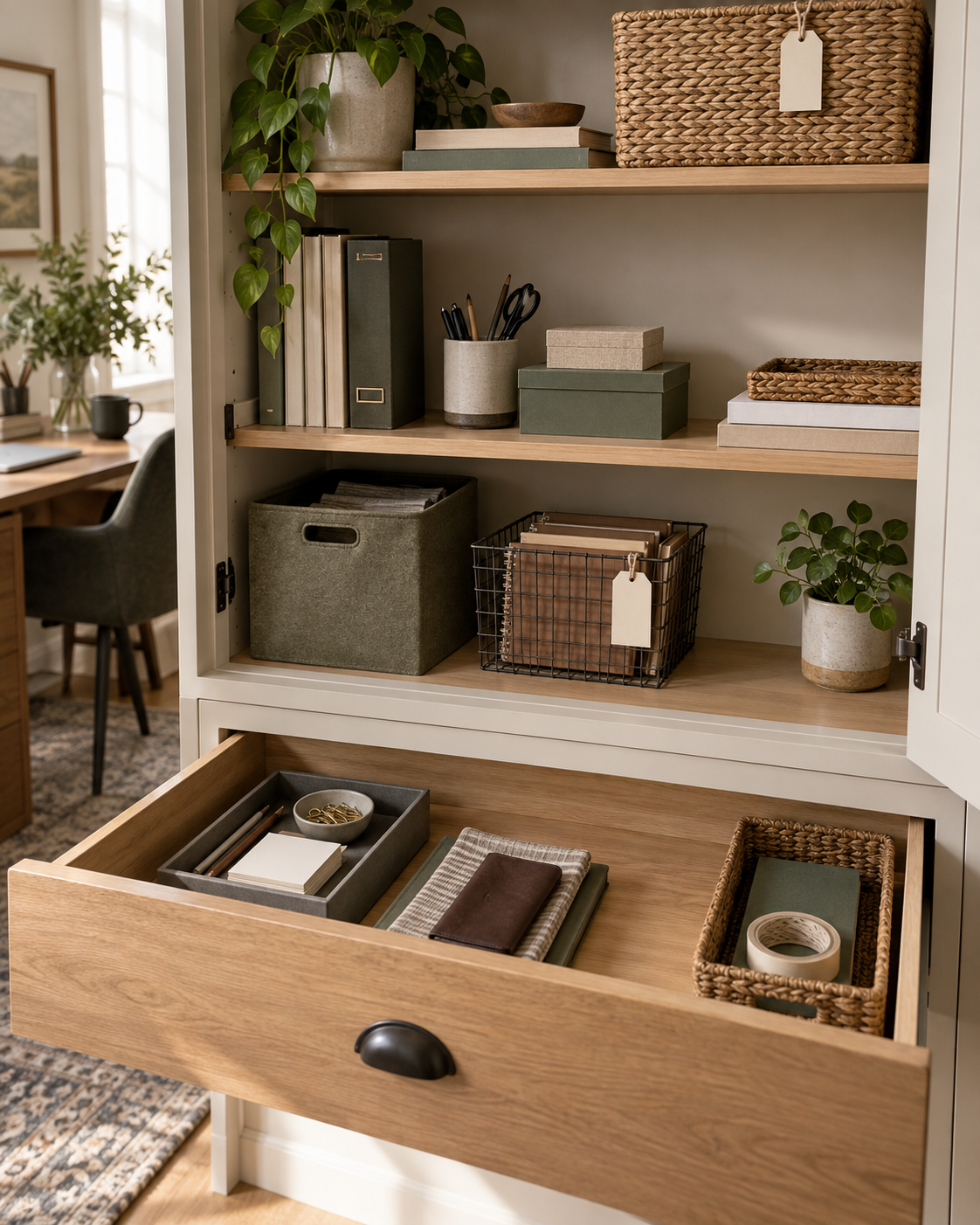
11. Drawer Organizers for Every Possible Object
You have probably seen these online.
Perfect little molded compartments designed for batteries, plastic wrap, tea bags, water bottles, lids, chargers, makeup brushes, and approximately every category known to humanity.
Some are brilliant.
Some are solutions searching desperately for a problem.
Ask one question
Was this category actually annoying before I saw the organizer?
If you constantly lose batteries in a junk drawer, a battery organizer could be useful.
If your tea bags already sit peacefully inside a perfectly functional box, transferring them into a twenty-four-compartment acrylic display may not improve your life.
It may just give you another thing to maintain.
12. The Storage Product That Usually Works Best: Empty Space
This one is unfortunately difficult to monetize.
But it is often true.
Sometimes the best storage solution is simply not filling every shelf, drawer, and cabinet to maximum capacity.
A little empty space gives objects somewhere to move.
It lets you see what you own.
It makes things easier to put away.
And it gives the household room to absorb the random things that inevitably enter it.
Storage becomes much harder when every container is already at 100 percent capacity.
Leave breathing room where you can
A drawer that is 80 percent full is easier to use than one where everything has to be compressed perfectly to close it.
The same applies to cabinets, shelves, closets, and baskets.
Organization needs a little margin.
How to Know If a Storage Solution Is Actually Good
Before buying an organizer, ask yourself four things.
1. Does it remove a step?
Good storage usually makes something easier to access or easier to put away.
If it adds several steps, be suspicious.
2. Does it solve a problem I already have?
Not a problem the advertisement just informed you that you have.
An actual recurring annoyance.
3. Can everyone who uses the space understand the system?
If a storage system only works when one person maintains it perfectly, it may not be a very good household system.
4. Will I still use it once the novelty wears off?
This may be the most important question.
A beautiful organizer is only useful if you are willing to interact with it every single day.
Organization Should Make the House Easier to Use
At The Rookie Homemaker, we are not particularly interested in making every cabinet look ready for a photoshoot.
We are much more interested in making the house easier to live in.
Sometimes that means a beautiful row of matching baskets.
Sometimes it means a $5 divider inside an ugly drawer.
Sometimes it means a Lazy Susan.
And sometimes it means buying absolutely nothing and simply moving the things you use most often somewhere easier to reach.
The best storage systems are usually the ones you stop noticing.
You open the cabinet.
You find what you need.
You put it back.
And you move on with your day.
That is the kind of organization worth keeping.
Measure the category—not only the cabinet
Storage dimensions need to account for the objects, the hand that retrieves them, hinges, pipes, shelf lips, door clearance, and room to return the item without precise packing.
| Measure | Why it matters |
|---|---|
| Usable interior width, depth, and height | Nominal furniture dimensions may include unusable structure |
| Largest item in the category | The organizer must fit real contents, not an average |
| Total category volume | Prevents buying containers that are full immediately |
| Access opening and pull-out path | A bin can fit the shelf but fail to clear the door |
| Loaded weight | Handles, shelves, and users need to manage it safely |
Run a no-purchase prototype
- Define the recurring problem in one sentence.
- Remove items that do not belong to the category.
- Use an existing box, tray, or divider in the proposed location.
- Test it through a normal week.
- Count how often objects land outside the system.
- Buy a permanent product only if the prototype reduces effort.
This test separates a storage need from the desire for a storage product.
Include safety and preservation
Keep medication, chemicals, batteries, sharp tools, and other hazardous items in storage appropriate to the household, product instructions, and local guidance. Do not decant hazardous products into unlabelled or food-like containers.
Check manufacturer load limits, anchoring requirements, ventilation, and material compatibility. Vacuum bags and tightly closed plastic containers are not appropriate for every textile, material, or moisture condition; follow care guidance for the stored item.
Score the system after two weeks
Rate it from one to five for finding, returning, cleaning, shared understanding, and unused capacity. A beautiful system that scores poorly on returning or shared understanding should be simplified.
For visible categories, compare with the open-storage decision guide. For the arrival zone, use the five-zone entryway system.
How this guide was developed: Each product is evaluated against an existing problem, category volume, access steps, loaded weight, household safety, maintenance, and performance after novelty wears off. Reviewed October 13, 2026.