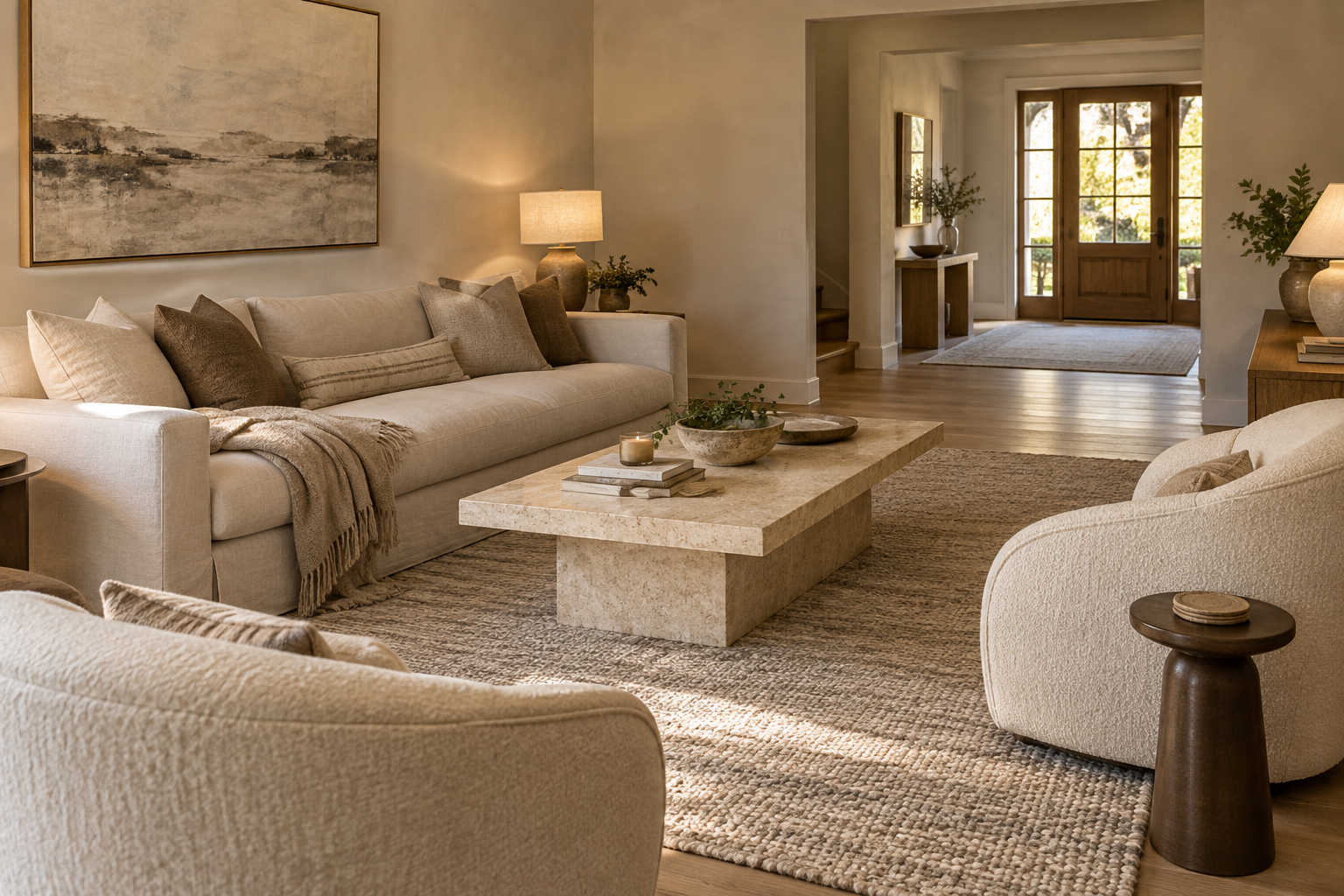
Hello, fellow decor lovers.
Today we are talking about one of the greatest joys — and, if we are being honest, one of the greatest pressures — of loving your home:
Having people over.
Because there is something deeply satisfying about welcoming guests into a space you have carefully thought about, styled, and made your own.
But there is also that tiny voice that suddenly notices everything.
The chair that feels awkwardly placed.
The entryway that looked fine five minutes ago.
The bathroom counter you now cannot stop looking at.
The fact that there may not actually be a good place for someone to put their bag.
Hosting can feel like the ultimate test of a home.
But a welcoming home is not about making everything perfect.
It is about making people feel comfortable.
And usually, that comes down to a few small things: where they sit, where they put their coat, whether the lighting feels warm, whether the bathroom feels cared for, and whether the house feels relaxed enough that they can relax too.
That’s what we are focusing on today.
Not perfection.
Not performance.
Just a home that feels genuinely good to walk into.
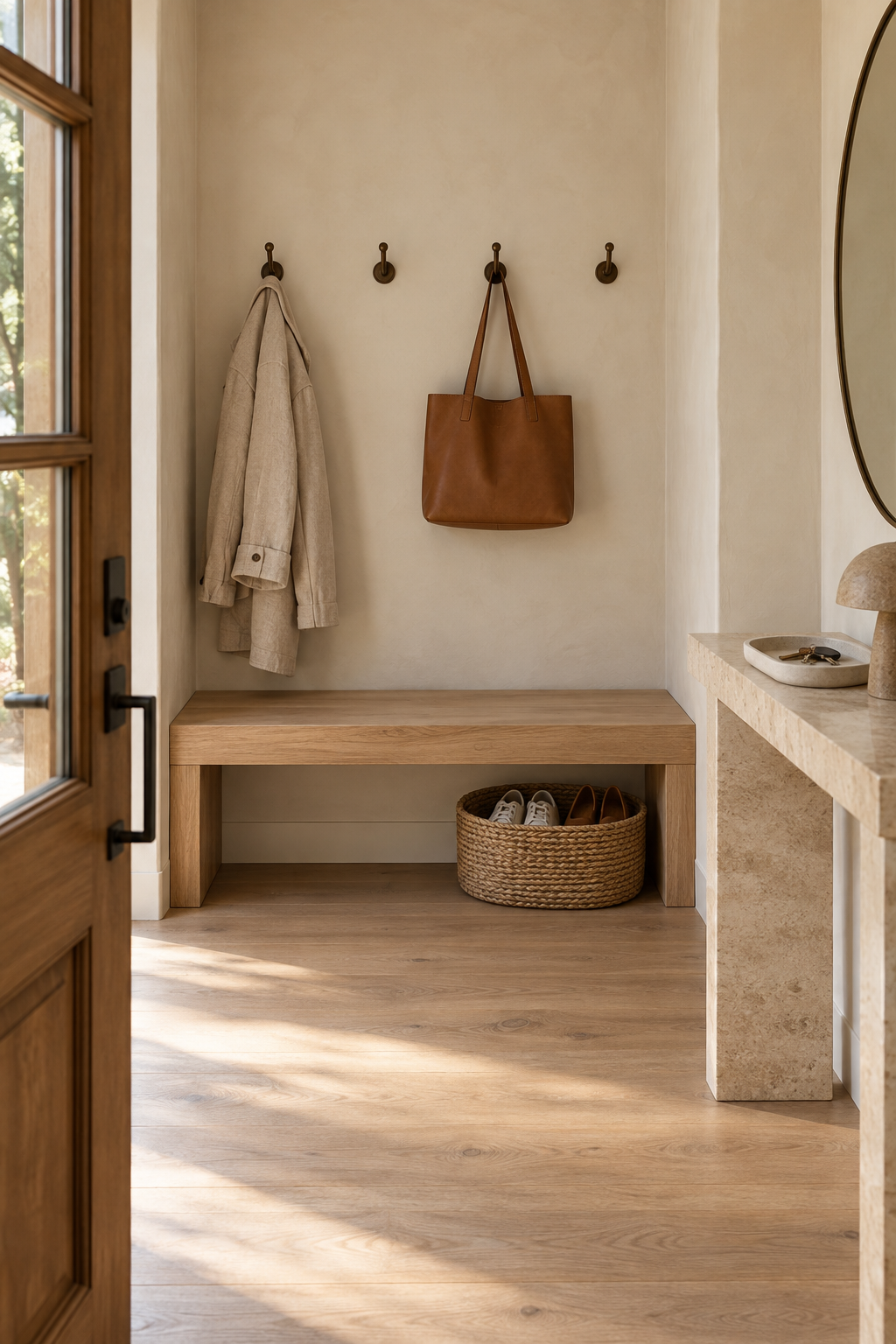
1. The Entry Sets the Tone
Guests start experiencing your home before they even reach the living room.
A cramped entry, nowhere to put a bag, shoes blocking the path, or a coat draped over the only available chair can make things feel awkward immediately.
Make it easier
You do not need a perfect mudroom.
A hook.
A small bench.
A basket.
A clear spot for shoes.
A tray for keys.
Anything that gives people an obvious place to put their things helps the house feel more welcoming.
The best entryways remove the question:
Where should I put this?
2. Give People Somewhere to Put Their Things
This sounds obvious until someone is standing in the middle of the room holding a handbag, jacket, phone, and drink with nowhere comfortable to put any of them.
Think about what guests usually carry.
Bags.
Coats.
Phones.
Glasses.
Keys.
Small surfaces matter
A side table near seating.
A clear console.
A hook.
An empty chair that is actually meant to stay empty.
You do not need to redesign the room around guests.
You just want to make sure every surface is not already completely occupied before they arrive.
3. Warm Lighting Changes Everything
Lighting may be one of the fastest ways to make a home feel welcoming.
Bright overhead lighting can make even a beautiful room feel slightly formal or exposed.
Before guests arrive
Turn on:
- table lamps
- floor lamps
- accent lighting
- candles where appropriate
Use the overhead light only if you actually need it.
Lower, warmer light makes conversation feel more intimate and immediately softens the room.
And luckily, it also makes almost everyone look better.
An underrated hosting benefit.
4. Make Seating Feel Natural
Enough seating is important.
But so is how that seating is arranged.
If everyone is facing the television instead of each other, conversation can feel less natural.
If one chair is floating in a strange corner, nobody wants to be the person who ends up there.
Look at the room as a group
Can people easily talk to one another?
Is there somewhere to put a drink from most seats?
Can someone join the group without dragging furniture around?
Sometimes moving a chair slightly before people arrive makes a bigger difference than adding any new decor.
5. Do Not Make Guests Afraid to Touch Anything
There is a fine line between a beautifully styled room and a room that feels like a museum.
If the coffee table is completely covered in delicate objects, where does someone put their glass?
If every sofa cushion is arranged with military precision, people may feel guilty leaning against them.
Leave some usable space
Decorate.
Absolutely.
But make sure the room still communicates:
You are allowed to live here.
A welcoming space feels cared for, not untouchable.
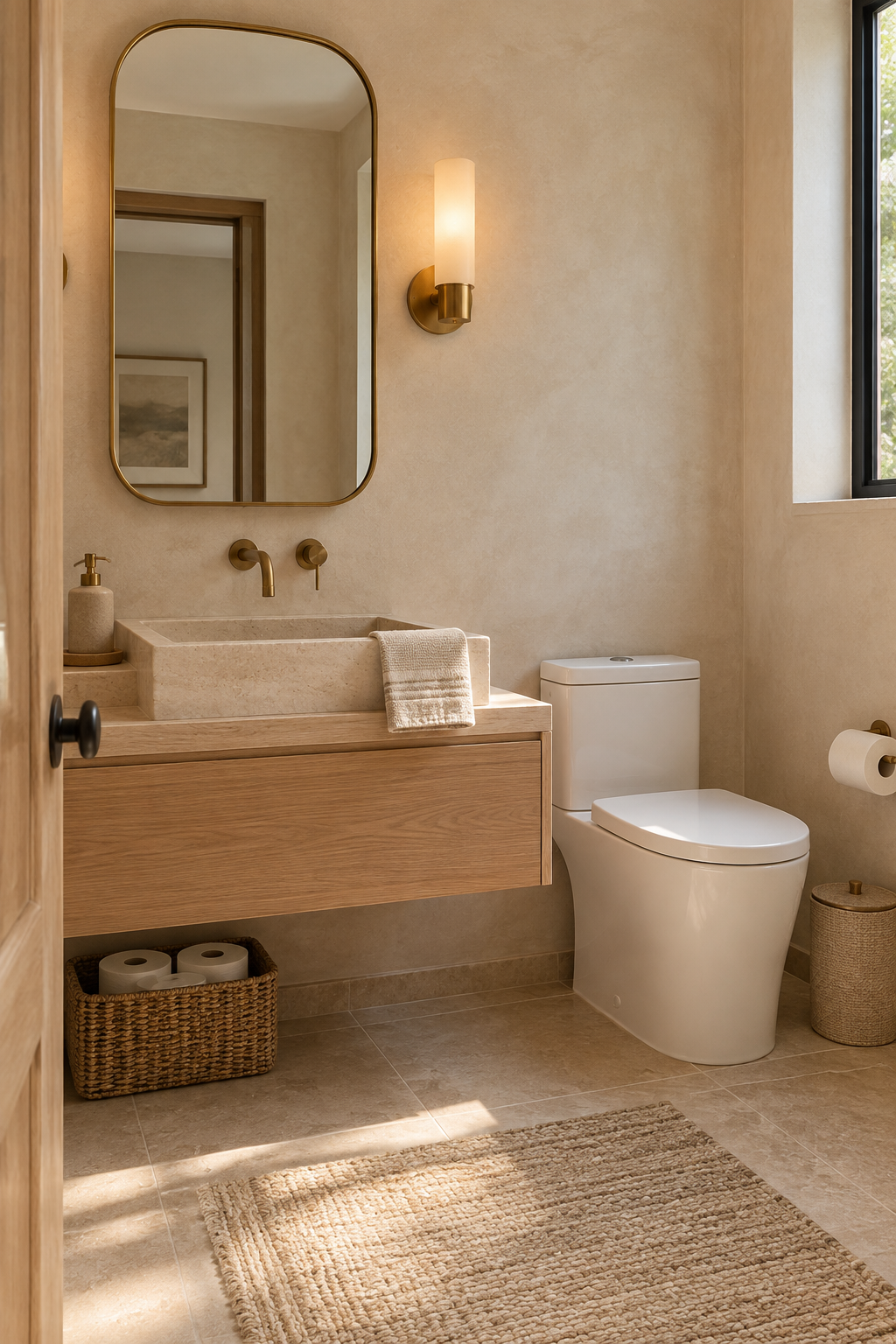
6. The Bathroom Matters More Than You Think
Nobody expects a guest bathroom to look like a hotel.
But people do notice whether it feels comfortable and cared for.
Check a few basics
Make sure there is:
- soap
- a clean hand towel
- toilet paper
- somewhere obvious to dispose of trash
- enough light
- a reasonably clear counter
That is usually enough.
You do not need to add decorative soaps, seven rolled towels, or a floral arrangement the size of the sink.
Clean, simple, and functional wins.
7. Keep Drinks Easy
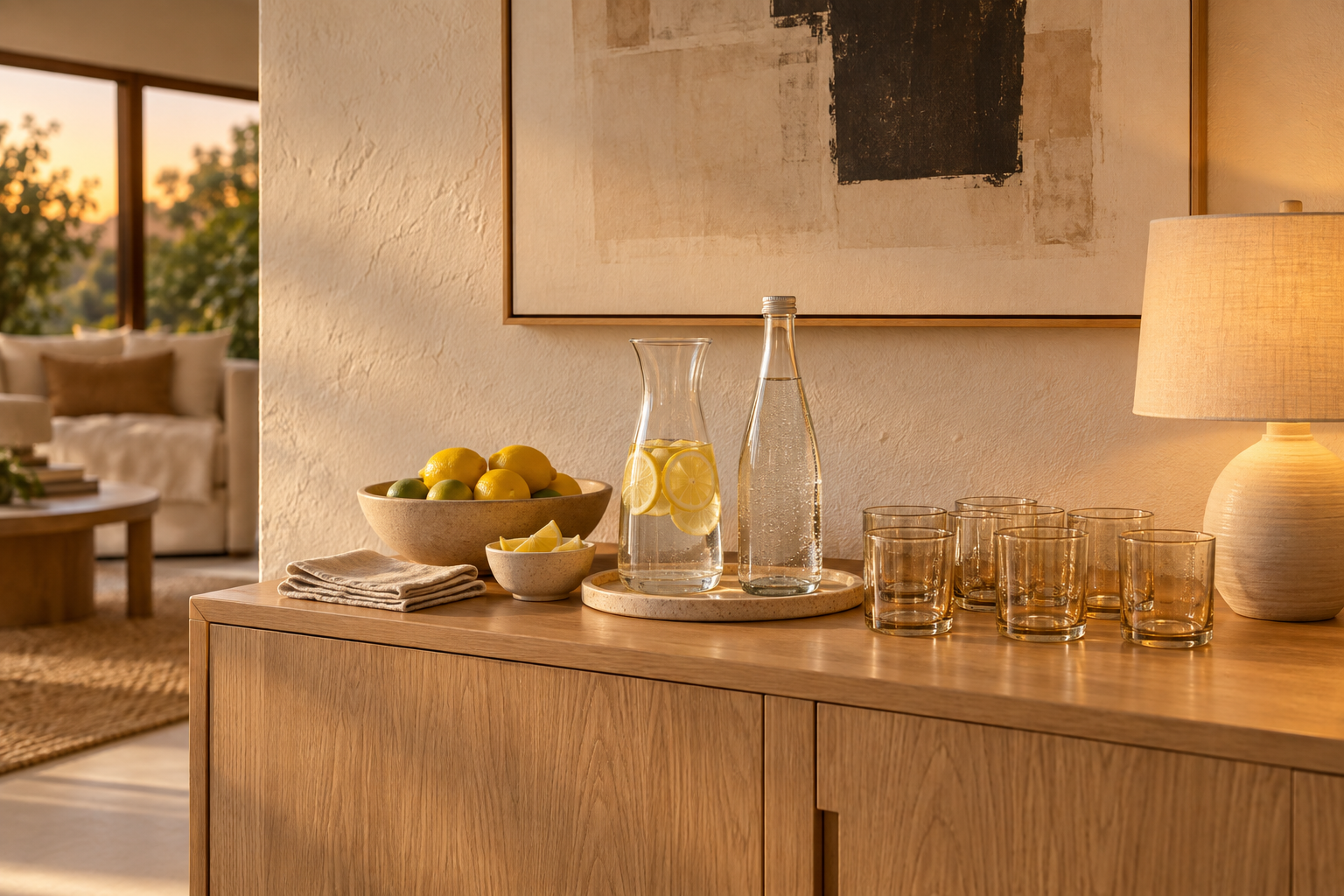
One of the nicest hosting tricks is making drinks feel accessible without turning yourself into a full-time server.
If possible, set up a simple drink area.
Water.
Glasses.
Wine.
Whatever makes sense for the occasion.
Why this works
People feel more comfortable when they do not have to ask you for every small thing.
And you get to sit down instead of spending the entire evening walking between the kitchen and living room.
Good hosting should allow the host to actually participate.
8. The Little Details People Actually Notice
You do not need to turn your home into a hotel.
But a few thoughtful details can make guests feel instantly more comfortable — mostly because they quietly communicate:
We were expecting you.
Think about the small things
- snacks or something easy to grab without asking
- fresh hand towels already folded and ready
- an extra blanket within reach
- a glass or bottle of water by the bed for overnight guests
- an accessible phone charger or empty outlet
- a small tray or surface where they can leave jewelry, glasses, or keys
- tissues somewhere obvious
- a spare toothbrush or basic toiletries if someone is staying over
- the Wi-Fi password written somewhere easy to find
- one small lamp they can control themselves at night
None of these things need to be elaborate.
The point is simply to remove tiny moments of awkwardness.
A guest should not have to wonder whether they are allowed to take a snack, where the towels are, or whether unplugging your bedside lamp is the only way to charge their phone.
Those little details are what make a home feel genuinely thoughtful.
9. Small Homes Can Still Host Beautifully
You do not need a huge dining room or an enormous sectional to have people over.
Small homes can actually feel incredibly warm when they are used intentionally.
Work with the space
Move a side table temporarily.
Pull in a dining chair.
Use an ottoman as extra seating.
Serve food in the kitchen instead of covering the coffee table.
Open up the areas people naturally gather in.
Do not try to make a small home behave like a large one.
Make the space you have work well.
10. If They Are Staying Over, Comfort Comes First
A guest room can be beautiful.
But what people remember is whether they slept well.
Prioritize the basics
Fresh bedding.
A comfortable temperature.
A place for luggage.
An accessible outlet.
A glass or bottle of water nearby.
A lamp they can control without getting out of bed.
Extra blankets if needed.
These things matter more than whether the bedside styling is perfect.
11. Give Overnight Guests a Little Independence
One of the nicest things you can give someone staying in your home is the ability to take care of small things without asking.
Show them:
- where towels are
- where water is
- how the coffee works
- the Wi-Fi password
- where extra blankets are
- anything unusual about the house
Why it matters
Nobody enjoys asking:
Sorry… where do you keep the glasses?
for the fourth time.
A little orientation helps guests feel less like visitors and more like they can comfortably exist in the space.
12. Think About Sound and Temperature
These are not the glamorous parts of hosting, but they can completely change the mood.
A room that is too hot.
A freezing guest room.
Music so loud that people have to shout.
Total silence that makes every pause feel dramatic.
Aim for comfortable, not impressive
Background music can help.
So can opening a window before people arrive or adjusting the thermostat slightly.
Comfort often comes from things nobody consciously notices when they are right.
13. Do Not Over-Style the House Before People Arrive
Decor lovers, this one is for us.
There is a very real temptation to suddenly restyle the entire house thirty minutes before guests arrive.
Move the books.
Redo the console.
Change the pillows.
Add flowers.
Remove flowers.
Question every design choice you have made since moving in.
Stop.
Your guests are probably not auditing the styling.
They are coming to spend time with you.
Straighten the things that matter.
Clear the surfaces they will use.
Adjust the lighting.
Then walk away.
14. Make the House Smell Good — but Not Too Good
Scent is powerful.
A home that smells fresh can feel instantly more inviting.
But five candles, a diffuser, room spray, and freshly baked cinnamon rolls all competing at once may be a little much.
Keep it subtle
Open the windows beforehand if you can.
Light one candle.
Use one scent profile.
Or simply let the smell of dinner do the work.
The goal is pleasant, not perfume department.
15. Let the House Feel Like You
This is probably the most important decor point.
Do not remove everything personal because guests are coming.
The books you actually read.
The art you love.
The family photos.
The slightly strange object you brought home from a trip.
Those are the things that make a house feel like a home.
Hospitality is not staging
People usually feel more comfortable in a home with personality than one that looks like nobody actually lives there.
Let them see you in the space.
16. The Best Hosts Make the House Feel Relaxed
You can prepare everything perfectly.
But if you spend the entire evening adjusting pillows, collecting glasses the second someone puts them down, and apologizing for things nobody noticed, your guests will notice that.
People take cues from the host.
If you seem comfortable, they are more likely to feel comfortable too.
Let the house survive the evening
There may be glasses on the table.
A cushion may end up on the floor.
Someone may move a chair.
The kitchen may look terrible by dessert.
That means people actually used the house.
Which is kind of the point.
Before Guests Arrive: The Five-Minute Check
If people are almost at the door, forget the deep clean.
Check five things:
- Is the entry clear?
- Is there somewhere to sit and put a drink?
- Does the bathroom have the basics?
- Are the lights warm and comfortable?
- Can people easily find food and drinks?
If the answer is yes, you are probably ready.
Does Thinking About All of This Make Hosting Feel Forced?
It can sound like a lot when you see everything written down.
Lighting.
Towels.
Snacks.
A place for bags.
Extra blankets.
A charger.
The bathroom.
The entry.
But the goal is not to turn hosting into a performance.
Actually, it is the opposite.
Thinking about a few practical details beforehand means you can stop thinking about them once people arrive.
You are not trying to impress anyone.
You are removing the small moments that make guests feel unsure or make you feel like you need to keep getting up every five minutes.
A welcoming home is not one where everything has been staged perfectly.
It is one where people can relax because the space quietly works for them.
And that is what lets you relax too.
A Welcoming Home Is About How It Feels
The homes we remember most are not always the biggest.
Or the cleanest.
Or the most beautifully decorated.
They are the ones where we felt comfortable enough to stay another hour.
Where someone told us to help ourselves.
Where the lighting felt warm.
Where we knew where to put our coat.
Where nobody panicked when we moved a cushion.
And that is good news for anyone who loves decor.
Because hosting does not mean making your home look perfect.
It means letting the home you already love do what it was meant to do:
Make people feel good inside it.
Run a guest-path audit
| Moment | Question to test |
|---|---|
| Arrival | Can guests identify the entrance, access instructions, and place for belongings? |
| Movement | Are primary paths clear and reasonably lit? |
| Seating | Are there stable, comfortable options and reachable surfaces? |
| Bathroom | Is it easy to find, stocked, and private? |
| Drinks and refreshments | Can guests see what is available and reach it comfortably? |
| Departure | Can coats, shoes, bags, and transport information be found easily? |
Walk the route once as if you did not know the home. Check temporary furniture, loose rugs, cables, low light, and any object narrowing the path. Keep exits and essential access clear.
Protect guest privacy
Clear personal documents, medication, mail, keys, financial information, and devices from guest-use areas. Provide a private place for luggage or belongings when someone stays overnight. Share Wi-Fi access in the way that fits your network setup without exposing unrelated account credentials.
If cameras, alarms, smart locks, pets, or unusual house rules affect a guest, explain what they need to know before or at arrival.
A 30-minute readiness sequence
- First 10 minutes: clear the entrance, paths, seating, and guest bathroom.
- Next 8 minutes: set water, glasses, food service, and necessary utensils.
- Next 5 minutes: adjust lighting, ventilation, and temperature.
- Next 4 minutes: create places for coats, bags, and phones.
- Final 3 minutes: stop cleaning, change clothes or sit down, and be ready to answer the door calmly.
Choose the minimum viable version
For an ordinary visit, the minimum is a clear path, usable seating, water, a stocked bathroom, and a host who can participate. Overnight visits add bedding, temperature control, a reachable light, charging access, and orientation to the house.
For the table itself, see the practical table-setting guide. For the arrival zone, use the five-zone entryway system.
How this guide was developed: The hosting framework follows the guest journey from arrival to departure and prioritizes access, privacy, usable surfaces, temperature, lighting, and host participation. Decor supports those outcomes rather than replacing them. Reviewed October 13, 2026.