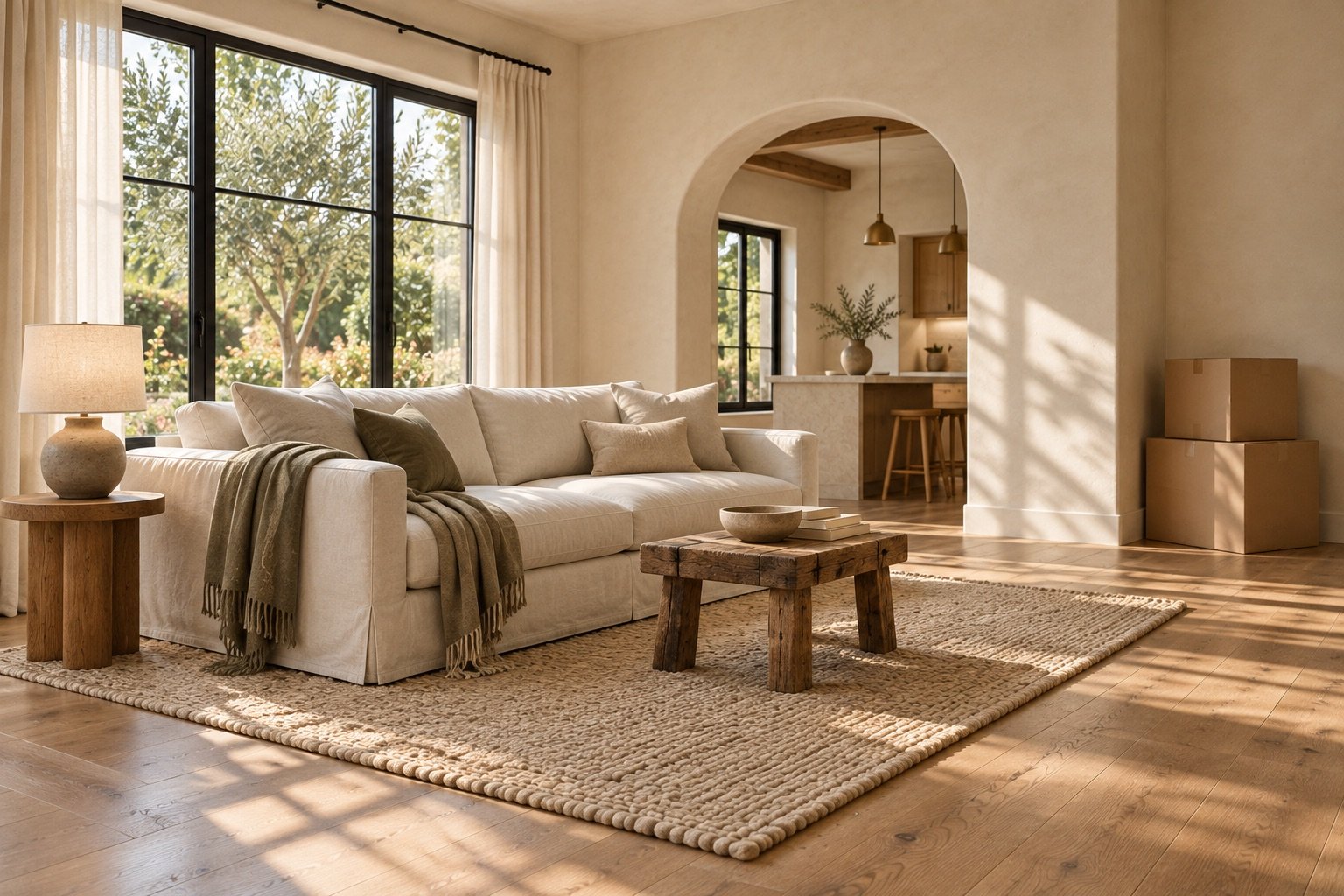
Moving into a new home creates a strange kind of urgency. Every empty wall looks like a decision. Every unfinished corner feels like something you should solve immediately. A few nights of eating from one plate can make a twelve-piece dinnerware set seem essential.
But the best first purchases are not the ones that make the home look finished. They are the ones that help you sleep, eat, clean, work, arrive, and leave with less friction.
This guide separates what most homes need first from what is usually safe to postpone. It is not a universal shopping list: the right order depends on the home, climate, lease, household, and things you already own.
Affiliate disclosure: As an Amazon Associate, we earn from qualifying purchases. This may result in a commission at no additional cost to you. Read our full affiliate disclosure.
The three filters for every first-home purchase
Before buying, ask whether the item solves one of these three problems:
- Safety or basic use: Does the home need it to be safely occupied and function?
- Repeated friction: Will you use it often enough that its absence creates a daily problem?
- Cost of delay: Will waiting damage the home, disrupt sleep, increase expenses, or force an emergency purchase later?
If the item solves none of them, it may belong on the “wait” list—even if it is beautiful.
A practical buying order
| Stage | Priority | Examples |
|---|---|---|
| Before the first night | Safe access, sleep, hygiene, essential light | Keys, working bulbs, bedding, towels, bathroom basics |
| First week | Simple meals, cleaning, laundry, privacy | Starter cookware, cleaning tools, hamper, appropriate window covering |
| First month | Comfort and recurring routines | Seating, task lighting, entryway system, measured storage |
| After living there | Scale, style, and long-term layers | Rugs, art, additional furniture, specialized appliances, decor |
This order is intentionally flexible. A home with no safe window covering needs privacy sooner; a furnished rental may already have seating; someone working remotely may need a desk before a dining table.
Before shopping: measure the home and protect a cash buffer
Record room dimensions, ceiling height, windows, doors and their swings, outlets, vents, stairs, elevator size, hallway turns, and the narrowest point on the delivery route. Measure existing furniture too.
Then protect part of the move-in budget for the problems the first weeks will reveal: a repair, different hardware, an unexpected delivery fee, a missing tool, or a routine that needs a better solution.
A complete shopping list created before living in the home is usually based on guesses. A buffer gives those guesses time to become evidence.
1. Buy what supports sleep first
Sleep affects every other part of moving. Start with a safe, supportive sleeping setup appropriate to your circumstances, clean bedding, pillows that suit the sleepers, privacy, and a reachable light.

If you are starting from scratch, keep the first bedroom purchases narrow: a simple sheet set, a compact bedside lamp, and privacy or room-darkening curtains. Confirm the bed size, lamp dimensions, curtain length, and mounting conditions before ordering.
A finished bedroom does not require matching nightstands, a bench, decorative pillows, art, and a large rug on day one. A temporary table can hold a phone and glass of water while you learn what size and storage the room needs.
First-bedroom minimum
- a suitable mattress and stable support system;
- necessary bedding and a workable laundry plan;
- window privacy or light control where required;
- one safe, reachable light;
- a clear route from the bed to the door and bathroom;
- temporary clothing containment.
What can wait: a coordinated bedroom set, multiple decorative cushions, a bed-end bench, permanent art, and storage purchased before measuring the actual clothing category.
2. Build a small kitchen kit around the food you really make
Do not buy a large cookware set simply because it is marketed as a starter set. Write down five meals you reliably prepare and identify the tools they share.
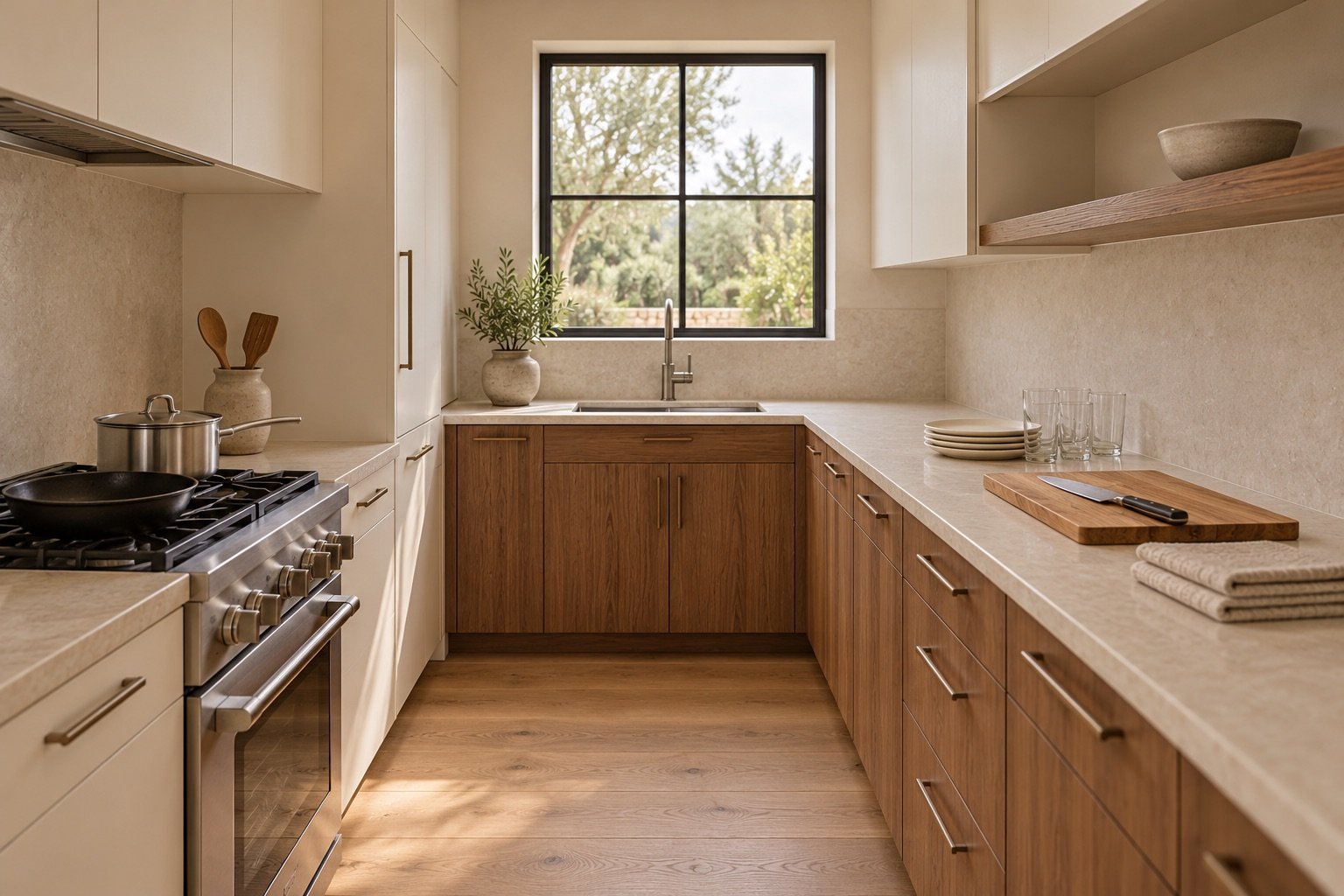
A small household might begin with one useful pot, one pan, a baking or roasting piece only if needed, a cutting board, an appropriate knife, a mixing bowl, basic utensils, plates, bowls, cups, and food-storage containers.
A compact starter kit might include a stainless-steel skillet, a stainless-steel pot, wood cutting boards, one chef’s knife, and glass food-storage containers. Stainless steel rewards correct use: preheat gradually, add cooking fat at the right time, and let the cookware cool before washing. With proper care, it can serve the kitchen for years.
Buy enough for ordinary life plus a small margin—not a hypothetical dinner party for twelve. Hosting pieces can be borrowed or added after the kitchen’s storage and habits are clear.
Check before buying
- Which cooking equipment is present and compatible?
- How much usable cabinet and drawer space exists?
- What can serve more than one purpose?
- Which items require care you are willing to perform?
- Do you already own a tool that solves the same task?
What can wait: specialized appliances, matching countertop containers, a full knife block, formal serving pieces, and gadgets for meals you rarely make.
3. Set up bathroom, laundry, and cleaning basics
The home needs to recover from ordinary use. Prioritize towels, toilet and hand-cleaning basics, a laundry hamper or sorting target, trash containers where needed, and a compact cleaning kit appropriate to the home’s actual surfaces.
Read finish and appliance instructions before choosing cleaners. More products do not automatically create a cleaner home; a few compatible tools stored near their point of use usually work better.
What can wait: identical bottles, decorative decanting, a different cleaning product for every surface, hotel-style towel collections, and organizers bought before the cabinet contents are known.
4. Solve light, privacy, and temperature by room
Spend several days observing daylight and several evenings observing artificial light. Each room may need a different combination of general, task, and low-level light.
If a room has overhead light but still lacks a comfortable reading or conversation zone, a simple floor lamp can solve that specific gap without replacing every fixture.
Prioritize the tasks that currently lack safe, useful illumination: cooking, reading, dressing, stairs, the entry, or a desk. Window treatments should begin with the required function—privacy, room darkening, glare control, or insulation—before fabric and style.
What can wait: replacing every fixture for appearance, buying identical lamps before testing brightness, and ordering curtains before confirming finished measurements and mounting conditions.
For a more detailed assessment, use the guide to diagnosing a dark room.
5. Choose the first seating for the life you have now
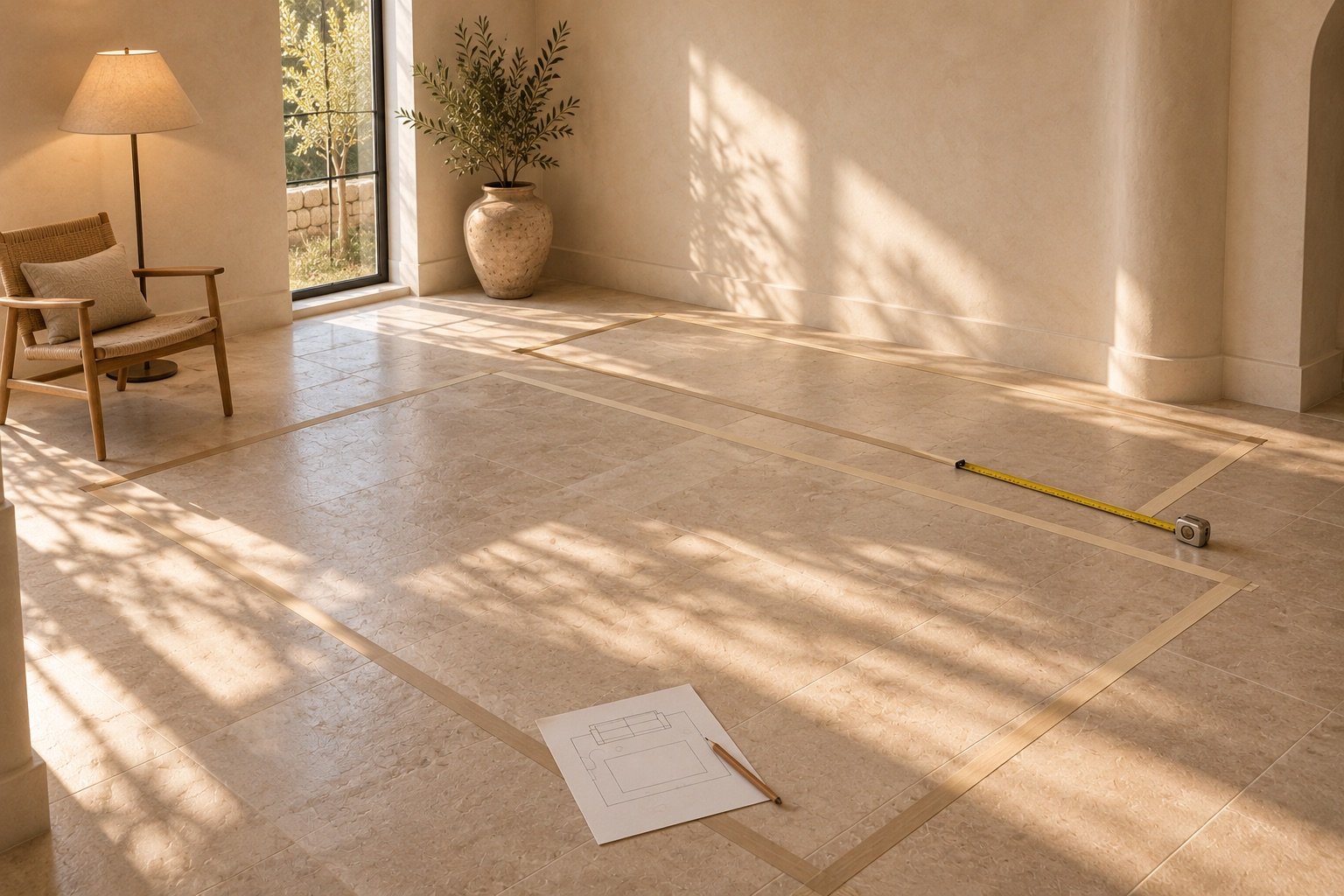
A sofa is often one of the largest early purchases, which makes patience valuable. Measure the room and delivery route, mark the proposed footprint with painter’s tape, and live around the outline.
Decide what the seating must do. Daily lounging, conversation, television, reading, guests, pets, and children create different requirements. Confirm seat depth, cushion maintenance, fabric care, and whether another chair or existing piece already covers part of the need.
What can wait: a matching loveseat, accent chairs for unused corners, a coffee table chosen before the sofa position, and side tables for seats nobody uses.
6. Create one useful surface before filling the room
Every active seat or routine needs somewhere for a drink, book, lamp, device, or bag. That does not mean every spot needs dedicated furniture immediately.
Use an existing stool, box, small table, or borrowed piece to test location and height. A temporary surface reveals whether the permanent answer needs a drawer, a shelf, a particular shape, or no additional furniture at all.
7. Build an entryway from behavior
Observe the first week: which door is used, where shoes come off, where keys and bags land, and what is searched for when leaving.
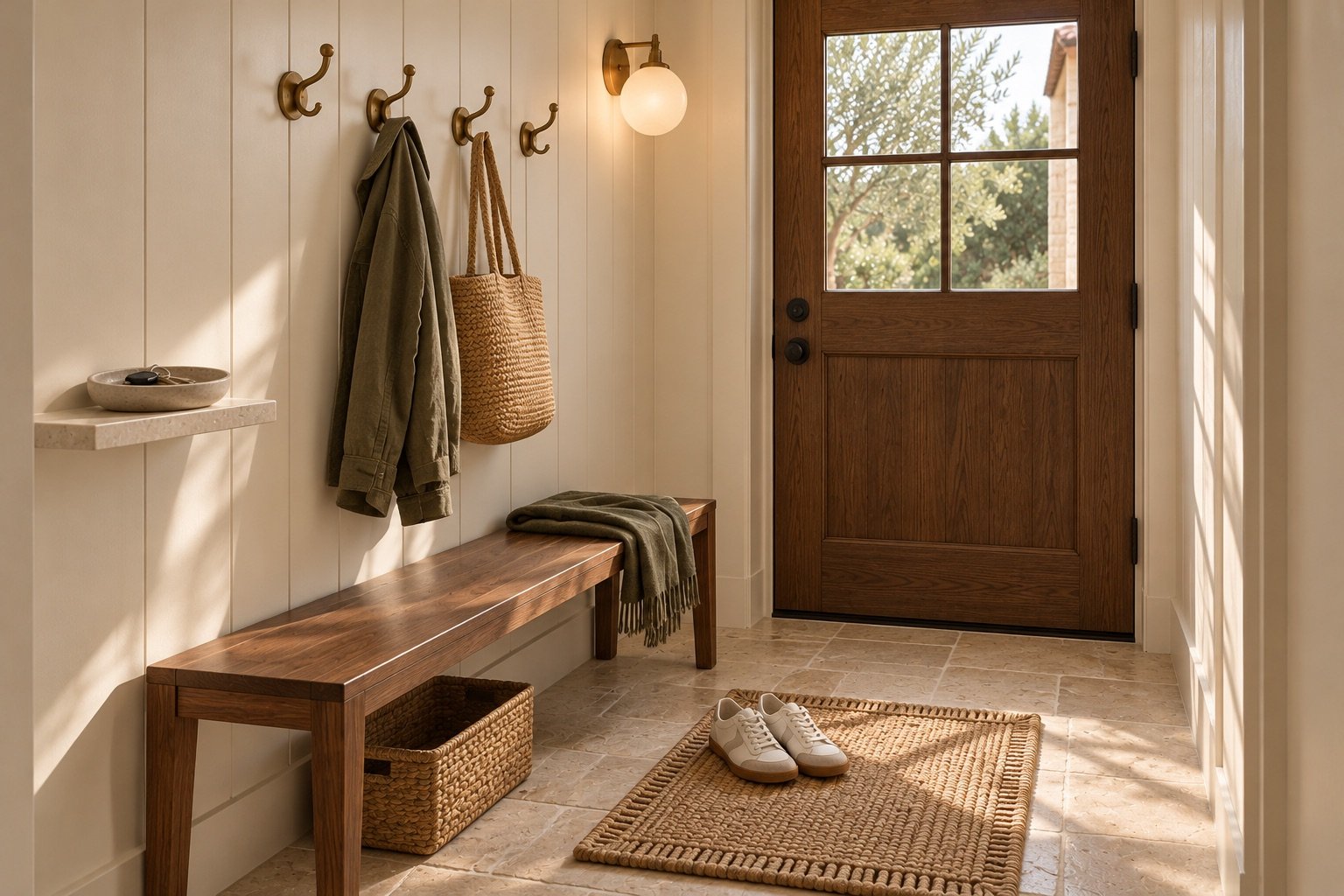
Then provide only the essential zones: a landing point, suitable hooks or hanging storage, a footwear boundary, and one place for outgoing items. An apartment with no formal foyer can distribute these functions across a wall, nearby closet, and small tray.
Use the complete five-zone entryway guide before purchasing a large hall tree or cabinet.
8. Delay permanent storage until the category is visible
Storage products should follow an inventory. Live with temporary boxes or baskets, identify the categories, measure their volume, and notice which items need open access or concealed storage.
Permanent storage bought too early may fit the wall but fail the objects. It can also hide duplicate or unnecessary belongings instead of solving the routine.
Compare which storage products genuinely reduce effort and when open storage is worth the maintenance.
9. Wait before buying the rug
A rug can anchor a room, improve comfort, and reduce noise—but its dimensions depend on the settled furniture plan. A beautiful rug purchased first can dictate an awkward layout or become an expensive scale mistake.
Mark potential rug sizes with tape after the main furniture positions are known. Check doors, vents, walking paths, chair movement, cleaning needs, and whether an appropriate rug pad is required.
The exception is a rug that solves an immediate, documented need such as protecting an approved surface or creating a safer, more comfortable route—provided the product and installation are suitable.
10. Let art and accessories arrive last
Art and meaningful objects give a home identity, but they do not need to fill every wall immediately. Empty space shows which views matter and which walls are naturally visible from the places you spend time.
Begin with objects you already own. Frame something meaningful, move a lamp, group books, or leave a wall quiet. A collected room is built from specific choices, not from purchasing filler for every surface.
Continue with the collected-room process and the accessory decision guide.
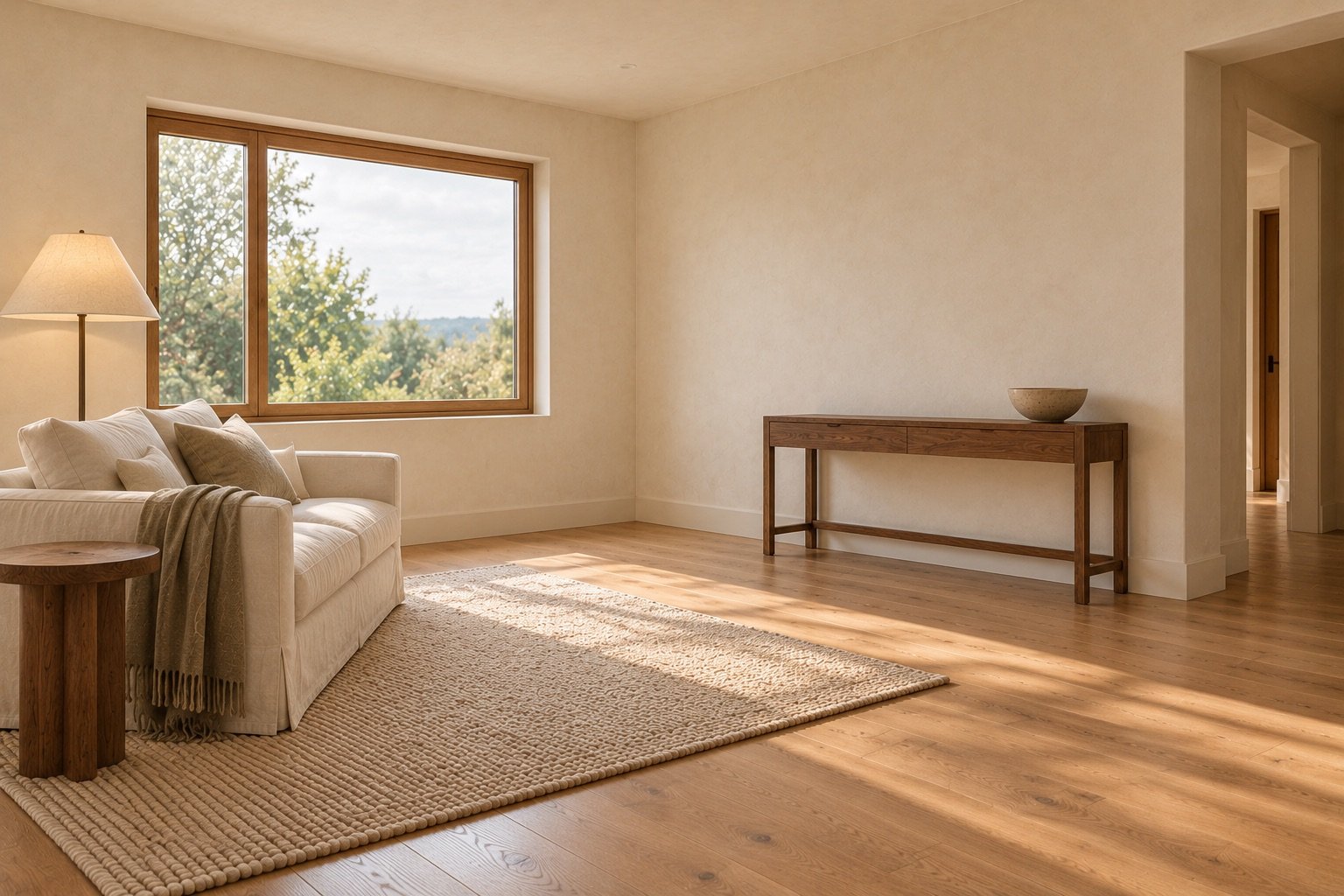
What usually belongs on the wait list
| Purchase | Why waiting helps |
|---|---|
| Matching furniture sets | You can learn the room’s scale and avoid a one-store appearance |
| Furniture for every empty corner | Some negative space supports circulation and calm |
| Large organization systems | Real categories and volumes are not yet known |
| Specialized kitchen appliances | Use frequency can be observed first |
| Decorative pillows and objects | They cannot repair layout, light, or storage problems |
| Formal hosting supplies | Your actual hosting style and storage capacity may differ from the imagined one |
| Trend-driven permanent finishes | Color and material decisions improve after observing the home’s light and architecture |
Use three lists instead of one shopping list
Need now
Items required for safe occupancy, sleep, hygiene, food, essential work, privacy, and repeated daily routines.
Friction log
Problems observed during the first month. Record the time, room, and repeated consequence before selecting a solution.
Wait and revisit
Beautiful objects, upgrades, and convenience purchases. Add the proposed location, measurements, and review date. If the need remains after several weeks, it is easier to buy confidently.
A first-30-days furnishing plan
- Days 1–3: make sleep, hygiene, essential light, access, and simple meals work.
- Days 4–7: observe paths, privacy, laundry, cleaning, and where objects land.
- Week 2: correct the highest-frequency friction with temporary solutions.
- Week 3: measure for one large or long-term purchase and test its footprint.
- Week 4: choose the purchase with the greatest daily value—not the room that photographs as most unfinished.
Room-by-room minimum
| Room | Useful minimum |
|---|---|
| Bedroom | Sleep system, bedding, privacy, reachable light, clothing target |
| Bathroom | Towels, hygiene basics, waste container, necessary storage |
| Kitchen | Tools for actual meals, eating pieces, food storage, cleaning basics |
| Living area | Comfortable seating, useful light, one reachable surface |
| Entry | Keys, bag/coat, footwear, and outgoing-item zones |
| Work area | Appropriate surface, seat, task light, power and cable plan |

A home can be functional before it is finished
The first stage of a home should feel a little incomplete. That space gives routines time to form, protects the budget, and makes room for objects with genuine use or meaning.
Buy the things that help the household function. Test large decisions at full scale. Let the home show you what it needs. The result may take longer, but it is more likely to fit the room, the budget, and the people who actually live there.
How this guide was developed: The buying order prioritizes safe occupancy, sleep, hygiene, essential food preparation, privacy, lighting, repeated friction, measurement, and the cost of delay. It is a decision framework rather than a universal product checklist or claim that every new home needs the same objects. Reviewed October 13, 2026.